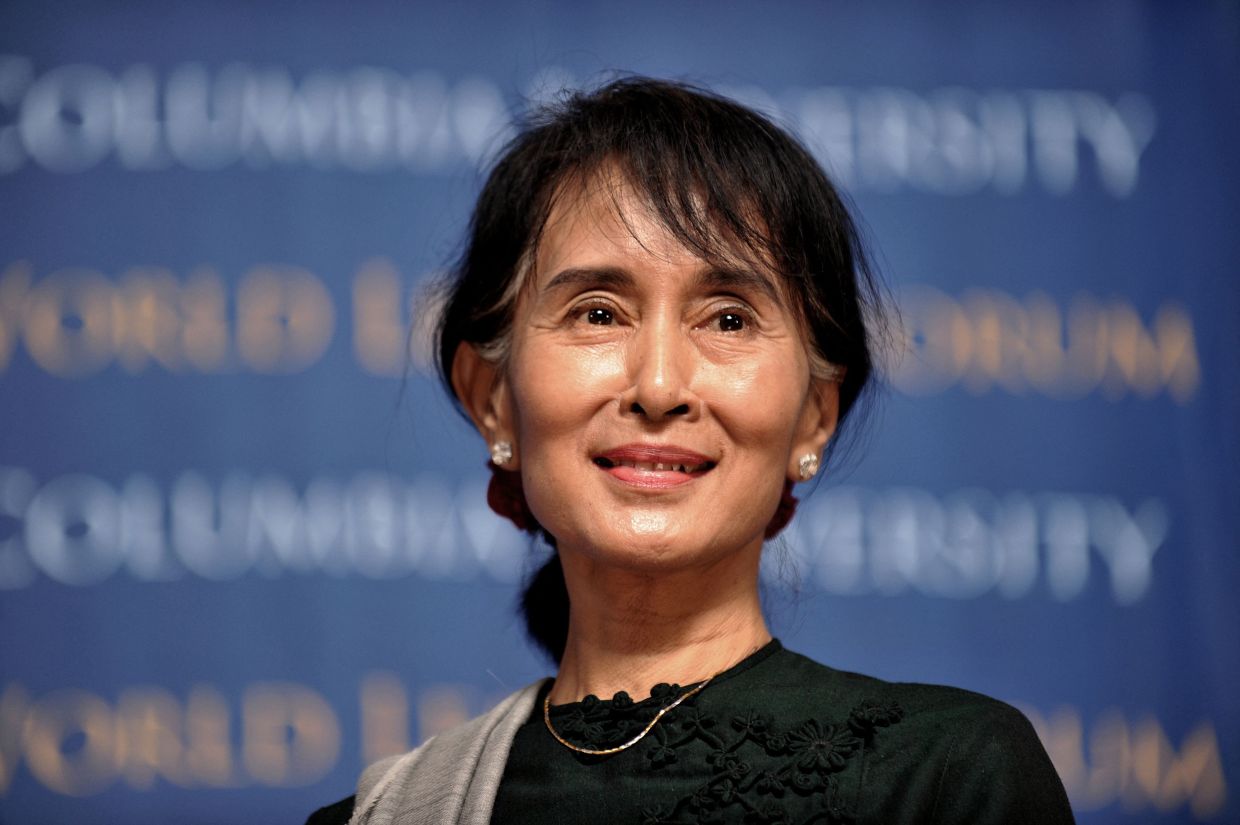
The precise location of Aung San Suu Kyi, Myanmar's deposed democratic leader, remains shrouded in official opacity within Naypyidaw, the nation's sprawling capital, where she is supposedly held under house arrest. The military junta that ousted her in 2021 claims to have moved the 81-year-old from prison to home confinement in April as a gesture of clemency, yet this supposed softening of her detention reveals little about where she actually resides in a city deliberately constructed to frustrate transparency and obscure the machinery of state power.
Naypyidaw itself embodies the paranoia and secrecy that have defined Myanmar's authoritarian governance. Covering an expanse nine times larger than New York City but housing only one million people, the capital presents a disorienting landscape of anonymous compounds separated by vast, largely empty 20-lane highways cutting through dense jungle and agricultural land. Urban planners and architecture experts regard the city as an architectural expression of political intent, designed fundamentally to prevent the kinds of public mobilisation and spontaneous political action that have repeatedly threatened Myanmar's military establishment. This deliberate dispersal of population and facilities across an inhospitable terrain serves a straightforward function: isolating centres of power whilst rendering observation and coordination among potential opponents extraordinarily difficult.
The transformation of Suu Kyi's legal status from prisoner to house arrest resident was presented by General Min Aung Hlaing, architect of the February 2021 coup, as evidence of his metamorphosis from military autocrat into civilian president following restricted elections held in January. However, this reframing rings hollow to observers who note that the 81-year-old remains fundamentally imprisoned, now without even the basic freedoms that home residence typically provides. Critics argue the manoeuvre functions primarily as image management for the junta, allowing international observers to claim modest progress toward normalcy whilst the substantive nature of Suu Kyi's captivity remains unchanged. Her confinement to an undisclosed location within Myanmar's labyrinthine capital represents continuity rather than change in her subjugation.
The reluctance of pro-military officials themselves to disclose Suu Kyi's location underscores the calculated nature of this opacity. Thein Tun Oo, a spokesman for the pro-military Union Solidarity and Development Party that secured a convincing victory in January's elections, admitted straightforwardly that he possessed no knowledge of where the former leader was being held. "Not everyone can know her location," he stated, effectively acknowledging that even party loyalists and elected parliamentarians lack access to this information. Police officers from multiple jurisdictions revealed that Suu Kyi had been relocated to areas explicitly off-limits even to local security forces, suggesting layers of compartmentalisation designed to ensure absolute control over her whereabouts and prevent any unexpected disclosure or rescue attempt.
Naypyidaw was deliberately established as the nation's capital in 2005 by Than Shwe, a former military leader determined to relocate governmental operations away from Yangon, the historic port city where concentrated urban populations had repeatedly mobilised against authoritarian rule. This relocation reflected deep-seated military anxieties about the vulnerability of power when exercised in densely populated environments where citizens could more easily organise resistance. The capital's central location, roughly equidistant from Yangon and Mandalay but genuinely removed from both cities' populations and international attention, served security purposes far more than administrative efficiency. The resulting urban environment feels simultaneously serene and claustrophobic, with security apparatus visibly omnipresent whilst the general population appears sparse and subordinated to the infrastructure's overwhelming physical scale.
The architectural vocabulary of Naypyidaw itself functions as an instrument of political control. Its parliament complex sprawls across 800 acres, representing one of the world's largest legislative facilities despite Myanmar's consistent refusal to extend genuine democratic authority to its institutions. Motorists navigate highways so oversized that traffic appears almost incidental to their purpose, whilst gardeners in disproportionate numbers maintain immaculate grounds across the city's expanse. Mobile internet jammers interrupt GPS navigation applications, rendering even technological orientation difficult for residents unfamiliar with physical routes. According to Galen Pardee, an architecture scholar from Columbia University, the city represents the inverse of everything urban planning theory identifies as conducive to healthy civic life. This inversion appears deliberately engineered, reflecting political objectives that prioritise surveillance, control, and the prevention of spontaneous public gathering.
Ordinary Naypyidaw residents testify to the city's disorienting effect on daily orientation. A 25-year-old inhabitant acknowledged complete bewilderment regarding Suu Kyi's location, adding that even permanent residents found themselves confused navigating the city's homogeneous architecture and indistinguishable districts. This confusion extends vertically through the social hierarchy; even officials at varying levels of the military and civilian administration admit ignorance of the deposed leader's actual residence. One police special branch source suggested that information about Suu Kyi's location remains restricted even to senior military figures, indicating compartmentalisation so extreme that even generals supposedly overseeing the system cannot access basic facts about the confinement of the nation's most prominent political prisoner.
Suu Kyi's detention within this inscrutable capital marks the latest chapter in a political trajectory spanning decades of principled resistance to authoritarian rule. The daughter of independence icon Aung San, she spent much of her life abroad before returning in 1988 to champion democratic reform. Her early activism resulted in 15 years of house arrest at her family's Yangon mansion, which became an informal pilgrimage site for democracy supporters. She received the Nobel Peace Prize in 1991 in recognition of her non-violent struggle against military dictatorship. The military eventually allowed her to lead Myanmar through a decade-long democratic transition, only to overturn the 2020 elections through the 2021 coup, jailing her on charges that human rights organisations characterise as politically motivated fabrications designed to neutralise her as a credible alternative leadership figure.
The physical infrastructure of her current confinement reflects strategic choice. A villa where Suu Kyi resided prior to assuming elected office has been demolished, eliminating a potential point of symbolic focus for supporters. The government residence to which she would have been entitled as elected leader, situated behind security checkpoints inaccessible without military clearance, is not her destination. Instead, her current location reportedly lies in zones explicitly designated beyond normal administrative access, suggesting deliberate placement within the most restricted compartments of the capital's security apparatus. This arrangement prevents any ordinary circuit of political activity or outside contact, effectively isolating her more completely than conventional imprisonment might achieve.
Her son Kim Aris, speaking from London, characterised the distinction between house arrest and prison as substantively meaningless in his mother's circumstances. He contended that any residence in Naypyidaw where she is held constitutes a "private prison" rather than a genuine home offering the social connections and domestic comforts that house arrest ostensibly permits. The house arrest designation functions primarily as terminology suitable for international consumption, suggesting humanitarian progress where material conditions remain severely restrictive. Aris's assessment reflects the perspective of those who understand his mother's situation intimately, viewing the announcement of improved status as fundamentally deceptive repackaging of unchanged confinement.
General Min Aung Hlaing's orchestration of January's elections, in which the pro-military Union Solidarity and Development Party achieved overwhelming victory after the junta excluded Suu Kyi's National League for Democracy from participation, represents consolidation rather than opening of military control. USDP parliamentarian Aye Chan declared bluntly that "her era is over," despite parliament still displaying old magazines praising her contributions. This symbolic gesture toward Suu Kyi's historical significance coexists with concrete denial of her political relevance and deliberate erasure of her physical presence from public view. The elections functioned to legitimise military governance through civilian institutional forms whilst eliminating the only popular political force capable of challenging military authority. Suu Kyi's invisible confinement within Naypyidaw's deliberately opaque geography represents the culmination of this strategy—stripping her of both freedom and visibility simultaneously.

