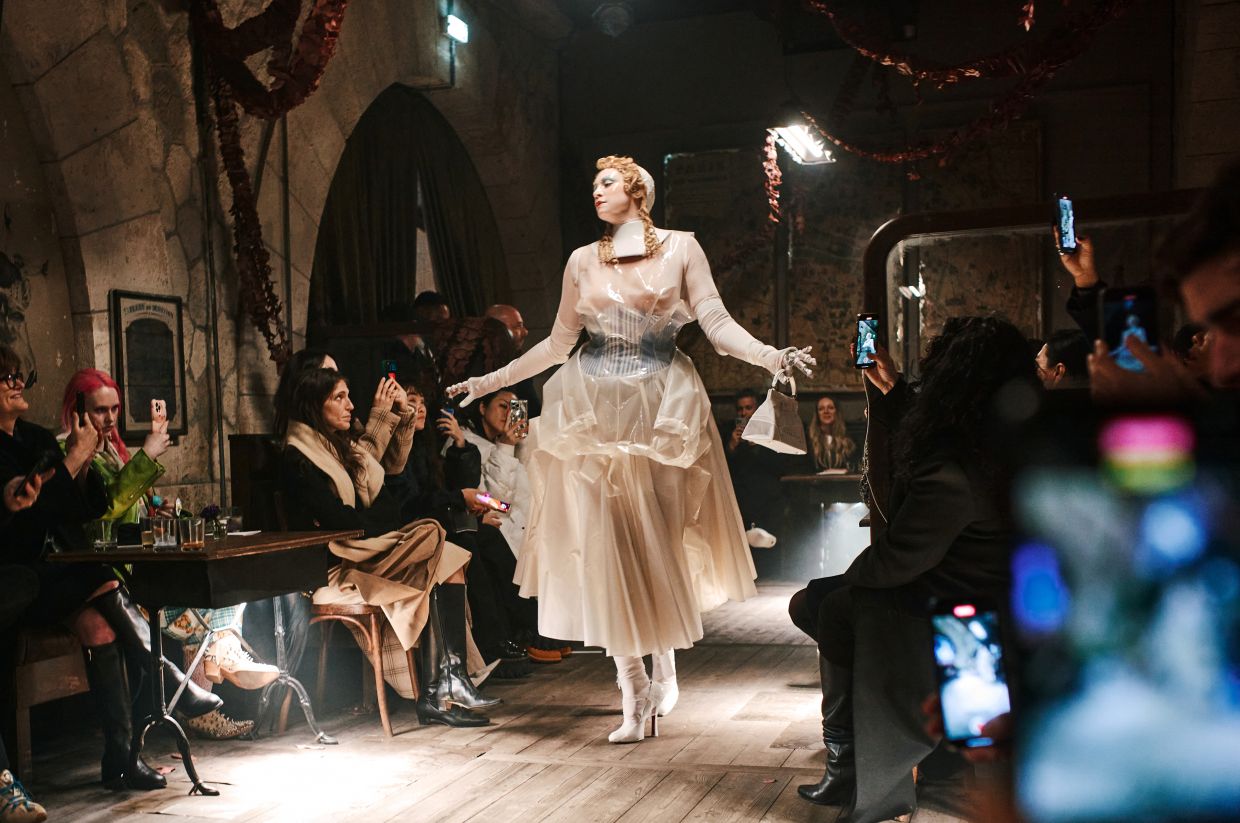
The Metropolitan Museum of Art convened an unusual gathering in May, bringing together influential figures including Vogue editor Anna Wintour to discuss a potential minefield: a major retrospective of John Galliano's work planned for next year. These closed-door conversations represented the museum's attempt to gauge community sensitivities and secure tacit approval for what could become fashion's most controversial exhibition in years. Museum leadership has held multiple sessions with Jewish community representatives over the past twelve months, recognising that honouring one of the fashion industry's most transformative designers demands careful navigation of his troubled past.
Galliano's position within fashion circles remains paradoxical. Industry insiders recognise him as a pivotal contemporary designer whose tenure as Dior's creative director from 1996 to 2011 transcended conventional fashion to create immersive theatrical worlds. His mastery of the bias cut and imaginative construction fundamentally reshaped Dior from a traditional French heritage brand into a global luxury powerhouse. Yet this remarkable trajectory was fractured in 2011 when video footage captured him making antisemitic remarks at a Paris establishment, an incident that immediately cost him his position at the French maison and resulted in conviction on hate crime charges in French court.
The timing of this retrospective proves especially sensitive given contemporary realities. Antisemitism is experiencing a troubling resurgence across North America and Europe, adding weight to concerns from Jewish New Yorkers about staging such a celebration. Recent hate crimes in Manhattan, including a stabbing outside a Jewish community centre prosecuted as a bias attack, underscore the fraught context in which the museum is operating. These incidents have heightened community anxiety about whether reviving Galliano's profile sends problematic cultural signals at a moment when Jewish communities face heightened vulnerability.
The exhibition would represent an exceptional honour—Galliano would become only the third living designer to receive a solo show at the Met, joining design legends Yves Saint Laurent and Rei Kawakubo. The accompanying Met Gala, one of fashion's most scrutinised annual spectacles, would serve as the exhibition's grand opening. This level of institutional recognition reflects the magnitude of Galliano's creative contributions but equally raises stakes around the propriety of the decision.
Rabbi Rick Jacobs, president of the Union For Reform Judaism in North America, attended the May meeting and highlighted a critical concern: the exhibition risked encountering significant public resistance rooted in moral objection rather than mere scepticism. His assessment emphasised that the museum's approach and Galliano's demeanour during these conversations mattered profoundly. Jacobs noted that Galliano demonstrated openness and directness rather than rehearsed responses, speaking authentically about his journey. Jonathan Greenblatt of the Anti-Defamation League acknowledged that Galliano's efforts to repair harm and learn from his conduct deserve recognition, signalling that certain Jewish leaders view his rehabilitation as substantive.
The concept of teshuvah—the Jewish principle of genuine repentance and restoration—emerged as central to these discussions. Participants explored whether meaningful second chances remain possible after serious ethical transgressions, particularly when the individual demonstrates sincere commitment to transformation. However, this theological framework coexists with pragmatic concerns about how the museum can meaningfully address Galliano's past within an exhibition celebrating his artistic achievements. The challenge lies in preventing the show from becoming merely a whitewashing of history or a superficial acknowledgment that then moves past genuine reckoning.
Rabbi Joshua Davidson of Temple Emanu-El, located adjacent to the Metropolitan Museum, articulated an alternative vision for the exhibition's purpose. Rather than sidestepping difficult history, the show could become a teaching moment about antisemitism's contemporary dangers and the importance of active resistance. This approach positions the retrospective as serving a larger social function beyond fashion criticism, leveraging the Met's cultural authority to educate viewers about prejudice and historical consequence. Such framing transforms potential controversy into an opportunity for institutional leadership on ethical matters.
Museum director Andrew Bolton revealed that conceptual planning for a Galliano exhibition had existed since 2010, but the project gained serious momentum only in 2024. He insisted that the recent intensification of discussions with Jewish leaders stemmed from genuine commitment to thoughtful presentation rather than apprehension about his past. Bolton now frames the current climate of rising antisemitism as rendering the exhibition more relevant rather than more problematic, suggesting that examining how figures fall into hatred and subsequently rebuild themselves offers contemporary pedagogical value.
Bolton's curatorial approach centres on what he terms the "rupture" that has defined Galliano's career trajectory as profoundly as his artistic brilliance. Plans include an "orientation gallery" designed to establish context before viewers encounter his designs, though specific presentation methods remain in development. The director emphasises using Galliano's own language rather than sanitised paraphrasing, a commitment reportedly reinforced by conversations with community leaders who stressed the importance of clarity over euphemism. Bolton simultaneously asserted his responsibility lies with historical accuracy rather than amplifying Galliano's personal narrative, a distinction suggesting the museum will maintain editorial independence.
Galliano's decade at Maison Margiela following his 2011 crisis demonstrates that rehabilitation is possible within fashion's commercial sphere. High-profile celebrities including Zendaya, Tyla, and Amal Clooney regularly wear his vintage designs on international red carpets, indicating that significant portions of the fashion world and celebrity culture have largely reconciled with his return. His garments now command premium prices at auction houses, suggesting that market mechanisms have already validated his artistic significance and forgiven his transgression. This commercial rehabilitation, however, differs fundamentally from cultural or institutional rehabilitation, and the Met's decision carries weight precisely because the museum operates as an arbiter of artistic significance rather than merely commercial value.
The prospective exhibition raises profound questions about whether institutions can simultaneously honour artistic legacy and maintain moral accountability. The Metropolitan Museum is attempting an experiment in what responsible redemption might look like in cultural institutions—neither erasing difficult histories nor refusing to recognise genuine transformation and artistic contribution. Whether this balance proves achievable remains uncertain, but the museum's deliberate consultation process suggests recognition that decisions about historical figures cannot remain exclusively within specialist or commercial circles. As Southeast Asian art institutions increasingly engage with international contemporary art discourse, the Met's approach offers a template—potentially fraught but conceptually rigorous—for how museums might navigate similar tensions between artistic merit and ethical complexity.

