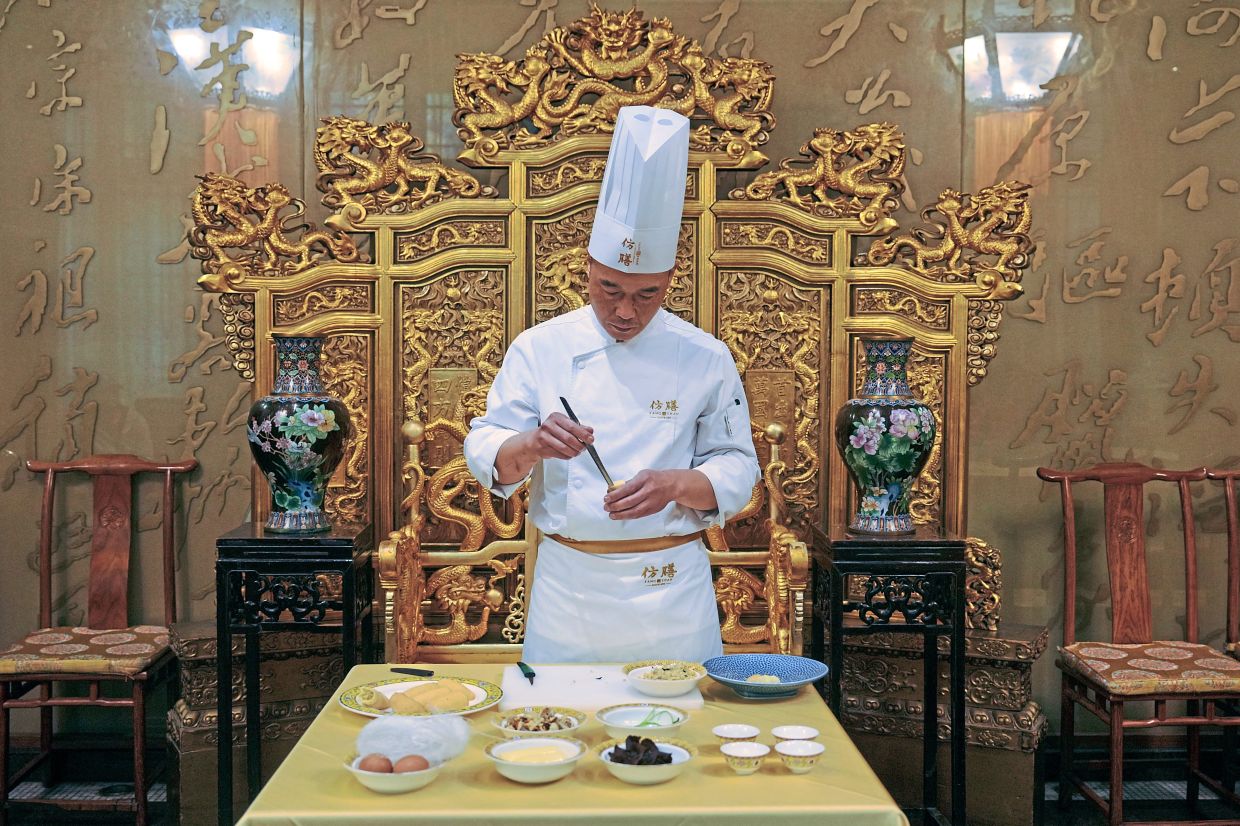
Deep within Beijing's culinary landscape lies a carefully maintained bridge to China's imperial past. Fangshan Restaurant, established in 1925 by former Qing Dynasty palace chefs at Beihai Park, represents one of the world's most unique gastronomic institutions—a living museum where the sophisticated foodways of emperors continue to grace dining tables. The restaurant's name carries meaning beyond mere branding: it translates literally to "imitating the imperial cuisine," capturing the institution's solemn mission to resurrect and perpetuate the complex dining traditions that once characterised the Middle Kingdom's most powerful households.
The origins of dishes served at Fangshan reveal the intricate connection between imperial cuisine and court mythology. According to culinary lore, Empress Dowager Cixi once dreamed of a particular pastry during the waning years of the Qing era. When the confection appeared on her breakfast table the following morning, her delight was such that she bestowed a silver ingot upon the chef responsible. The humble "minced pork pancake" subsequently acquired an evocative new identity as the "dream pastry," transforming through imperial favour from humble fare into a celebrated dish whose very name encodes the gratification of royal desire. Such stories illustrate how imperial cuisine transcended mere sustenance, functioning instead as a medium through which power, favour and cultural sophistication were simultaneously displayed and transmitted.
Imperial cuisine encompassed far more than the daily meals of emperors; it represented an elaborate system of ritual dining that reinforced hierarchical relationships and cosmological principles. During Qing Dynasty banquets, specific protocols governed every phase of consumption. Milk tea invariably initiated proceedings, establishing a ceremonial tone before the elaborate courses commenced. The emperor wielded dining itself as an instrument of statecraft, bestowing wine and food upon princes and officials who, before partaking, performed prescribed obeisances and expressions of gratitude. This choreography of eating transformed the table into a stage where political subordination and cultural refinement were simultaneously enacted. Beyond festive occasions, sacrificial rituals occupied an equally central position in imperial food practices, following distinct protocols that invested particular dishes with spiritual significance.
Sacrificial meals embodied paradoxes that illuminate how meaning accrued to food through absence as much as presence. At the Palace of Earthly Tranquillity, a crucial Qing ceremony involved the consumption of sacrificial pork—fatty meat deliberately prepared without salt or other seasonings. After the ritual concluded, distribution of this unseasoned flesh among courtiers constituted a profound honour, transforming what modernity might regard as unpalatable into a coveted symbol of imperial recognition. This practice extended into antiquity: classical Chinese texts including the "Book of Rites" describe a meat broth termed the "grand stew" that featured in sacrificial ceremonies expressly because its absence of artificial flavouring evoked earlier, simpler culinary traditions. The unseasoned dish thus functioned symbolically, evoking cultural memory and honouring ancestral practices whilst simultaneously affirming the cosmic order that the emperor embodied.
Pastries held particular prominence within imperial culinary arts, commanding specialised institutional attention within palace structures. Fangshan's contemporary offerings—including Cixi's storied dream pastry and delicate steamed corn buns—represent direct transmission from imperial court kitchens, their recipes maintained through unbroken lineages of apprenticeship and mentorship. Chef Zhou Tong, who prepares these confections, exemplifies the pedagogical chains through which imperial techniques persist. His mastery derives from a master craftsman who had similarly learned from predecessors stretching backward toward the imperial era itself. This chain of knowledge transmission proves non-trivial; each generation must absorb not merely recipes but the philosophical and technical principles underlying imperial pastry-making.
The distinction between imperial and contemporary culinary methods illuminates broader transformations in food preparation. Fangshan's practitioners deliberately eschew modern convenience technologies—blenders, food processors and electric mixers remain forbidden within the kitchen. Instead, beans are pulverised using traditional sieves whilst certain flours are processed exclusively in custom-made copper vessels. This apparent inefficiency carries profound consequences for the finished product. Machine processing, whilst swifter, destroys the delicate graininess and distinctive sandy mouthfeel that characterise authentic imperial pastries. The texture itself becomes a carrier of historical authenticity, allowing contemporary diners to encounter tactile sensations that previous generations experienced. Such commitment to hand-labour production reflects an understanding that culinary heritage encompasses embodied knowledge extending beyond recipe transcription.
Executive Chef Fan Liangliang's trajectory illuminates the dissonance between conventional culinary training and imperial methodology. Upon joining Fangshan as an apprentice, he confronted the disconcerting realisation that his culinary school education had trained him in precisely the wrong techniques. The efficiency-oriented approaches emphasised during his formal training proved antithetical to imperial protocols. Instead, he embraced deliberately slower processes unfamiliar within contemporary restaurant culture. One particularly demanding technique termed "Nizihuo" demands that ingredients including fish, shrimp and chicken be meticulously minced into utterly smooth pastes subsequently reshaped into elaborate decorative forms—frogs, birds and blossoms. This labour-intensive methodology exemplifies what Fan identifies as the fundamental imperatives governing imperial cuisine: each preparation required novelty, visual splendour, nutritional completeness and presentation standards befitting imperial dining chambers.
Adaptation rather than literal recreation characterises Fangshan's contemporary preservation efforts. Certain historical ingredients—notably bear paws—no longer appear on menus, yet their absence does not represent culinary failure. Instead, chefs creatively reinterpret classic dishes, maintaining their essential character whilst accommodating modern ethical and legal contexts. This approach recognises that culinary traditions necessarily evolve whilst remaining rooted in foundational principles. Bestselling items including pea flour cakes and red bean rolls demonstrate that authentic imperial techniques continue generating significant contemporary demand; during peak seasons, customers order more than two hundred pea flour cakes daily, suggesting that modern diners find something genuinely compelling in these historical preparations.
Chinese culinary history itself proves inseparable from political meaning and aesthetic philosophy. The celebrated poet Du Fu composed verses about cold noodles prepared with pagoda-tree leaves, yet these compositions transcended mere gastronomic description. Rather, the modest dish became invested with symbolic weight, expressing Du Fu's political loyalties and frustrated ambitions to serve the imperial court. This symbolic resonance—wherein foodways crystallise broader cultural values and political aspirations—has characterised Chinese culinary expression across dynasties. Contemporary preservation efforts therefore require recognising that culinary heritage functions simultaneously as historical documentation and as a field upon which communities project contemporary meanings and memories. The act of preserving imperial cuisine becomes fundamentally an act of cultural interpretation, wherein present generations select which elements merit continuation and what significance they should carry.
Fangshan itself represents a synthesis of the diverse culinary traditions encompassed within Qing imperial kitchens. Chef Fan emphasises that the restaurant's imperial cuisine fuses Manchu and Han culinary approaches, uniting the foodways of Qing rulers with those of China's majority population. This synthesis reflects historical reality: the Qing Dynasty, despite its Manchu origins, adopted and adapted Han Chinese cultural forms including cuisine. By maintaining both traditions, Fangshan preserves not merely recipes but evidence of cultural encounter and integration. For Malaysian and Southeast Asian readers, this model of culinary preservation offers relevant perspective. As modernisation threatens traditional foodways throughout the region, Fangshan's institutional commitment to hand-labour production, apprenticeship-based knowledge transmission and meaning-laden culinary practice demonstrates one approach toward sustaining gastronomic heritage amidst rapid transformation.
The contemporary global interest in imperial Chinese cuisine reflects deeper recognition that culinary traditions encode historical memory, aesthetic values and philosophical principles extending far beyond nutritional provision. Fangshan's servers narrate the stories embedded within each dish, recognising that customers derive enhanced appreciation when understanding the narratives shaping preparation and presentation. This interpretive dimension proves crucial: heritage cuisine survives not through museum-like preservation but through active, meaning-making engagement. As Dr. Wandi Wang from Lehigh University emphasises, taking culinary history seriously requires understanding how past communities ate but equally how contemporary societies choose to remember and reinvest that past with significance. Fangshan represents this ongoing negotiation—maintaining imperial techniques and recipes whilst adapting to modern circumstances, thereby creating a living tradition rather than a static monument to vanished dynasties.

