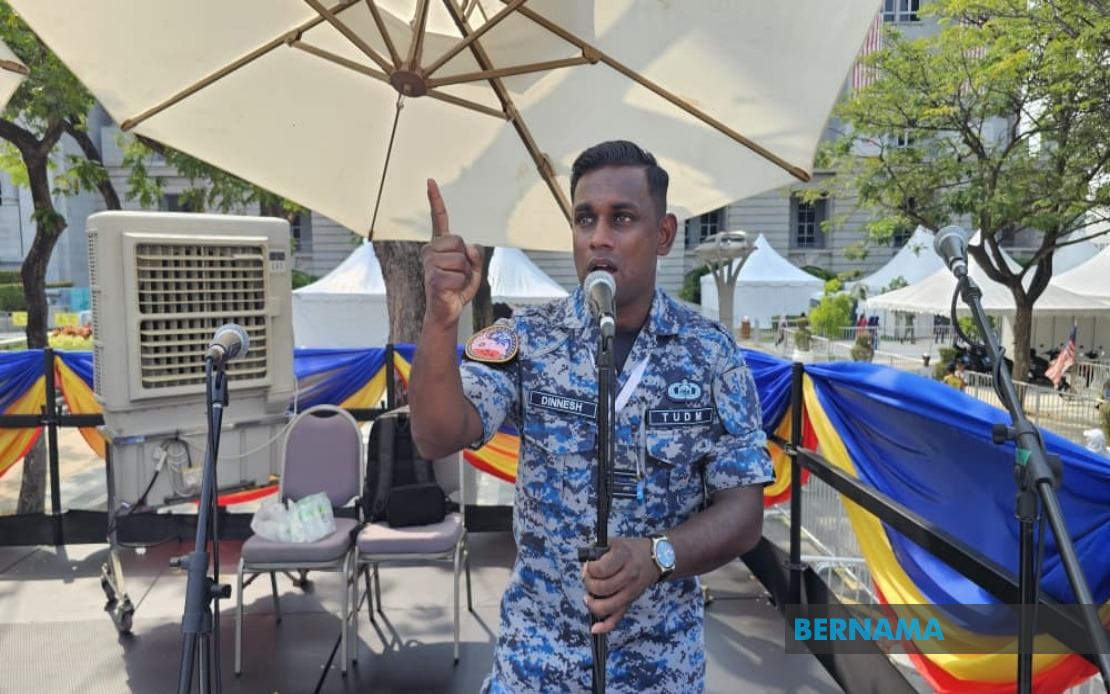
When fighter jets streaked across the Putrajaya skyline on National Day, it was not merely their thunderous presence that captivated the assembled crowd. Major Dinnesh Nicolas Rene, a 34-year-old Royal Malaysian Air Force officer, stood as the crucial intermediary between the aerial ballet unfolding overhead and the thousands of spectators craning their necks skyward. His voice, projected with precision and energy, transformed abstract flight patterns into comprehensible narratives of military prowess and national pride, ensuring that every barrel roll, formation shift, and synchronized descent resonated with meaning for those watching from below.
The role of air show commentator might appear straightforward to the uninitiated observer—merely a matter of describing what the audience sees while holding a microphone. In reality, Dinnesh explains, the position demands substantially more than polished delivery. Success requires intimate familiarity with aircraft specifications, pilot backgrounds, tactical formations, and the precise choreography of each manoeuvre scheduled for performance. This is not work that can be accomplished through improvisation or surface-level observation. Rather, it represents a specialized niche within military communications that combines technical expertise, real-time responsiveness, and theatrical flair into a singular demanding craft.
Dinnesh's journey into this uncommon specialization began a decade into his military career. Having enlisted with the RMAF in 2015, he remained focused on conventional defence responsibilities until 2019, when a selection process identified him as potential commentary talent for the Langkawi International Maritime and Aerospace Exhibition. That assignment proved transformative, establishing him as a practitioner of the form and launching what would become a recurring responsibility across subsequent RMAF commemorative events. For the 2026 National Day parade held at Dataran Putrajaya, he shared commentary duties with Major Neny Suhaida Ab Suki and Captain Muhammad Iqbal Nasrudin, collectively responsible for narrating the aerial dimension of Malaysia's most prominent national celebration.
The preparation underlying a seemingly effortless performance involves extensive coordination across multiple stakeholders. Dinnesh emphasizes that his background as an air defence officer provides valuable operational context—he understands the technical realities underpinning what spectators witness. Yet this familiarity cannot replace the systematic groundwork required before any public performance. Commentary teams must convene repeatedly with ground control personnel and pilots to establish precise understanding of what each aircraft will undertake, how many platforms participate in particular sequences, which individual aviators occupy each cockpit, and what historical significance and motto each squadron carries. Coordination extends beyond aviation circles into security bureaucracies and ceremonial protocols, as successful air shows demand seamless integration with all contributing organizations and governmental bodies.
Large-scale state occasions introduce complexity beyond routine air show commentary. The 2026 National Day celebration commanded attendance from Malaysia's constitutional monarch and political leadership, circumstances that elevate stakes considerably. Commentators must navigate elaborate protocols governing permissible content and appropriate timing, distinguishing between information suitable for broadcast alongside the King's presence versus material requiring restraint or repositioning. This diplomatic dimension of the role demands cultural awareness and political sensitivity alongside technical knowledge. Dinnesh recognizes that careless phrasing or mistimed remarks could undermine the solemnity expected at such occasions, making judgment and restraint as valuable as enthusiasm.
Among the multifaceted challenges confronting air show commentators, perhaps none proves more relentless than vocal preservation. Unlike master of ceremonies who orchestrate events from protected positions, air show commentators must project their voices powerfully enough to penetrate the ambient roar of military aircraft, an acoustic environment hostile to vocal longevity. The risk of voice deterioration looms large across rehearsal phases extending into performance day itself. Dinnesh identifies voice management as uniquely critical to his profession—the instrument carrying information and emotional resonance cannot be rested mid-event or substituted mid-performance. Protecting vocal capacity throughout intensive preparation and actual delivery represents an ongoing technical concern that extends into physical self-care and strategic pacing decisions.
Sustaining energy and momentum across an extended aerial display requires more than technical competence. Dinnesh articulates a philosophy grounded in authentic emotional engagement: the commentator must genuinely feel the excitement and pride they wish to transmit to audiences. This is not mere performance theory but a practical necessity. Audiences readily distinguish between mechanical recitation and authentic enthusiasm, particularly in contexts where the visual spectacle itself generates substantial emotional response. Dinnesh notes that despite years of professional proximity to military aircraft and aerial manoeuvres, his capacity for genuine wonder remains undiminished. The awe he experienced witnessing fighter jets as a younger officer persists, providing emotional authenticity that transcends formulaic delivery.
The preparation process involves studying not merely what aircraft will perform, but understanding the human and institutional dimensions supporting that performance. Commentators accumulate biographical details regarding pilots, historical narratives concerning squadrons, and the symbolic meanings embedded within formations and manoeuvres. This contextual knowledge transforms raw description into meaningful narrative. When Dinnesh explains that particular aircraft are executing formation patterns honoring military tradition or that specific pilots represent achievements worthy of national recognition, he anchors the spectacle within broader frameworks of national identity and institutional pride. This layering of information appeals to audiences at multiple levels—those interested in technical aviation knowledge, those seeking emotional connection to national symbolism, and casual observers simply wishing to understand what they are witnessing.
The National Day celebration represents the pinnacle of air show commentating opportunities within the Malaysian calendar. The event's prominence, official attendance, and scale of preparation distinguish it from routine air shows at exhibitions or commemorative events. Success requires commentators to balance technical accuracy with accessible communication, maintaining energy while respecting ceremonial decorum, and managing vocal demands across hours of performance. Dinnesh's participation alongside Major Neny Suhaida Ab Suki and Captain Muhammad Iqbal Nasrudin demonstrates how the RMAF has developed institutional capacity in this specialized domain, rotating trained personnel through high-profile assignments while building deeper expertise within the service.
The role of air show commentator remains underappreciated by general audiences, yet represents a distinctive contribution to Malaysia's civic observances. These officers serve as interpretive intermediaries, translating military capability into national narrative. They ensure that spectacular technical achievements achieve their intended communicative purpose—reinforcing national pride, celebrating institutional excellence, and connecting citizens to the defence establishment through shared moments of collective experience. Major Dinnesh's work exemplifies how specialized military roles extend far beyond traditional combat or operational functions, encompassing public communication and ceremonial participation that shape how Malaysians understand and relate to their armed forces. As National Day celebrations continue evolving, the voices of commentators like Dinnesh remain essential to transforming aerial displays from mere spectacle into meaningful expressions of nationhood.

