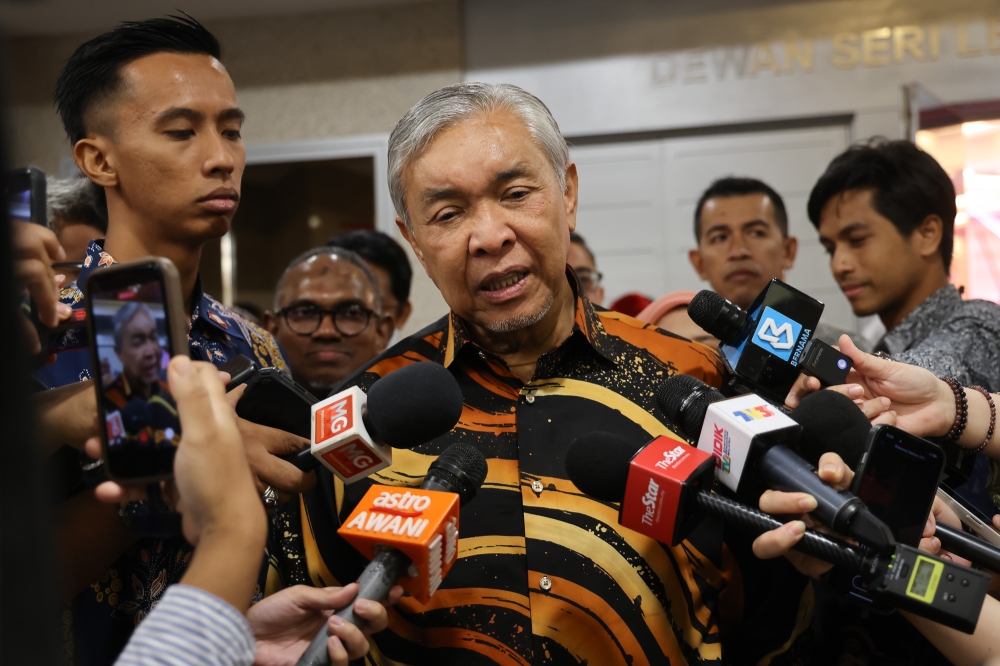
Deputy Prime Minister Datuk Seri Zahid Hamidi has declared that individuals implicated in mismanagement at Tabung Haji will not escape accountability, signalling that the ruling Barisan Nasional coalition and Umno remain steadfast in their stance against corruption within the pilgrimage fund. Speaking in Putrajaya on August 6, Zahid emphasised that neither the political coalition nor the party would overlook any violation of public trust, particularly in institutions entrusted with managing funds for Muslim Malaysians seeking to perform the Islamic pilgrimage.
Tabung Haji, formally known as the Pilgrimage Fund Board, has faced scrutiny over financial management practices and governance lapses in recent years. The institution, which holds deposits from millions of Malaysian Muslims saving for the hajj pilgrimage, encountered significant challenges that prompted investigations and calls for reform. As one of Malaysia's largest financial institutions by asset base and deeply rooted in the Muslim community's confidence, any mismanagement carries implications beyond mere financial loss—it directly affects the savings and trust of ordinary Malaysians.
Zahid's statement reflects the government's broader effort to demonstrate commitment to institutional governance and transparency, particularly regarding organisations with religious and social significance. By explicitly warning that perpetrators must face consequences, the Deputy Prime Minister is attempting to reassure stakeholders that no individual, regardless of position or influence, will be granted immunity for wrongdoing. This approach is strategically important for BN and Umno, as both organisations have faced criticism over governance issues and need to rebuild public confidence in their administration of state institutions.
The emphasis on accountability also signals the government's recognition that Tabung Haji's credibility is central to its broader policy legitimacy. The fund's struggles have become a public concern, with narratives around mismanagement and poor governance circulating widely among Muslim Malaysians who are the institution's primary stakeholders. By positioning itself as an enforcer of accountability, the ruling coalition seeks to distinguish itself from previous eras when institutional mismanagement often went unpunished or was perceived as politically motivated.
For Southeast Asian context, Malaysia's experience with large religious and financial institutions mirrors challenges seen across the region. Countries throughout Southeast Asia manage similar pilgrimage and religious funds, and governance failures in such institutions can trigger broader questions about how governments oversee religiously significant organisations. Malaysia's response to Tabung Haji issues may serve as a template—or cautionary tale—for how other nations approach similar institutional crises.
The specific mention of holding individuals responsible rather than simply reforming systems suggests that investigations into Tabung Haji have identified named persons or positions whose actions warrant consequences. Whether through disciplinary action, criminal prosecution, or removal from office, the government appears committed to pursuing individual accountability rather than settling for structural reforms alone. This distinction is significant because it demonstrates intent beyond superficial change.
Umno's particular stake in this matter warrants consideration. As the dominant Malay-Muslim party within BN, Umno's credibility with its core constituency depends significantly on demonstrating that it protects Muslim community interests and institutions. Any perception that Tabung Haji's problems were ignored or handled leniently would damage Umno's political standing. Zahid's firm statement therefore serves multiple purposes—party positioning, institutional reform signalling, and reassurance to the Muslim community that their financial interests remain protected.
The government's stance also reflects lessons learned from prior institutional crises where perceived inaction or insufficient consequences fuelled public cynicism. By making explicit commitments to accountability early, the administration may be attempting to prevent similar erosion of trust that plagued other governance failures. This proactive messaging suggests awareness that Tabung Haji's situation, if mishandled, could snowball into broader questions about institutional integrity across Malaysian government bodies.
However, the translation of such statements into concrete action remains crucial. Malaysian observers will be watching closely to see whether individuals identified as responsible for Tabung Haji mismanagement actually face meaningful consequences or whether the situation becomes another instance of announced accountability without tangible follow-through. The credibility of Zahid's warning depends entirely on whether the government demonstrates the political will to pursue accountability even if it proves inconvenient or implicates powerful figures within the coalition.
Moving forward, Tabung Haji's recovery will require not just enforcement action against those responsible for past failures, but also comprehensive governance reforms to prevent future mismanagement. The government's commitment to consequences must be paired with structural changes, stronger oversight mechanisms, and restored institutional culture. For Malaysian Muslims saving for hajj and for the broader Southeast Asian region observing how Malaysia handles this test of institutional governance, the path forward demands both accountability and reconstruction.

