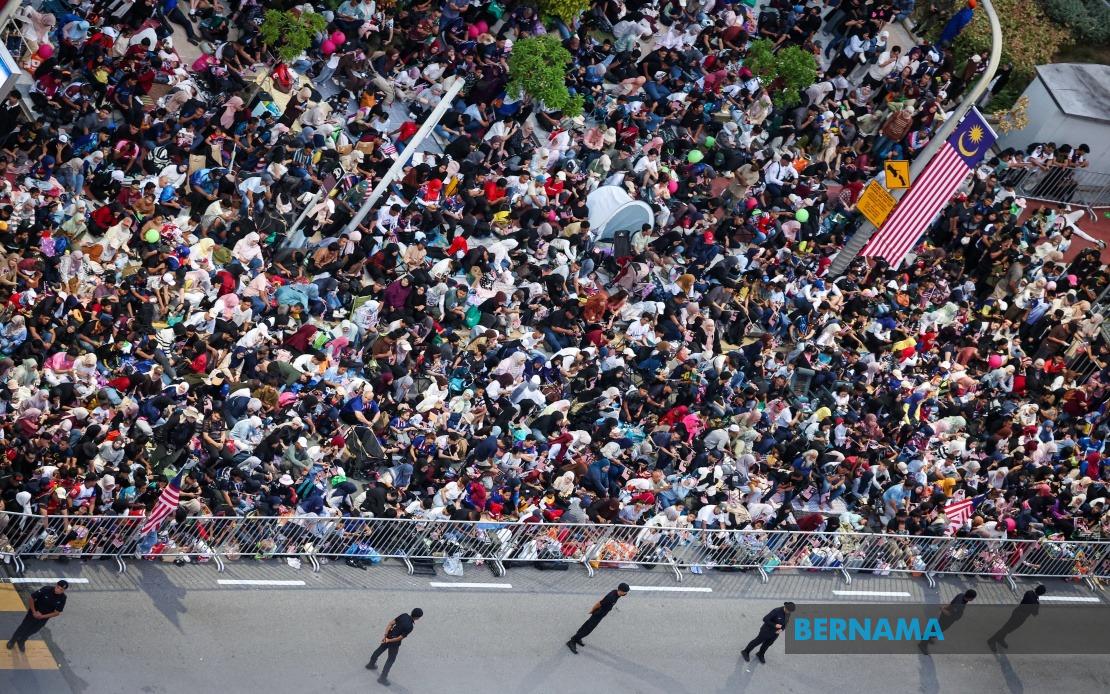
Enthusiasm for Malaysia's 69th National Day reached fever pitch on August 31 as throngs of citizens and residents converged on Dataran Putrajaya from the previous evening, determined to claim the choicest vantage points along the celebration route. The gathering demonstrated the enduring appeal of the marquee national occasion, with families, young professionals, and photography enthusiasts willing to sacrifice comfort and sleep to experience the spectacle firsthand.
Among the early arrivals were content creators eager to document the festivities through a contemporary lens. Mock Wei Qi, a 23-year-old freelance photographer, arrived at 11 pm on August 30 alongside friends, motivated by a shared commitment to cinematography and visual storytelling. His stated ambition transcended mere documentation—he sought to produce creative, cinematic material that would communicate Malaysia's distinctive character and appeal to global audiences. For young media professionals like Mock, the National Day celebration represented an invaluable opportunity to exercise technical skills whilst generating authentic footage that captured the nation's cultural and social identity.
The parade theme this year, "Malaysia MADANI: Kesejahteraan Dinikmati," encapsulated governmental messaging around prosperity and inclusive wellbeing, setting the conceptual framework for the morning's proceedings scheduled to commence at 8 am. This thematic focus reflected contemporary policy priorities, with the MADANI framework representing a broader developmental philosophy emphasizing equitable distribution of national benefits across society.
Family units also dominated the early-morning landscape, seeking to transform the wait into a shared experience and memory-building opportunity. A couple identified only as As and Adib brought their children to Dataran Putrajaya by 5 pm on August 30, motivated by the previous year's disappointment when late arrival forced them to observe proceedings from considerable distance. Their deliberate early mobilization this year indicated how attendance patterns at national celebrations often reflect lessons learnt and adjustments made based on prior experiences.
Ahmad Azri Onn, a 55-year-old attending with his spouse and three children aged between 10 and 15, deliberately reframed the overnight encampment as a recreational "camping experience" rather than an endurance test. His comments revealed how families strategically managed expectations and reoriented hardships into bonding opportunities, particularly during school holiday periods when children enjoyed freedom from academic commitments. The overnight stay granted his offspring direct, immersive exposure to national celebrations during formative years, embedding civic consciousness and national identity through experiential participation rather than passive observation.
Weather conditions presented a potential obstacle to comfort during the overnight vigil. However, participants generally adapted well to environmental challenges. Light rainfall on August 30 actually provided relief from oppressive heat rather than deterring attendance. Ahmad Azri specifically noted that precipitation benefited rather than hindered his family's experience, with children remaining comfortable throughout the evening and overnight hours. Such resilience among attendees underscored genuine commitment to participation in national observance.
The phenomenon of overnight camping for premium viewing positions reflected deeper patterns about how Malaysians engage with national ceremonies and symbolic occasions. Unlike some democracies where such gatherings occur exclusively for political rallies or sporting events, Dataran Putrajaya's evening-to-morning occupation demonstrated how National Day commanded cultural investment transcending mere civic obligation. The willingness of diverse demographic cohorts—from young creative professionals to multi-generational families—to sacrifice sleep and comfort illustrated the celebration's enduring resonance within the national consciousness.
Dataran Putrajaya itself functioned as the ceremonial epicenter, with its geographical and symbolic positioning at the heart of Malaysia's federal administrative capital amplifying the occasion's national significance. The venue's capacity and layout necessitated early arrival for optimal positioning, creating the competitive dynamics that drove overnight encampment. As morning hours approached on August 31, the gathering intensified, with Dataran Putrajaya progressively filling as the 8 am commencement time drew nearer.
The composition of the assembled crowd reflected Malaysia's demographic plurality. Young professionals wielding cameras and recording equipment mingled with families spanning three generations, suggesting that National Day celebrations maintained cross-generational appeal and relevance. This intergenerational participation carried implications for national cohesion and continuity of patriotic sentiment, with younger citizens internalizing celebration practices and values through parental modeling and family participation.
For participants, the overnight experience transformed what could have remained a routine official proceeding into a shared social occasion infused with anticipation and communal purpose. The informal encampments, spontaneous conversations between strangers united by common intent, and collective weathering of environmental conditions fostered ephemeral but genuine communities bound by national citizenship and commemorative participation. Such social dynamics, often overlooked in formal analyses of national celebrations, constituted significant dimensions of civic engagement and national identity formation.
The eagerness displayed across all demographic categories also signaled continued public investment in state-organized national occasions despite competing entertainment options and alternative modes of accessing ceremonial content through digital platforms. Live, embodied participation at Dataran Putrajaya retained distinctive value that streaming or delayed broadcast viewing could not replicate, suggesting that physical presence at national celebrations answered psychological and social needs extending beyond mere information consumption.

