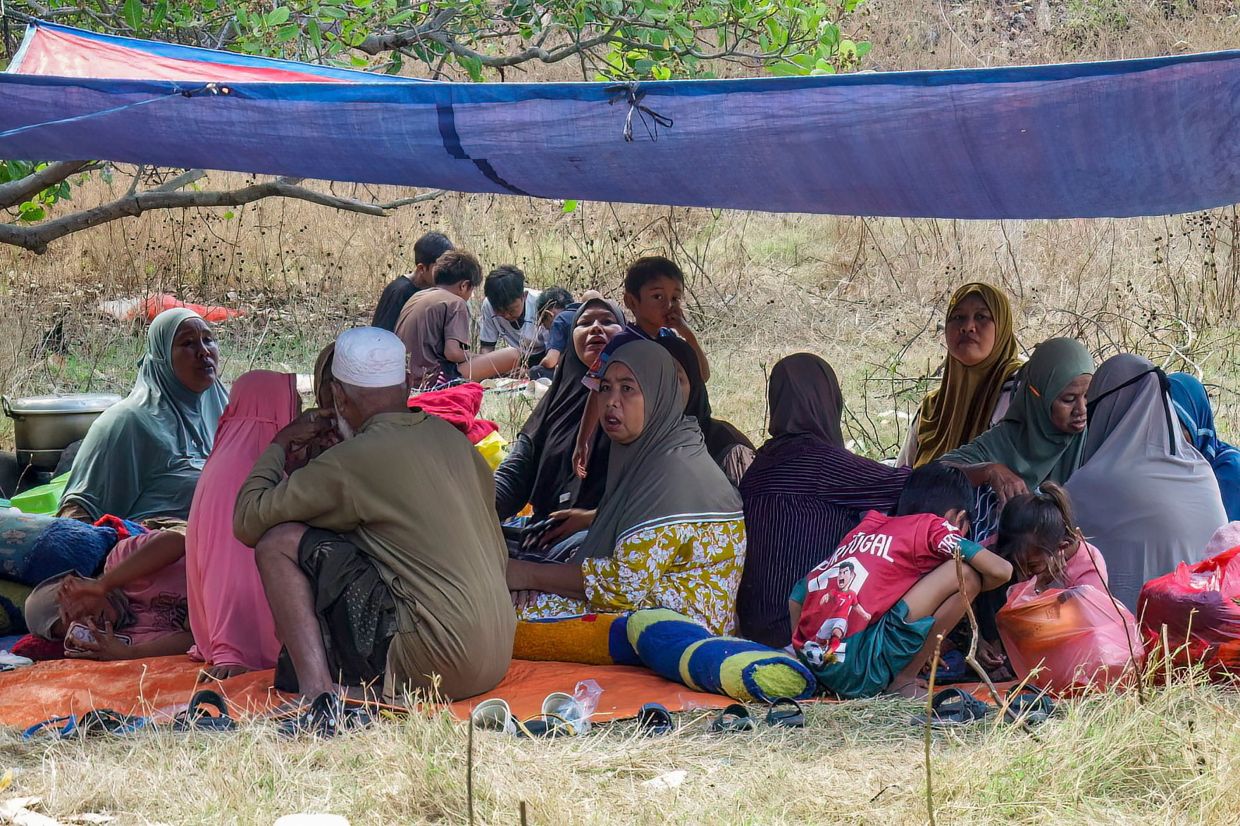
Indonesia's Flores island faces a humanitarian crisis following a catastrophic 7.7-magnitude earthquake that struck early Saturday morning, claiming at least 48 lives and forcing approximately 5,000 residents to abandon their homes. By Sunday, thousands remained in makeshift shelters awaiting essential supplies, with the disaster agency BNPB confirming that 101 people had sustained injuries. The shallow offshore epicentre, positioned just off the island's north coast, unleashed enormous destructive force across the densely populated region, leaving communities in disarray and sparking widespread fears of further devastation from the relentless aftershock sequence.
The seismic event generated an alarming 341 aftershocks within hours of the initial tremor, according to BNPB spokesman Berton Suar Pelita Panjaitan, maintaining a climate of fear among residents and hampering recovery efforts. The intensity of this aftershock swarm underscores the volatile geological conditions affecting the region and raises legitimate concerns about structural integrity of partially damaged buildings. Many survivors remain too frightened to return home, clustering instead on hilltops and other elevated ground, uncertain whether their shelters will withstand future ground movement. This psychological toll, compounded by the physical destruction, has created a complex emergency requiring both immediate material aid and careful consideration of residents' emotional trauma.
The infrastructure damage across Flores is staggering in scope. At least 914 houses suffered severe damage, with hundreds more experiencing varying degrees of structural compromise. The disaster extended beyond residential areas, affecting critical institutional infrastructure essential for community recovery: 93 educational facilities, 36 health installations, and 38 government offices have been damaged or destroyed. The loss of these facilities threatens to undermine the island's ability to respond effectively to the crisis, as schools cannot shelter evacuees, clinics struggle to treat the injured, and administrative centres face operational paralysis. Telecommunications and electrical systems in several areas have been severed, isolating vulnerable populations from critical information and emergency services.
Residents enduring the aftermath face acute shortages of fundamental supplies. Umri, a Nangahale village inhabitant on the north coast, articulated the desperation confronting survivors: basic necessities including food, clean water, medicines, and infant care materials remain scarce. Nurhidayati, another evacuee who spent Sunday night sheltering on a hillside, expressed visceral anxiety rooted in historical memory. The 1992 earthquake that devastated Flores killed approximately 2,500 people and triggered a destructive tsunami, creating deep psychological scars that resurface with each tremor. For those who survived that catastrophe, Saturday's quake evoked paralyzing recollection of loss, compelling many to reject the perceived safety of their homes in favour of exposed hilltops deemed geologically more stable.
Initial tsunami concerns added another dimension to the chaos. Coastal residents observed the sea's dramatic retreat, a classical warning sign of approaching waves, prompting urgent evacuation toward higher terrain. The BMKG geological agency subsequently recorded wave heights reaching 1.6 metres in some coastal areas. Although authorities eventually downgraded the tsunami threat and issued an all-clear, their cautionary advice against re-entering damaged structures due to aftershock risk has prolonged the displacement crisis. This protective guidance, while prudent from a safety perspective, has left thousands without shelter during a critical stabilization period when psychological reassurance and basic comfort would facilitate recovery.
Response mechanisms have mobilized rapidly despite the logistical challenges. The government deployed 50,000 aid packages weighing 275 tonnes to affected areas, representing a substantial initial relief commitment. The International Federation of Red Cross and Red Crescent Societies began coordinating emergency assistance for displaced populations. International support has also materialized: European Union President Ursula von der Leyen announced that the bloc would deploy its Copernicus Earth observation satellite constellation to support search and rescue operations, offering technological assistance that could enhance situational awareness for Indonesian rescue teams navigating the damaged terrain.
The East Nusa Tenggara provincial government, which encompasses Flores, initiated proceedings to formally declare a 14-day emergency response status. This administrative designation activates enhanced resource allocation protocols and streamlines decision-making procedures critical for large-scale disaster management. Such formal declarations unlock additional funding mechanisms and expedite the deployment of military and civilian resources, though bureaucratic processes require time even in emergencies. Search and rescue official Fathur Rahman reported no confirmed cases of people buried or missing, allowing authorities to redirect focus from intensive rescue operations toward systematic humanitarian assistance and damage assessment.
Flores' geological vulnerability reflects Indonesia's precarious position within the Pacific Ring of Fire, a seismic arc spanning from Japan through Southeast Asia and across the Pacific basin. This tectonic reality condemns the archipelago to recurring earthquake hazards, each capable of generating catastrophic consequences for densely populated areas. The 2004 Indian Ocean earthquake and tsunami, which registered 9.1 magnitude and claimed approximately 220,000 lives regionally with 170,000 Indonesian fatalities, exemplifies the devastating potential of major seismic events in this zone. That calamity remains one of recorded history's deadliest natural disasters, establishing a sobering benchmark against which current losses are measured.
The psychological and social dimensions of this crisis extend beyond immediate survival concerns. Communities traumatized by both the current earthquake and the harrowing memory of 1992's devastation face profound uncertainty about their future security. The damage to educational and health facilities threatens to disrupt children's schooling and medical access during a critical post-disaster window when both become increasingly necessary. Economic disruption will ripple outward as agricultural lands remain unattended, commercial activity halts, and reconstruction demands consume years of productivity. For Malaysian observers and regional policymakers, Flores' experience underscores the urgent imperative for enhanced earthquake preparedness, resilient building standards, and coordinated regional disaster response frameworks that can mobilize assistance rapidly across national boundaries when catastrophe overwhelms local capacity.

