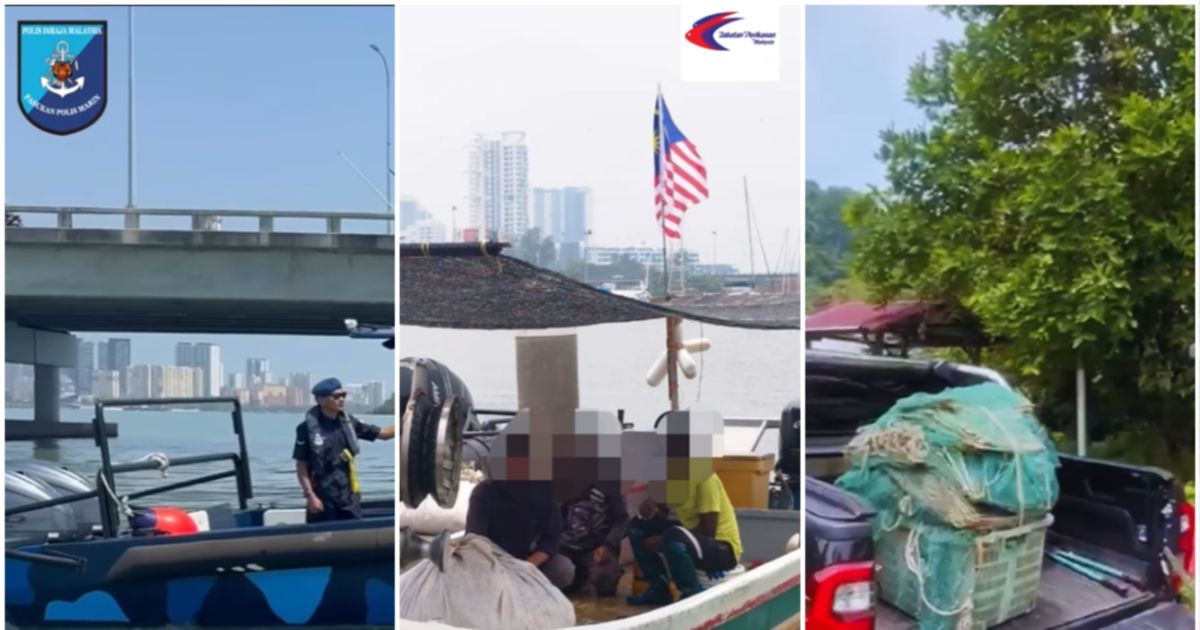
A coordinated enforcement operation in Penang waters has netted three arrests and resulted in the confiscation of an extensive haul of fishing equipment and a fishing vessel, with the seized assets valued at RM75,360. The operation, which took place in waters under Penang's jurisdiction, underscores the authorities' intensified focus on regulating maritime fishing activities and preventing unauthorised operations that could threaten the sustainability of local fish stocks and fair competition among legitimate operators.
The three individuals detained during the operation face potential charges related to fisheries violations, though specific details regarding the nature of their alleged infractions remain under investigation. Authorities have not yet disclosed whether they were engaged in illegal fishing, operating without proper licensing, or violating closed fishing seasons and marine protected area regulations. Such enforcement sweeps are typically conducted in response to intelligence about violations or as part of routine compliance checks in high-activity fishing zones.
Beyond the immediate arrests, the seizure of equipment and the vessel itself represents a significant disruption to the operation in question. Fishing vessels and gear can represent substantial capital investment, and the confiscation carries considerable financial consequence for those involved. The valuation of RM75,360 suggests a reasonably well-equipped operation, hinting at either commercial-scale fishing or sophisticated gear intended for harvesting valuable species.
Penang's maritime zones have long been focal points for fisheries enforcement, given the state's busy shipping lanes, established fishing communities, and the delicate ecosystem balance in the Strait of Malacca. Illegal or unregulated fishing in these waters not only threatens marine biodiversity but also undermines the livelihoods of licensed fishermen operating within regulatory frameworks. The cumulative impact of unauthorised fishing on stock sustainability has prompted agencies to maintain vigilant patrols and conduct periodic enforcement operations.
From a broader Southeast Asian perspective, Penang's enforcement efforts align with regional commitments to combating illegal, unreported, and unregulated (IUU) fishing. The practice remains a significant challenge across Southeast Asia, draining fish stocks, destabilising local economies, and generating income through criminal channels. Countries including Malaysia have pledged to strengthen port state controls and at-sea enforcement to align with international fisheries management standards.
The joint nature of this operation indicates coordination between multiple agencies—likely involving the Department of Fisheries Malaysia, Penang state authorities, and possibly maritime police or customs. Such integrated approaches have become standard practice, pooling resources and expertise to enhance detection and enforcement capacity. Coordination across agencies also streamlines the investigation process and ensures proper handling of evidence for potential prosecution.
For Malaysian fishing communities, particularly in Penang, such enforcement activity carries mixed implications. Licensed fishermen operating legitimately may welcome action against competitors who circumvent regulations, which can suppress market prices and deplete shared resources. Conversely, enforcement operations that target subsistence or artisanal fishers—whether through overzealous application or technical violations—can spark concerns about livelihoods. The authorities' targeting criteria and proportionality of enforcement therefore remain important considerations for social stability.
The investigation phase will prove critical in determining how cases against the three detainees proceed. Authorities will examine vessel registration documents, licensing records, catch documentation, and the specific equipment seized to establish the nature and extent of alleged violations. The strength of evidence gathered during the operation will determine whether charges proceed and the likely penalties if convictions result.
Regulatory frameworks governing Malaysian fisheries have tightened considerably over recent years, with stricter licensing requirements, catch limits, and designated fishing zones now standard. The Fisheries Act and state-level regulations provide authorities with powers to conduct inspections, seize vessels, and impose penalties ranging from fines to vessel forfeiture. Operators found in violation face potential imprisonment alongside financial penalties, creating substantial deterrents for deliberate breaches.
Recent years have witnessed escalating maritime enforcement across Malaysia's coastal states, reflecting government prioritisation of resource management and illegal activities detection. Penang, positioned along critical shipping and fishing routes, naturally attracts enforcement attention. The frequency and intensity of operations signal commitment to the agenda, though questions persist about enforcement consistency and whether resources adequately address the scale of illegal activity suspected to persist.
International dimensions also merit consideration. Fishing vessel crews sometimes include foreign nationals, and some vessels operate across jurisdictional boundaries, complicating enforcement and investigation. Transnational cooperation mechanisms remain underdeveloped in some areas, potentially allowing operators to exploit regulatory gaps between national waters and international zones. The three detained individuals may face additional complications if any are foreign nationals, requiring coordination with diplomatic or consular authorities.
Looking ahead, the outcome of prosecutions will influence broader enforcement strategy and sector compliance. High-profile successful prosecutions with proportionate penalties reinforce deterrence, while weak convictions or lenient sentences may encourage continued violations. Industry observers will monitor how authorities handle this case as an indicator of regulatory commitment and capacity.

