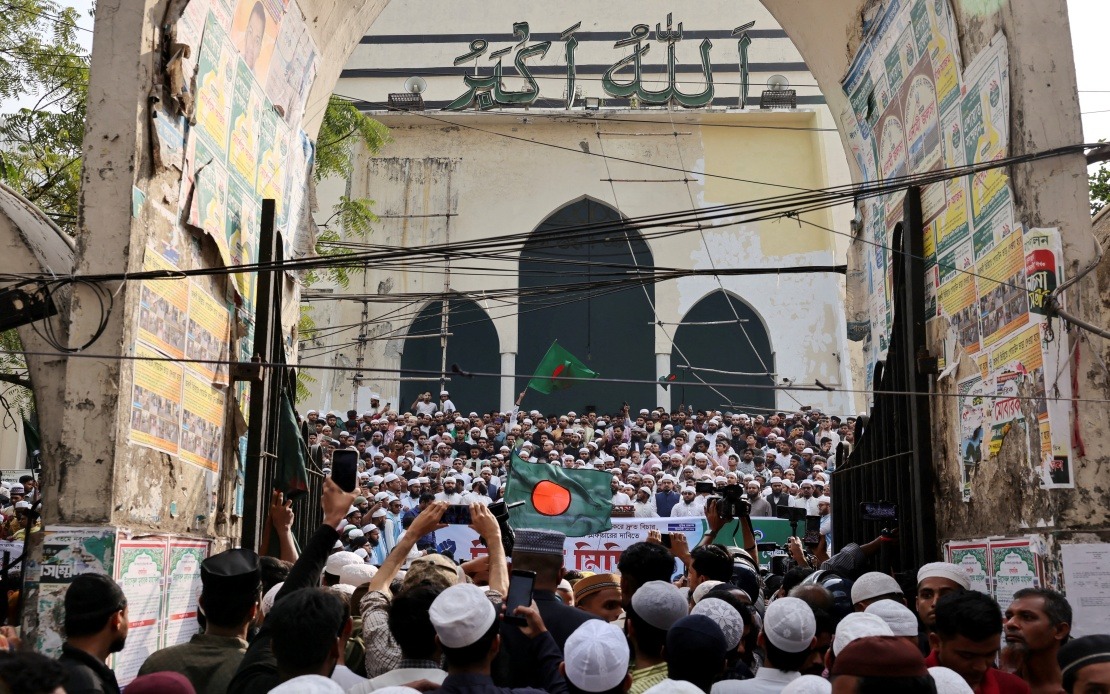
A Bangladeshi tribunal delivered death sentences on Sunday to three senior police officers for their involvement in fatal police crackdowns against demonstrators during last year's uprising, marking a significant moment in the country's ongoing reckoning with the violence that swept through the nation and ultimately forced the government from power.
The International Crimes Tribunal, chaired by Justice Md Golam Mortuza Mozumder, found the three men guilty of crimes against humanity stemming from incidents during July 2024 when security forces opened fire on massive crowds protesting government policies. The convictions relate to specific killings that gained wide circulation on social media, intensifying public outrage and accelerating calls for governmental change across the nation.
Former Dhaka Metropolitan Police Commissioner Habibur Rahman, former Additional Deputy Commissioner Md Rashedul Islam, and former Rampura Police Station Chief Md Mashiur Rahman received capital punishment, though all three remain at large. Rahman, the police commissioner, faces execution in a separate case as well, highlighting the extent of allegations against senior security force officials. Two additional officers, including former sub-inspector Tariqul Islam Bhuiyan, received sentences of life imprisonment plus 20 years for their respective roles in the violence.
The tribunal's action represents an attempt by Bangladesh's current authorities to address accountability for the security response to the 2024 demonstrations. According to United Nations assessments, approximately 1,400 people lost their lives during the month-long uprising, with thousands more sustaining injuries. The vast majority of casualties resulted from police firearms directed at civilian protesters, actions carried out under the direction of the Awami League party leadership at that time.
The July 2024 uprising emerged from mounting dissatisfaction with economic conditions and governance, escalating from initial student-led protests into a broader movement encompassing various segments of society. The scale of participation caught authorities unprepared, leading to increasingly heavy-handed security responses that ultimately backfired. One particularly haunting incident involved the shooting of a young man attempting to climb out of a building in Dhaka, an image that circulated widely online and crystallised public anger toward the administration.
These convictions carry substantial implications for Bangladesh's justice system and regional politics. The tribunal's willingness to move forward with prosecutions demonstrates that the transitional government, which assumed control following the August 2024 departure of former Prime Minister Sheikh Hasina, intends to pursue accountability measures. However, the fact that all convicted officers remain fugitives underscores the practical challenges in enforcing such sentences and suggests possible protection networks or unresolved institutional resistance to full accountability.
Former Prime Minister Hasina herself received a death sentence in November from the same tribunal in a separate crimes against humanity case. She has remained in exile in India since fleeing Bangladesh, complicating efforts to bring her into custody. Her case and that of the police officers together illustrate a broader pattern of alleged human rights abuses attributed to her administration, which held power for roughly 15 years before collapsing under the pressure of public mobilisation.
For Malaysian and Southeast Asian observers, these proceedings offer important lessons regarding the vulnerability of long-serving administrations to popular upheaval and the role of security force escalation in determining political outcomes. Bangladesh's experience demonstrates how use of lethal force against protesters, particularly when captured and distributed via social media, can rapidly erode governmental legitimacy beyond recovery. The relatively swift establishment of tribunals to address alleged crimes also illustrates how transitional governments can move to consolidate power by pursuing accountability against predecessors and associated officials.
The tribunal process itself reflects Bangladesh's attempt to balance reconciliation with accountability following the upheaval. International legal frameworks addressing crimes against humanity provide mechanisms for pursuing justice even in absence of perpetrators, establishing precedent and maintaining factual records of what occurred during the uprising. However, questions remain about whether conviction in absentia carries sufficient weight in deterring future abuses or satisfying victims' families demanding tangible consequences.
Regional stability considerations feature prominently in Bangladesh's transitional moment. The uprising's success in dislodging an established government raised questions throughout South Asia about the durability of incumbent administrations facing coordinated popular pressure. For countries managing complex relationships with powerful constituencies and security services, Bangladesh's experience serves as a cautionary example of institutional brittleness when public confidence erodes completely.
The enforcement challenge presented by fugitive officers also highlights institutional weaknesses in Bangladesh's security apparatus. Locating and apprehending individuals within a police force where they may retain sympathisers represents a complex undertaking requiring institutional commitment and international cooperation that remains uncertain. The presence of such figures outside the country's reach limits the tribunal's practical impact, though establishing guilt in absentia maintains legal and historical record.
Looking forward, Bangladesh faces the dual challenge of rebuilding public confidence in law enforcement while pursuing accountability mechanisms. The tribunal's actions represent a necessary first step, but sustained commitment to prosecution and eventual apprehension of fugitives will determine whether such proceedings translate into meaningful deterrence or remain primarily symbolic gestures. For the broader region, Bangladesh's transitional justice approach offers both cautionary and instructive examples as other nations contemplate governance transitions and institutional reform.

