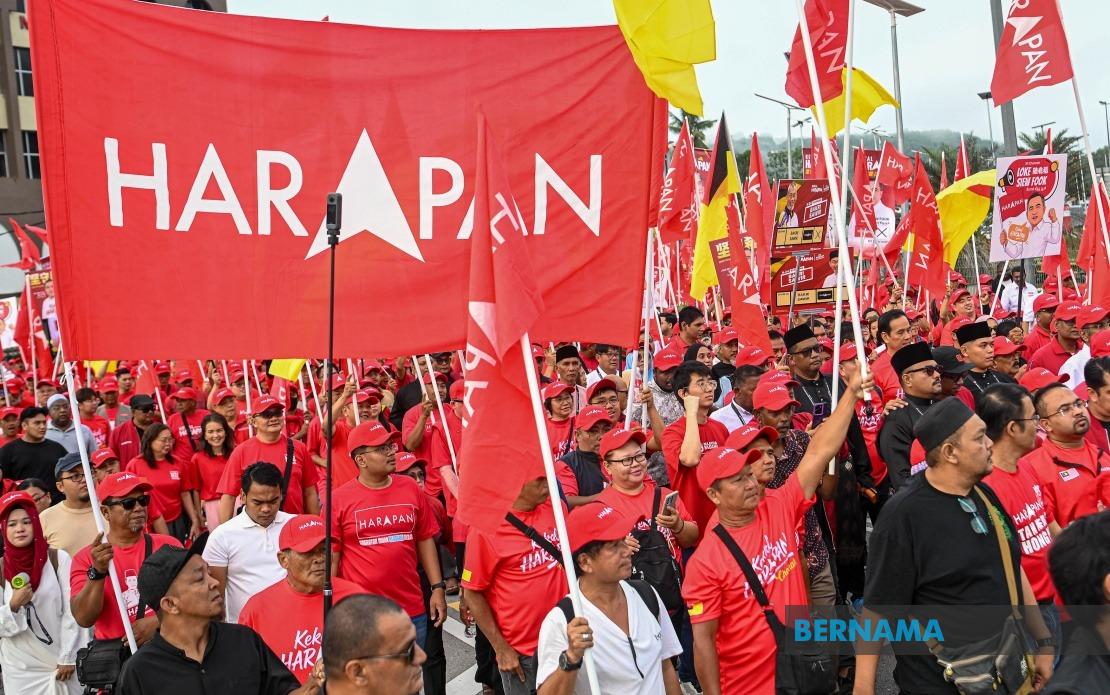
The 16th Negeri Sembilan State Election is shaping up to be a closely contested affair, with three state constituencies confirmed to host multi-cornered fights rather than the traditional two-way contests that have historically dominated Malaysian state politics. The Jelebu Parliamentary returning officer, Abdul Rahim A Aziz, made this announcement after the nomination process closed on July 18, setting the stage for what analysts expect to be a fragmented electoral outcome across the state.
In the Pertang constituency, the political competition centres on incumbent Datuk Seri Jalaluddin Alias of Barisan Nasional, who will face challengers from both Pakatan Harapan and Bersatu. Jalaluddin's previous performance demonstrated considerable electoral strength—he secured 5,634 votes in the last election, defeating his nearest opponent by a margin of 2,844 votes, which represents a comfortable cushion in a state-level contest. However, the entry of a third major contender in the form of Mohd Faizal Fadli Mohd Idrus representing Bersatu introduces a complication for incumbent-dominated races. Mohd Umry Abdul Khois, fielded by the Pakatan Harapan alliance, adds further pressure on an already divided opposition vote.
The Sungai Lui seat has drawn particular attention from political observers due to an intriguing personal element—the three candidates contesting the seat are reported to be former schoolmates, lending an unusual dimension to what would otherwise be a straightforward political contest. Datuk Mohd Razi Mohd Ali of Barisan Nasional, Zainal Fikri Abd Kadir representing Pakatan Harapan, and Mazrulhisham Abd Mansor of Bersatu will compete for the constituency's mandate. This proximity between candidates may influence campaign dynamics, as personal relationships often shape how political messages are crafted and received in Malaysian electoral contests.
The Klawang seat presents a different competitive terrain, with the incumbent Datuk Bakri Sawir of Pakatan Harapan seeking to retain his position against Muhammad Adib Musa from Bersatu and Danni Rais representing Perikatan Nasional. For Malaysian observers, Klawang represents a microcosm of the broader political fragmentation affecting state-level politics, where the emergence of Bersatu as a distinct electoral force has complicated traditional two-coalition battles. The presence of a Perikatan Nasional candidate in Klawang, rather than in the other two constituencies, suggests strategic candidate deployment by different coalitions.
The proliferation of three-cornered contests across these three constituencies signals a significant shift in Negeri Sembilan's political landscape. Historically, Malaysian state elections have featured predominantly two-way contests, with votes splitting cleanly between government and opposition coalitions. The presence of Bersatu candidates in all three seats, coupled with Perikatan Nasional's participation in Klawang, reflects the fragmentation of the political centre-right that has characterised Malaysian politics since 2020. This splintering means that winning candidates may require substantially lower vote shares than in previous electoral cycles, potentially leading to representation that does not align neatly with overall state sentiment.
From a Malaysian political economy perspective, these developments carry implications for federal policy implementation. Negeri Sembilan, despite its relatively small population and state assembly size, punches above its weight in national political calculus due to its strategic position and swing-state characteristics. Multi-cornered contests in key constituencies could determine overall state control, and the outcome may either reinforce or disrupt current federal political alignments depending on which coalitions emerge victorious.
The Election Commission has scheduled early voting for July 28, providing a two-day window for voters unable to cast ballots on the main polling day. The principal election day is set for August 1, giving candidates and parties approximately two weeks from nomination closure to conduct campaigns. This compressed timeline means campaign resources must be deployed efficiently, potentially benefiting better-funded organisations while disadvantaging newer political entrants.
For regional observers monitoring Southeast Asian political trends, the Negeri Sembilan contest offers insight into how Malaysian voters respond to coalition fragmentation and multi-party competition. Several Southeast Asian nations face similar pressures from emerging political movements challenging established two-coalition systems, making the Malaysian case particularly instructive. The results in Pertang, Klawang, and Sungai Lui will provide crucial data on whether voters in mature democracies gravitate toward consolidation around established coalitions or embrace fragmentation and new political options.
The three-cornered configuration also raises strategic questions about coalition mathematics at the state assembly level. Previous Malaysian state elections have occasionally produced hung assemblies or slim majorities when vote splitting occurs across multiple constituencies simultaneously. Political analysts will be monitoring whether the Negeri Sembilan outcome follows this pattern, potentially requiring post-election coalition negotiations that could reshape state governance regardless of which coalition technically wins the most seats.
Candidates and party machinery across Barisan Nasional, Pakatan Harapan, Bersatu, and Perikatan Nasional now face the complex task of distinguishing their offerings to voters in an increasingly crowded electoral marketplace. Traditional party loyalty, which once delivered relatively predictable vote shares, faces pressure from cross-cutting cleavages and policy differentiation among coalitions that share significant ideological overlap. This complexity may explain why nominations included multiple challengers to sitting representatives, suggesting parties have calculated that seat-by-seat contests warrant their full competitive efforts rather than strategic seat-sharing arrangements.
The nomination of candidates across these three constituencies also reflects broader patterns in Malaysian state-level politics, where federal government composition influences state-level dynamics but does not completely determine them. Voters in Negeri Sembilan have demonstrated willingness to split their preferences between different coalitions across different electoral levels, and the August 1 election will test whether this pattern continues or consolidates further.

