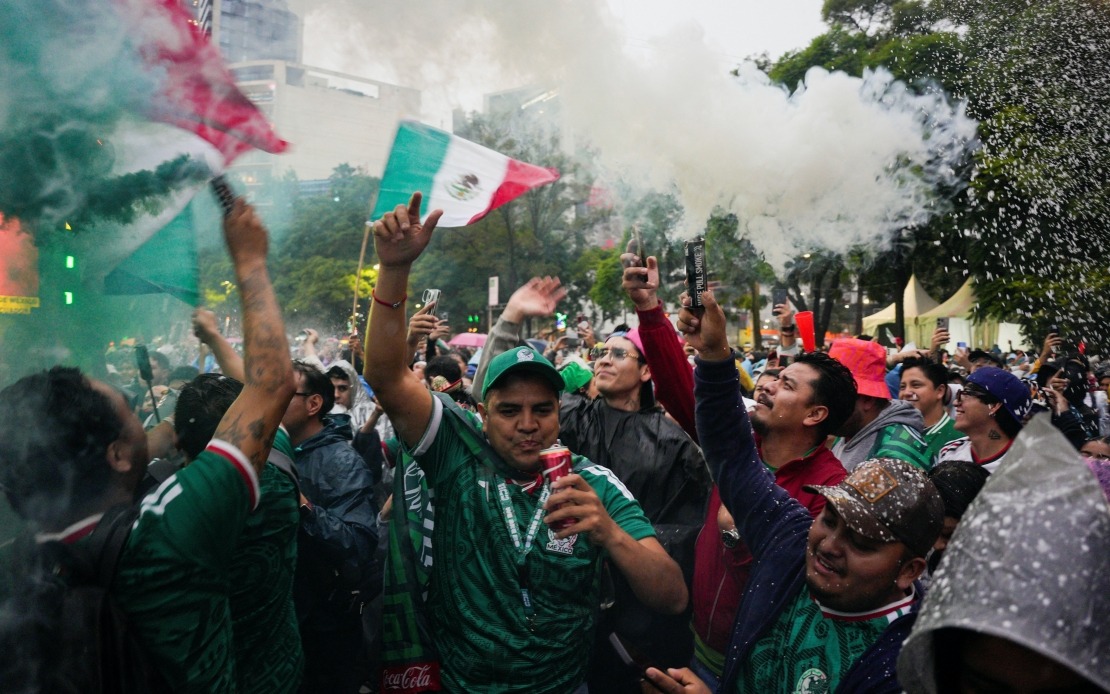
A somber outcome marred Mexico City's jubilation on Tuesday evening when three individuals lost their lives amid crowds celebrating the national team's advancement to the World Cup knockout stages. The deaths occurred in separate locations near Paseo de la Reforma, the capital's prominent thoroughfare cutting through the city centre, as thousands of supporters flooded the streets following their country's decisive 2-0 triumph over Ecuador at the Estadio Azteca.
The Mexico City secretary of public health's office confirmed the identities and circumstances surrounding the fatalities. Among those who died were a 44-year-old man and two women aged 19 and 48 years old, all succumbing to asphyxiation in the congested downtown areas. The cluster of deaths in proximity to one another raised immediate concerns about crowd control and safety protocols during mass celebrations in the densely populated metropolitan zone.
Clara Brugada, serving as the elected head of government for Mexico City, acknowledged the tragedy through a statement posted on social media platform X. She detailed how emergency response teams deployed across the city located and attended to three unconscious individuals at multiple points concentrated around Paseo de la Reforma. Despite the activation of comprehensive medical intervention protocols and immediate resuscitation efforts by trained personnel, all three victims could not be revived.
Brugada's official response extended condolences to the bereaved families and indicated that municipal authorities had established direct contact with relatives to coordinate support services. Her message carried an implicit acknowledgment of responsibility, recognising the city government's obligation to provide assistance during such emergencies. The statement also reflected growing awareness within Mexican governance about the need for managed crowd safety whenever major sporting events trigger mass public gatherings.
The tragedy unfolded against the backdrop of Mexico's genuine prospects for deeper tournament progression. By defeating Ecuador convincingly, Mexico advanced to face one of the world's traditional powers in the round of 16. Should England overcome DR Congo in their concurrent match on Wednesday, the two nations would meet at the same Estadio Azteca venue on Sunday—a tantalising scenario that would place Mexico at home with a genuine opportunity to challenge one of football's established heavyweights. This possibility underscores why the immediate celebrations carried such emotional intensity for supporters across the sprawling metropolitan area.
For Southeast Asian observers, the incident carries particular resonance given the region's own experience with large-scale sporting celebrations and the occasional safety incidents accompanying them. Major tournaments involving regional nations frequently generate similar patterns of spontaneous public gatherings, street celebrations, and concentrated crowds in urban centres. The Mexico City deaths serve as a cautionary reminder about infrastructure limitations and crowd management challenges that cities face when controlling massive volumes of emotionally-charged supporters.
Asphyxiation deaths during crowd celebrations typically occur through compression injuries or oxygen deprivation in extremely congested areas where escape routes become blocked or impassable. Such incidents have historically plagued major sporting events and public celebrations worldwide, highlighting the tension between allowing citizens to celebrate national achievements and implementing necessary safety barriers. Mexico City, with its population density and infrastructure constraints, faces particular challenges managing sudden influxes of people into central commercial districts during unplanned festivities.
Brugada's explicit appeal for responsible celebration reflected a coordinated government messaging strategy aimed at discouraging reckless crowd behaviour ahead of potential future matches. The statement emphasised care, empathy, and responsibility—language designed to encourage joy whilst simultaneously warning of genuine physical risks accompanying densely-packed public gatherings. Such messaging becomes increasingly important as Mexico potentially progresses further in the tournament, with each successive match victory likely triggering even larger celebratory gatherings across the city.
The incident also raises questions about pre-event planning and coordination between municipal authorities, police forces, and health services. Effective crowd management requires advance preparation, including designated celebration zones, barrier placement, clear exit pathways, and sufficient emergency medical personnel stationed throughout likely gathering points. Cities hosting major sporting events increasingly rely on sophisticated crowd flow analytics and real-time monitoring systems to identify dangerous density concentrations before tragedy strikes.
For Mexico's football federation and tournament organisers, the tragedy introduced an uncomfortable complication to an otherwise triumphant national achievement. The narrative surrounding Mexico's World Cup progression became intertwined with questions about public safety and celebration management—a shift that governing bodies typically wish to avoid. However, such incidents often catalyse positive change, prompting investment in better crowd management infrastructure and safety protocols for future major events.
The deaths also underscored broader issues around mental health and safety in developing urban environments, where rapid population growth and aging infrastructure sometimes struggle accommodating sudden demands. Mexico City's metropolitan area exceeds 20 million residents, making it one of the world's largest urban concentrations. Managing spontaneous mass gatherings in such environments requires considerable coordination and resources that even well-organised municipal governments find challenging.
Looking forward, should Mexico progress to face England or other formidable opponents, authorities will likely implement enhanced crowd management measures based on lessons learned from this tragedy. Such approaches might include designated celebration zones in areas with better structural capacity, increased police and medical personnel deployment, public safety campaigns emphasising responsible behaviour, and improved communications about safe gathering practices. The challenge lies in maintaining the celebratory atmosphere that connects citizens to their sporting heroes whilst implementing protections that prevent similar incidents.

