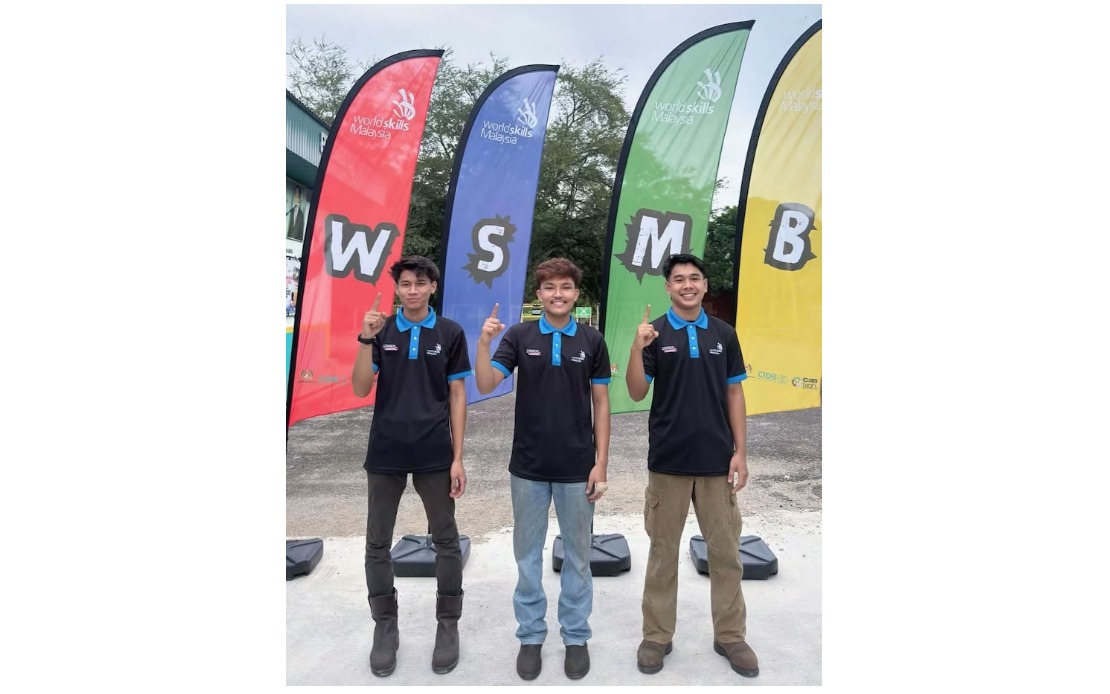
Three and a half decades after its establishment, WorldSkills Malaysia Belia remains a cornerstone institution for developing skilled workers across the construction sector and allied industries. Originally conceived as the Malaysian Skills Champion Competition by the fourth Prime Minister Tun Dr Mahathir Mohamad in 1990, the programme has undergone multiple iterations—from Anugerah Tangan Emas Perdana Menteri through to its current branding—each refinement reflecting the nation's evolving priorities in workforce development and industrial competitiveness.
The trajectory of WSMB reflects a deeper commitment to bridging the gap between academic training and market-ready employment. Through successive rebrandings spanning from 1991 to the present era, the competition has maintained its core objective: identifying exceptional talent, nurturing technical mastery, and preparing Malaysian representatives for the WorldSkills international arena. This long-standing institutional commitment signals the Malaysian government's recognition that vocational excellence represents a strategic economic asset, particularly as the country grapples with demographic shifts and technological disruption across traditional manufacturing sectors.
Today, WSMB operates through a robust ecosystem of accredited training providers, most notably the Malaysian Construction Academy and CIDB Technologies. These facilities house internationally benchmarked infrastructure, enabling participants to engage with equipment and methodologies that mirror global industry standards. This alignment is crucial for a country seeking to position itself as a supplier of high-calibre skilled labour within the Southeast Asian and global marketplace, where technical proficiency commands premium wages and career mobility.
Mohd Hafiz Dasahi, chief executive of CIDB Technologies, articulates a vision that extends beyond competition into systemic workforce transformation. By positioning WSMB as an incubator for industry-ready professionals rather than merely a talent showcase, the institution anchors itself within broader economic development objectives. The emphasis on curriculum responsiveness—with training modules developed in consultation with real-time industry requirements and integrated with emerging technologies—reflects a pragmatic understanding that skills obsolescence represents a genuine risk in rapidly evolving sectors such as welding, manufacturing, and energy.
Assessment frameworks within WSMB transcend narrow technical measures, incorporating dimensional competencies that employers increasingly demand. Zarulhakim Abdul Rahim, heading welding operations at CIDB Technologies, emphasises that participants undergo rigorous evaluation across measurement precision, workmanship quality, procedural compliance, temporal management, problem-solving capacity, and workplace safety adherence. This holistic approach cultivates attributes—self-confidence, discipline, resilience—that distinguish employable graduates from those possessing only theoretical knowledge. Such multifaceted skill development proves particularly valuable in construction and maritime sectors where human error carries material and financial consequences.
Industry partnership represents another critical dimension of WSMB's institutional design. Companies such as Lincoln Energy and Vinxus Mark actively resource the competition by supplying specialised equipment, consumables, and technical mentorship. This collaborative arrangement creates mutual benefit: employers gain early visibility of potential recruitment candidates whilst simultaneously shaping curriculum content to reflect operational realities. Putra Faisal Ashraf Idris characterises such engagement as corporate social responsibility with clear self-interest, recognising that workforce quality directly impacts organisational competitiveness and profitability. For developing economies like Malaysia, this public-private nexus in skills development proves far more efficient than state-directed training divorced from market signals.
Young participants themselves articulate tangible value realisation from their involvement. Ahmad Syafie Dasuki, aged 20 and drawn from Kelantan, brought workshop experience from his employment in Terengganu to the competition. His trajectory illustrates how WSMB functions as an accelerant for career progression—offering exposure to cutting-edge technologies and international standards that transcend what small-scale local workshops typically provide. Similarly, Muhammad Fazran Md Rashid, currently employed in Kedah's welding sector, emphasises how competition participation elevated both technical capability and psychological resilience, attributes essential for career advancement and professional credibility.
The geographical distribution of participants reflects WSMB's reach across Malaysia's East and West coasts. Mohd Sahmi Irfan Sulaimi, originating from Terengganu, exemplifies how the programme extends opportunity to constituencies beyond major urban centres, democratising access to world-class skills certification. His advocacy for youth participation underscores an implicit social mobility function: WSMB represents a pathway through which capable individuals from modest backgrounds can acquire credentials and professional networks that generate durable economic returns. This inclusive dimension proves particularly significant within a Malaysian context where regional inequality remains a persistent policy concern.
The international dimension constitutes a defining feature of WSMB's value proposition. National champions gain preparation and exposure for WorldSkills competitions, positioning Malaysia within a global benchmarking system that measures workforce capability against peers from developed and emerging economies alike. This external validation mechanism—being assessed against international standards rather than purely domestic metrics—impels continuous improvement and prevents institutional complacency. For Malaysian businesses seeking to compete globally or participate in international supply chains, having a domestic talent pipeline calibrated to global expectations reduces friction in recruitment and onboarding.
Sector breadth extends WSMB's relevance beyond construction into manufacturing, oil and gas, energy, and maritime industries. This multisectoral application reflects Malaysia's economic diversification trajectory and the cross-cutting nature of foundational skills like welding. A welding technician trained to international standards finds employment opportunities across petroleum refining, shipbuilding, heavy manufacturing, and infrastructure development. Zarulhakim articulates this expansive labour market value explicitly, emphasising how WSMB graduates emerge genuinely competent across sectors requiring construction-adjacent technical expertise.
Looking forward, WSMB faces evolving challenges inherent to mid-income economies transitioning toward higher value-added production. Automation and digitisation are reshaping skill requirements even within traditional trades. The programme's responsiveness to technological change—as evidenced by integration of latest equipment and processes—suggests institutional capacity to adapt. However, maintaining relevance amid accelerating technological disruption demands continuous curriculum renewal, investment in trainer capability, and sensitivity to emerging industry requirements. Malaysian policymakers and training administrators must sustain the financial and regulatory commitments that allow WSMB to remain frontier institutions rather than relegating vocational training to secondary status.
The longevity and evolution of WorldSkills Malaysia Belia across 36 years testifies to institutional resilience and recognition of vocational development's strategic importance. As Southeast Asia undergoes demographic and technological transition, maintaining accessible pathways to internationally competitive skill certification becomes increasingly essential. WSMB's model—combining rigorous assessment, industry partnership, technology integration, and international benchmarking—offers a template applicable beyond Malaysia's borders. For the country itself, the programme represents tangible investment in human capital that translates into employability, wage growth, and industrial competitiveness—outcomes that transcend any single competition cycle and accumulate across generations of skilled workers.

