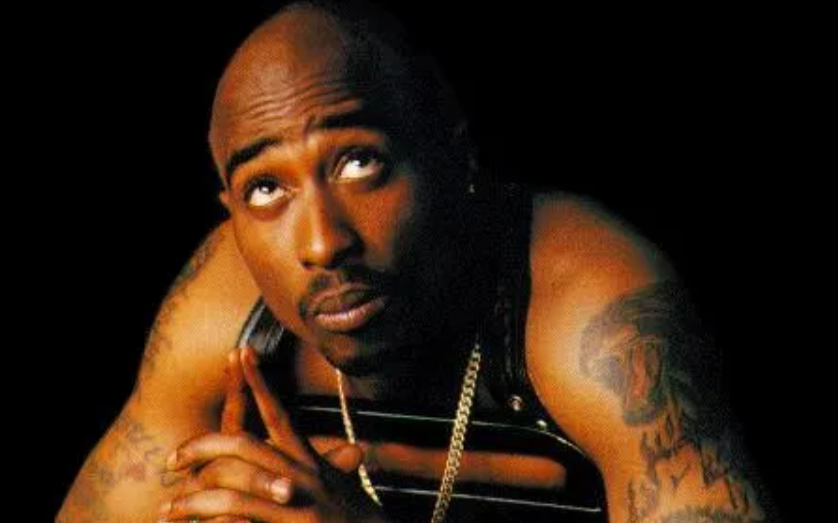
A trial that many thought would never materialise has finally begun, reopening one of America's most enduring mysteries: the 1996 murder of hip-hop icon Tupac Shakur. The case against Duane "Keffe D" Davis, 63, a former leader of the South Side Compton Crips, commenced on Monday with jury selection—marking the beginning of what prosecutors anticipate will be a month-long proceeding. Three decades have passed since Shakur's death on September 7, 1996, when the 25-year-old was struck by gunfire in a drive-by shooting while in Las Vegas attending a Mike Tyson boxing match. The trial's commencement signals that modern investigative techniques and a defendant's own written confession have finally created a pathway to accountability.
Davis faces a potential life sentence without parole if convicted on charges related to orchestrating the killing. Prosecutors contend that Davis not only ordered the assassination but also supplied the weapon used in the attack. The case hinges on demonstrating that a personal grudge—rooted in an earlier altercation—provided Davis with sufficient motive to exact deadly revenge. The defendant appeared in court during opening proceedings dressed formally, but his demeanor and his subsequent statements suggest a man determined to distance himself from the narrative that has ensnared him. The legal proceedings will attempt to untangle a web of gang affiliations, corporate rivalries in the music industry, and personal vendettas that shaped the circumstances surrounding Shakur's death.
The murder occurred at the intersection of two powerful forces in 1990s hip-hop: the fierce East Coast-West Coast rivalry that defined the era, and the complex gang networks that provided security and muscle for competing record labels. Death Row Records, the West Coast powerhouse founded by Marion "Suge" Knight, enjoyed protection from Mob Piru, a faction within the broader Bloods gang alliance. Conversely, Bad Boy Records—the East Coast label created by Sean "Diddy" Combs and home to superstar Christopher "The Notorious B.I.G." Wallace—retained the South Side Compton Crips as bodyguards. This arrangement meant that two of hip-hop's most influential labels were backed by rival gangs, transforming what might have remained a purely musical feud into something far more dangerous. The murder of Shakur, and later The Notorious B.I.G. in March 1997, exposed how deeply organised crime had penetrated the upper echelons of the music industry.
The specific catalyst for the killing, according to prosecution theory, involved a physical confrontation at the MGM Grand casino following the Tyson fight. After the bout concluded, Shakur and Knight encountered Davis's nephew, Orlando "Baby Lane" Anderson, and beat him severely in retaliation for what prosecutors claim was an assault on a Death Row Records employee. This humiliation, prosecutors argue, transformed Davis from a bystander into an avenging force. Later that same evening, a white Cadillac containing Davis, Anderson, and others drew alongside Shakur's vehicle on a Las Vegas street. Gunfire erupted from the Cadillac, and Shakur suffered fatal wounds. The sequence of events paints a picture of impulsive violence born from wounded pride and gang honour—a deadly cycle that has long characterised the intersection of urban gang culture and celebrity status.
For nearly three decades, the case languished in investigative limbo, frustrating law enforcement and the public alike. Crucial witnesses had either died or refused to cooperate, and physical evidence proved difficult to establish. The breakthrough came unexpectedly in 2019, when Davis authored a memoir that contradicted his longstanding public denials. In the book, Davis admitted to being in the front seat of the Cadillac and claimed he handed a pistol to occupants in the rear seats—though he carefully avoided naming the actual shooter. These admissions aligned broadly with statements Davis had made to reporters over the years, but they suddenly transformed him from a rumoured participant into a documented witness with direct knowledge of the crime. Remarkably, Davis also stated that everyone else who had been present in that vehicle on the night of Shakur's death had since died, meaning his account could face no direct contradiction from fellow occupants.
Arrest came swiftly after Davis's memoir became public knowledge. In September 2023, authorities took him into custody, charging him with murder. Yet in a startling reversal, Davis subsequently recanted his own admissions. During a March 2025 interview conducted from prison with ABC News, he denied culpability entirely, declaring: "I'm innocent. I ain't killed nobody. Never did ever kill nobody." Davis now claims he was in Los Angeles on the night of the killing, not Las Vegas. He further asserts that he has never actually read his own autobiography and that his co-author fabricated or exaggerated portions to boost commercial sales. This strategic denial represents a high-risk gambit—the prosecution will almost certainly seek to introduce both the memoir and Davis's previous statements to reporters as evidence of consciousness of guilt.
Davis's legal team fought strenuously before trial to exclude both the memoir and a 2008 police interview in which Davis discussed the incident as a witness. These pre-trial motions failed, meaning the jury will hear Davis's own words from multiple periods of his life, creating the appearance of a man whose narrative has shifted dramatically under legal pressure. The fact that Davis claims he never read the very book that bears his name stretches credibility among reasonable observers, yet defence attorneys will likely argue that prosecutors are relying on hearsay, co-author interpretation, and statements made under duress rather than direct, forensic evidence linking Davis to the crime scene. The trial will essentially pit Davis's evolving accounts against prosecutorial arguments that his shifting positions reveal consciousness of guilt.
Beyond the criminal proceedings, the case has spawned additional legal action that underscores the deep dissatisfaction many feel regarding the resolution of Shakur's death. In May 2025, Maurice Shakur, the rapper's stepbrother, filed a wrongful death lawsuit in civil court, asserting that multiple individuals involved in the murder remain unaccountable after three decades. The civil complaint pointedly states: "There remain individuals who were involved in Tupac's murder who, for 30 years, have not been held accountable for their crimes." This dual-track approach—pursuing both criminal and civil remedies—suggests that the Shakur family harbours doubts that the Davis prosecution alone will deliver meaningful justice or reveal the full truth about the murder.
The trial's opening comes at a moment when public fascination with the case shows no signs of diminishing. Documentary films, books, podcasts, and investigative journalism have kept the case alive in popular consciousness, spawning countless theories and rekindling media interest with each new development. For many observers, particularly those who came of age during hip-hop's golden era, Shakur's murder represents not merely a criminal matter but a cultural wound that has never properly healed. The rapper's artistic legacy—marked by powerful social commentary, vulnerability, and commercial dominance—ensures that his death remains culturally resonant decades later.
The proceedings are expected to illuminate aspects of the 1996 killing that have remained shrouded in mystery, yet prosecutors acknowledge that the jury may never learn definitively who pulled the trigger. Davis's defence team will likely focus on reasonable doubt regarding his specific role in the actual shooting, emphasising that Davis's admitted presence in the vehicle does not necessarily prove he ordered the killing or that he was responsible for pulling the trigger. This technical distinction—between orchestration and execution—could prove crucial to Davis's defence strategy. Even if convicted, observers suggest the verdict may fail to satisfy Shakur's loved ones or the broader public's appetite for complete truth and comprehensive accountability.

