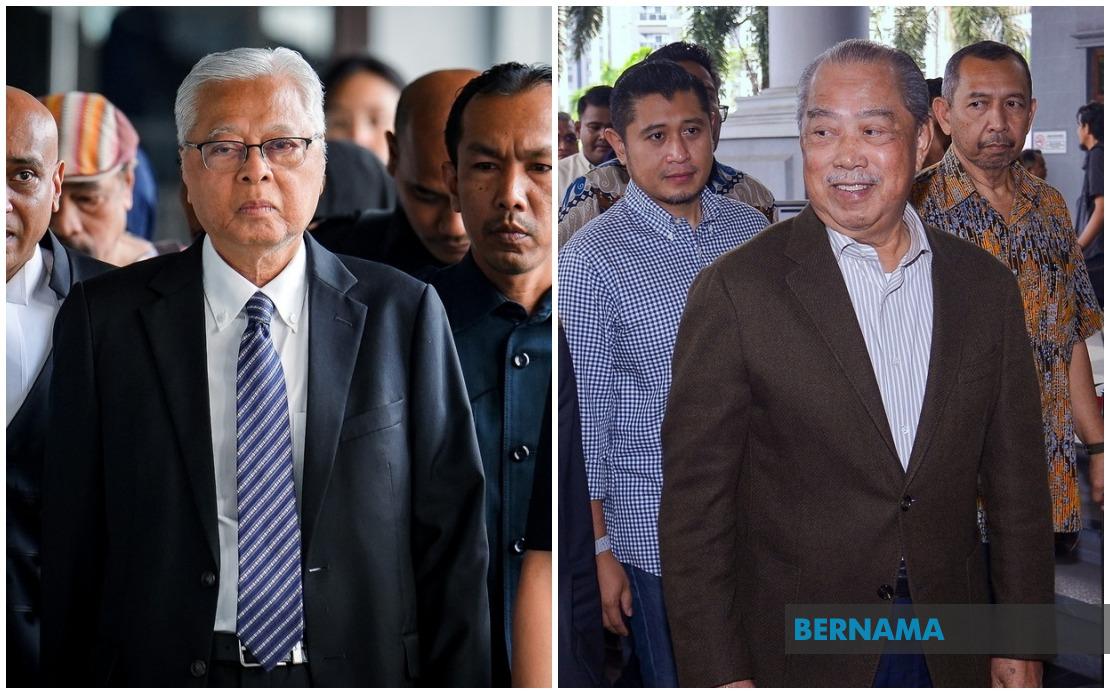
The convergence of three former prime ministers at the Kuala Lumpur Court Complex on August 27 represented an extraordinary moment in Malaysian legal and political history, with Datuk Seri Najib Tun Razak, Tan Sri Muhyiddin Yassin, and Datuk Seri Ismail Sabri Yaakob each attending distinct court proceedings on the same day. The simultaneous appearance of three former heads of government at the same judicial venue had never occurred before in Malaysia, drawing intense media scrutiny and presenting logistical challenges that authorities managed through meticulous planning and coordination.
Veteran court correspondent V. Anbalagan of Free Malaysia Today characterised the day as genuinely historic, emphasising that no journalist in his lengthy career had witnessed such an occurrence. He reflected that the significance extended beyond mere novelty, representing a watershed moment in Malaysian political and judicial affairs that would be etched in the country's institutional memory. Anbalagan suggested the probability of such an event recurring was extraordinarily low, given the specific alignment of circumstances required for three former premiers to face legal proceedings in the same location simultaneously.
The scale of media mobilisation began hours before the proceedings commenced, with journalists assembling at the court complex from early morning to secure vantage points and prepare for coverage. Television crews, photojournalists, and reporters stationed themselves throughout the grounds, creating a visible intensity rarely seen outside major national events or natural disasters. The gathering reflected the profound public interest in the legal trajectories of three individuals who had collectively led Malaysia across a significant span of recent history, and whose current legal troubles symbolised deeper questions about governance, accountability, and the rule of law in the Southeast Asian nation.
Bernama TV news officer Siti Zanariah Nor Zin highlighted the operational complexities the media faced, noting that her sixteen years in journalism had not prepared her for such a scenario. She praised the staggered arrivals of the three former leaders, which created breathing room for news organisations to process and transmit real-time updates to their central editorial offices. This management of timing proved crucial in allowing comprehensive coverage despite the logistical pressures, demonstrating how careful choreography of judicial proceedings could facilitate rather than hinder media access and public information.
Amirul Aiman Osman, reporting for Utusan Malaysia, described the atmosphere as hectic and densely crowded, yet underscored that robust security measures prevented the situation from deteriorating into chaos or conflict. Having arrived before dawn to secure his position, Osman's account painted a picture of professional journalists working under intense conditions, balancing the demands of breaking news coverage with safety and propriety. The early morning deployment reflected the unpredictability of major news events and the constant readiness required of Malaysian media personnel covering high-profile legal cases.
Security preparations were extraordinarily comprehensive, with police personnel from Sentul district headquarters and Palace of Justice security officers deployed across the court complex to manage movement and prevent disruptions. A court official coordinating these efforts explained that preparations had begun the previous afternoon, indicating the scale of advance planning necessary to accommodate three former heads of state within the same judicial institution. This preparation illustrated the distinctive security challenges posed by former officeholders, whose movements typically command heightened protection and whose presence generates unusual public and media attention.
The security architecture created differential access categories, with between three and six classifications of passes distributed to facilitate movement for various groups including the general public, accredited journalists attending open proceedings, and personnel accessing video-linked courtrooms. This tiered approach represented a sophisticated attempt to balance judicial transparency with the security imperatives surrounding three high-profile individuals. Security officer Nik Zainab Jusoh reported that the security briefing conducted the previous day ensured personnel maintained heightened alertness, with particular focus on upper floor corridors and courtroom entrances where congestion appeared most probable.
Najib appeared for proceedings in a civil suit valued at USD5.64 billion initiated by 1Malaysia Development Berhad and subsidiary entities, seeking redress for alleged misappropriation of state funds. His case proceeded before Judicial Commissioner Mohamad Redzuan Idrus in proceedings that touch upon one of Malaysia's most significant financial scandals. The 1MDB affair continues to reverberate through Southeast Asian political and legal systems, with implications extending beyond Malaysia's borders given the transnational dimensions of the funds involved.
Muhyiddin faced seven charges encompassing alleged abuse of governmental authority and money laundering connected to the Jana Wibawa initiative, appearing before Judge Noor Ruwena Md Nurdin. These allegations centred on potentially improper use of power during his tenure as prime minister, representing a distinct category of governance-related accusations. The Jana Wibawa programme allegations raised questions about accountability mechanisms within the Malaysian executive and the capacity of the judiciary to investigate high-level officials after they leave office.
Ismail Sabri's proceedings involved asset declaration violations, specifically allegations concerning his failure to disclose RM14.7 million in cash holdings, multiple foreign currency deposits, and precious metals including gold bars. Before Judge Suzana Hussin, these charges underscored concerns about the transparency and accuracy of financial disclosures by public officials. Ismail Sabri subsequently secured release on RM300,000 bail with a single surety, departing the court complex at 11.43 am, establishing a procedural template that resolved at least one component of the day's unprecedented proceedings.
The convergence of these three legal proceedings symbolised broader questions about Malaysia's political transition and institutional capacity. Over recent years, the nation has experienced significant leadership changes and internal political realignments that have placed former prime ministers under judicial examination. These simultaneous appearances represented not simply individual legal difficulties but reflected systemic questions about governmental accountability, the effectiveness of anti-corruption mechanisms, and the judiciary's role in investigating former officeholders. The unprecedented concentration of former premiers in the same court complex on the same day underscored how Malaysian politics had entered an unusual phase characterised by legal scrutiny of recently departed leaders.
For Malaysian observers and regional analysts monitoring the country's institutional development, the day represented both a concerning indicator of political instability and potential evidence of functional judicial independence. The willingness of courts to pursue cases against three consecutive former prime ministers, regardless of outcome, demonstrated that no political position conferred immunity from legal accountability. Yet the circumstances prompting simultaneous proceedings also suggested underlying governance challenges that had accumulated sufficiently to generate multiple legal crises reaching their procedural culmination on a single date.

