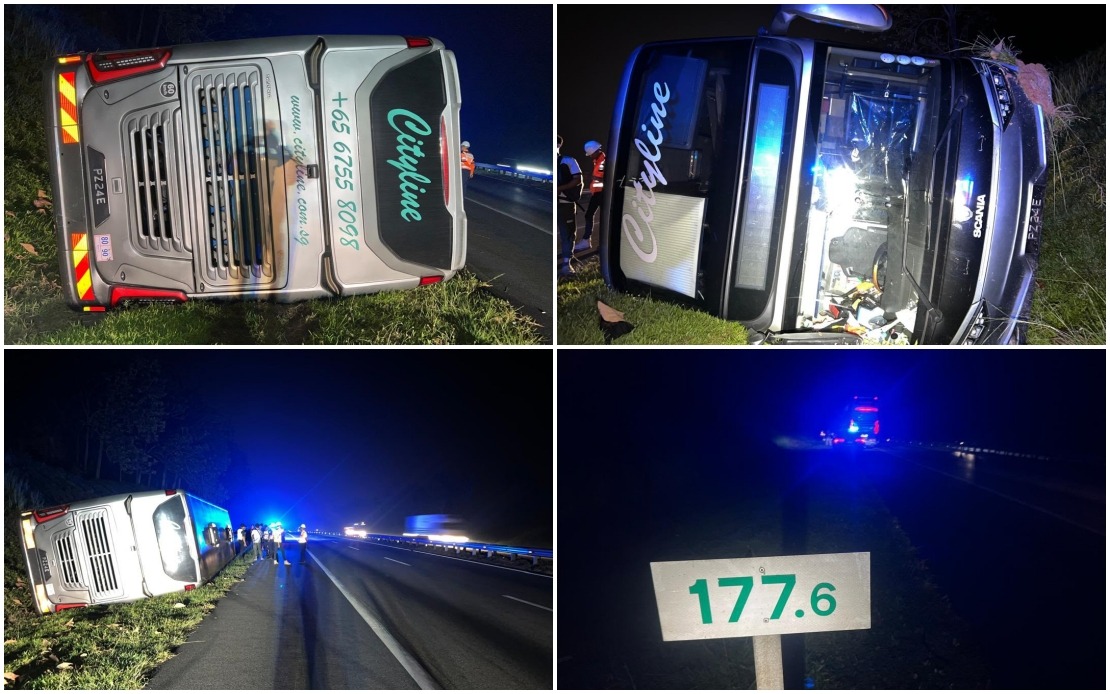
A tour bus carrying passengers from multiple nationalities overturned on the North-South Expressway in Jasin early Monday morning, resulting in injuries to three people on board. The accident happened at Kilometre 177.6 on the northbound carriageway just after 5 am, prompting an immediate response from emergency services and local police.
According to Jasin district police chief Supt Lee Robert, the injured included a 59-year-old Malaysian tour guide, a 62-year-old Singaporean passenger, and a 42-year-old British national. All three sustained injuries to their heads and legs of varying severity and were transported to Jasin Hospital for medical evaluation and treatment. The remaining passengers on the coach escaped injury, though the incident would have caused considerable distress to all those aboard.
The tour bus had departed from Singapore bound for Kuala Lumpur with a total of 12 occupants, comprising paying passengers, the bus driver, and the tour guide who was injured in the accident. The vehicle was operating as part of the established cross-border tourism circuit that connects major Malaysian and Singaporean cities, a route regularly travelled by tour operators facilitating leisure travel in the region.
Investigations by police revealed the sequence of events leading to the mishap. As the bus travelled northward on the expressway, the driver encountered a lorry ahead that had begun slowing down on the roadway. To prevent a rear-end collision, the bus driver made a rapid evasive manoeuvre, steering the vehicle sharply to the left. However, this emergency action caused the bus to veer completely off the left side of the road surface, causing it to lose stability and subsequently overturn.
The accident underscores ongoing concerns about road safety on Malaysia's expressway network, particularly regarding the high speeds at which vehicles travel and the sometimes unpredictable behaviour of commercial vehicles such as lorries and buses. The North-South Expressway carries substantial daily traffic volume connecting the country's major urban centres, making it a critical transportation artery for both domestic and cross-border journeys. Incidents involving tour buses are of particular concern given the vulnerability of passengers to injury during such events.
Accidents of this nature often trigger broader discussions about driver training standards, vehicle maintenance protocols, and the enforcement of safety regulations on Malaysia's highways. Tour bus operators face the challenge of balancing tight schedules with passenger safety, and fatigue among drivers has been identified as a contributing factor in many expressway incidents. The circumstances of this particular accident—reactive steering to avoid another vehicle—highlight how unpredictable road situations can escalate quickly into dangerous scenarios.
The involvement of international passengers in this incident adds a diplomatic dimension to the matter. Tourism authorities in both Malaysia and Singapore maintain cooperative frameworks to ensure visitor safety, and incidents affecting tourists are typically investigated thoroughly to identify systemic issues. The presence of visitors from Commonwealth nations such as Singapore and Britain means their respective missions in Malaysia will likely monitor the case and the treatment of their nationals.
For the injured parties, recovery from such incidents typically involves both physical rehabilitation and psychological impact assessment. Head and leg injuries sustained in vehicle overturns can range from minor contusions to more serious conditions requiring extended medical supervision. The Malaysian healthcare system, particularly in regional hospitals like Jasin Hospital, is equipped to handle such trauma cases, though the long-term effects on the victims' ability to travel remain uncertain.
This accident will likely prompt fresh scrutiny from Malaysian authorities regarding safety standards on commercial tour buses operating on expressways. Regular audits of vehicle condition, driver competency, and adherence to speed restrictions are essential protective measures. The expressway operators may also review their protocols for managing incidents involving large vehicles slowing unexpectedly, potentially including enhanced signage or communication systems to warn following traffic of changing conditions ahead.
The incident serves as a reminder to travellers, both domestic and international, of the inherent risks associated with long-distance road travel in Southeast Asia. While the region's expressway infrastructure is generally modern and well-maintained, the human elements of driving—decision-making, vehicle control, and response to emergencies—remain critical factors in preventing accidents. This particular case demonstrates how quickly a routine journey can transform into a crisis situation.

