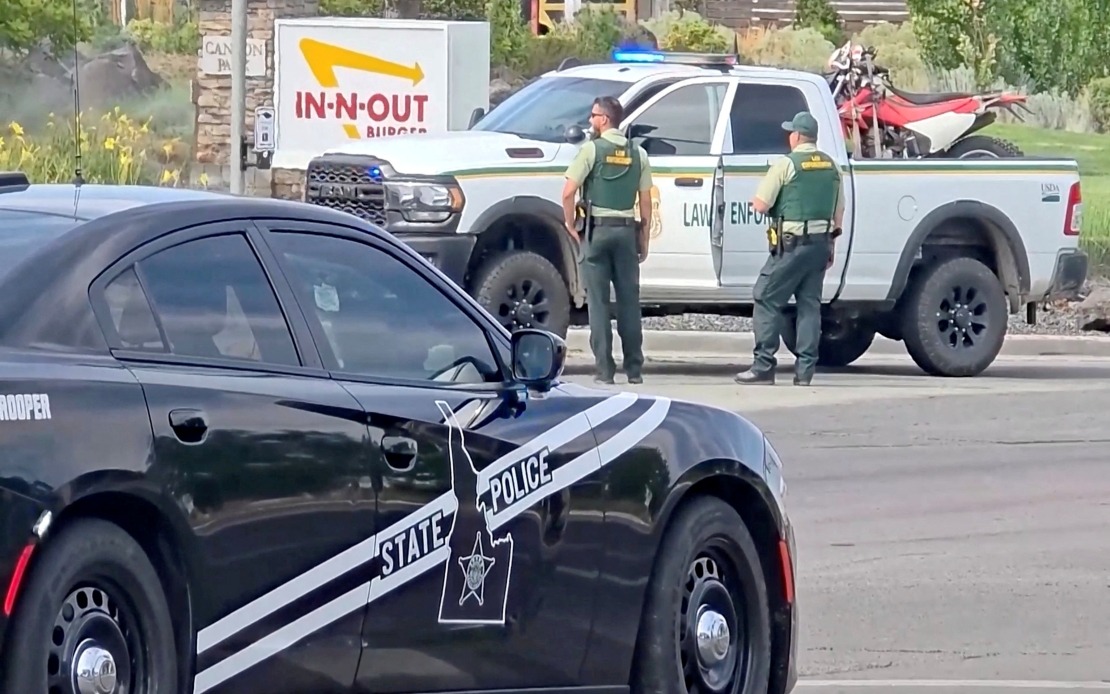
A shooting rampage at a fast-food restaurant in Twin Falls, Idaho, left three people dead and seven injured on Saturday afternoon, marking another incident of gun violence in the United States. Local law enforcement responded to the incident at the In-N-Out Burger location shortly after 2 pm local time, discovering a scene of chaos in the heart of a busy commercial district that would have been crowded with shoppers and diners during weekend hours.
According to Joshua Palmer, public information coordinator for the Twin Falls city administration, several of the wounded sustained injuries classified as critical, necessitating immediate emergency medical intervention. The severity of injuries among the seven victims underscores the intensity of the shooting and its impact on those in proximity to the gunfire. Authorities have not yet disclosed the identities of the deceased or injured parties, citing the ongoing process of notifying relatives and conducting formal victim identification procedures.
Law enforcement personnel discovered what they believe to be the suspected shooter's body in a location adjacent to the restaurant premises. Twin Falls Police Chief Matthew Hicks indicated at a subsequent press briefing that the police department had determined the immediate threat to public safety had been neutralised, suggesting the shooter was no longer a danger to the surrounding community. However, officials were still in the process of formally confirming whether the deceased shooter should be counted as part of the overall casualty toll.
The restaurant sits within a prominent shopping plaza that draws considerable foot traffic, particularly on weekend afternoons. Hundreds of people were present in the vicinity at the time of the incident, according to Palmer's account, raising concerns about the potential for even greater loss of life had circumstances been slightly different. The crowded setting amplified the shock and disruption caused by the violence, affecting not only direct victims but also numerous witnesses and bystanders who were shopping or dining in the area.
For Malaysia and Southeast Asian observers, such incidents highlight the continuing challenges that democratic societies with permissive gun laws face in preventing mass casualties. The United States experiences dozens of mass shooting incidents annually, a problem that most developed nations in Asia have largely avoided through stricter firearm regulations. These recurring tragedies fuel ongoing debates about constitutional rights, public safety, and the proper balance between individual liberties and collective security.
Investigators remained focused on establishing the identity of the suspected shooter and uncovering potential motives behind the attack. Twin Falls Police Chief Hicks acknowledged that these determinations were still pending, indicating that preliminary investigative work continued in the hours following the incident. Understanding motive often provides crucial context for interpreting such events, though authorities cautioned against premature conclusions.
The investigation into the shooting was ongoing at the time of reporting, with police conducting interviews with witnesses and reviewing available evidence from the scene. The commercial setting of the restaurant and its proximity to other businesses suggested that investigators would have access to surveillance footage and multiple eyewitness accounts. Such forensic and testimonial evidence typically assists law enforcement in reconstructing the sequence of events and establishing a comprehensive factual record.
The incident represents one of numerous mass shooting events that have occurred across various American communities in recent years, each leaving communities grappling with trauma and prompting renewed discussion about violence prevention. While individual incidents receive media attention and public concern, the cumulative toll of gun violence in the United States significantly exceeds most other developed nations, reflecting deeper systemic factors related to firearms accessibility and cultural attitudes toward weapons.
For the Twin Falls community specifically, the shooting marked a dramatic and unwelcome interruption to ordinary weekend activities. The shopping plaza that had been a routine destination for residents suddenly became a crime scene, with the restaurant itself serving as the focal point of a major emergency response involving multiple law enforcement agencies and emergency medical services. The psychological impact on survivors and community members extended far beyond the immediate victims.

