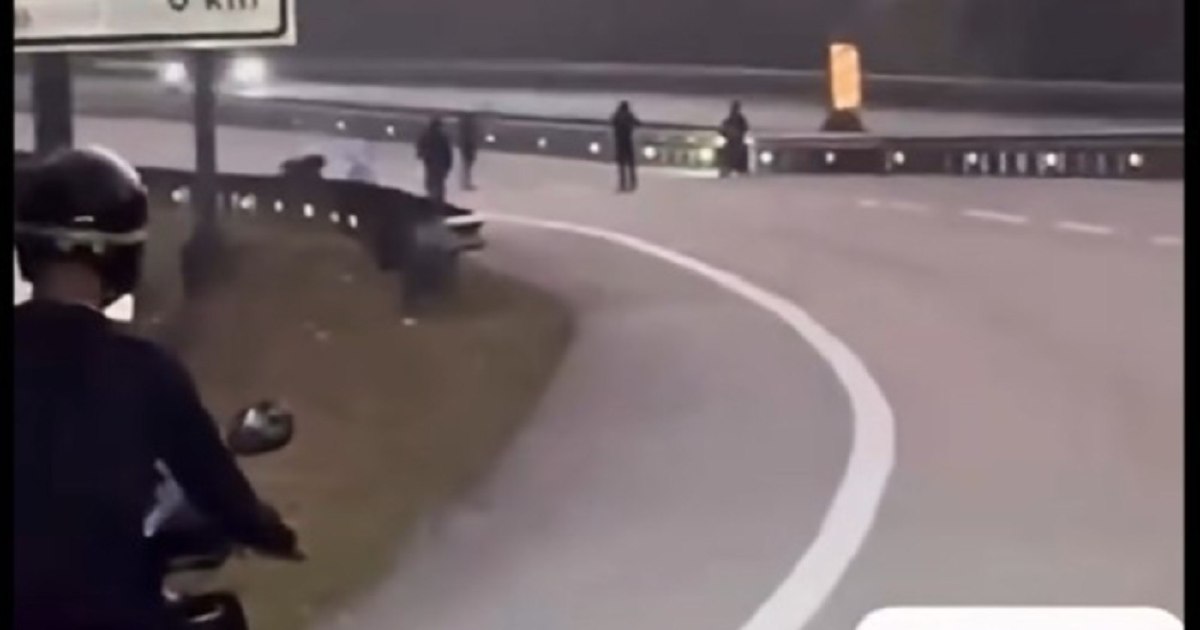
Law enforcement authorities in Johor have intensified their crackdown on illegal street racing activities, securing three further arrests in Kuala Lumpur following the emergence of a video depicting what appears to be a coordinated attempt to obstruct the Second Link highway for an unauthorised motorcycle competition. The arrests represent an escalation in police efforts to identify and prosecute those involved in the incident that drew widespread public condemnation online.
The viral footage, which circulated extensively across social media platforms, captured the troubling moment when participants allegedly halted traffic flow on one of Malaysia's busiest north-south corridors to conduct their illicit racing event. Such deliberate disruption of major transportation arteries poses significant risks not only to the participants themselves but to innocent motorists traversing the route during the incident. The Second Link remains a critical commercial and transit artery connecting Peninsular Malaysia with Johor, handling tens of thousands of vehicle movements daily.
The investigation, spearheaded by Kulai police authorities, has now expanded beyond the initial apprehensions as investigators piece together the full network of individuals involved in organising and executing the dangerous stunt. Each new arrest provides authorities with additional leads and intelligence that help establish the conspiracy's scope and hierarchical structure. Police have indicated that their inquiry remains active and that further arrests cannot be ruled out as evidence continues to emerge from witness testimonies and digital forensics.
Illegal street racing has become an increasingly persistent problem in Malaysia, particularly among younger demographics who view such activities as thrilling pursuits despite their manifest dangers. The practice disrupts legitimate traffic flow, creates hazardous conditions for uninvolved road users, and diverts police resources away from other pressing community safety concerns. Organised racing events conducted without proper licensing and safety protocols eliminate the protective infrastructure available at legitimate racing circuits, transforming public highways into uncontrolled proving grounds.
The decision to deliberately close or obstruct a major thoroughfare to stage a race demonstrates a reckless disregard for public safety and an alarming sense of entitlement among perpetrators. Such actions effectively hold ordinary citizens hostage to satisfy the participants' desire for excitement and social media notoriety. The Second Link specifically serves crucial roles in regional commerce, emergency services operations, and routine commuter traffic, making any deliberate obstruction particularly egregious in its consequences.
Authorities have emphasised that penalties under Malaysian law for such infractions are substantial, with possible charges including obstructing traffic flow, dangerous driving, and conspiracy to commit public nuisance. Conviction on these charges carries potential imprisonment and substantial fines. The legal framework exists to deter participation in such activities, yet some individuals persist in testing police resolve and judicial patience, suggesting that awareness campaigns regarding consequences remain inadequate in certain sectors of society.
The viral nature of the video has significantly amplified this incident beyond a routine traffic violation, transforming it into a public order issue that demands clear demonstration of law enforcement capability. The footage itself becomes evidence and inadvertently aids investigators in identifying participants, as social media engagement patterns often reveal the network of individuals involved in organising such events. Digital trails created through online coordination, video sharing, and subsequent commentary provide investigators with unprecedented investigative advantages compared to historical cases involving underground racing communities.
Neighbouring Singapore, which shares the Second Link crossing with Johor, maintains exceptionally strict enforcement against street racing and traffic obstruction. The contrast between enforcement approaches on either side of the causeway underscores differing risk tolerances regarding public safety. Malaysian authorities face pressure to demonstrate comparable commitment to protecting highway safety and maintaining orderly traffic flow, particularly given the international dimension of the corridor and the commercial interests dependent upon its uninterrupted operation.
Community responses to the arrests have been largely supportive, with social media users expressing relief that authorities are taking action against reckless behaviour that endangers innocent people. This public backing provides political and institutional support for sustained enforcement efforts. However, prevention requires complementary strategies addressing root causes such as inadequate outlets for racing enthusiasm among young people, peer pressure dynamics that encourage participation in dangerous stunts, and the social media incentive structure that rewards increasingly extreme behaviour through engagement metrics.
The police investigation underscores broader concerns about maintaining highway safety in an era when coordinated groups can rapidly mobilise for disruptive activities. Traffic management during such incidents requires careful coordination between multiple agencies, including highway operators, state and federal police, and emergency services. The Second Link operator's response protocols and any communication failures during the incident remain matters of administrative interest, though initial public attention has focused on identifying and prosecuting the perpetrators.
Moving forward, the case will likely proceed through the courts with prosecutors seeking maximum applicable penalties to establish clear deterrence. Each conviction sends a message to the broader racing community about the serious consequences of such activities. Simultaneously, authorities and community organisations should consider enhanced public awareness initiatives highlighting the dangers and legal ramifications of illegal street racing, particularly targeting online communities where coordination for such activities typically occurs.

