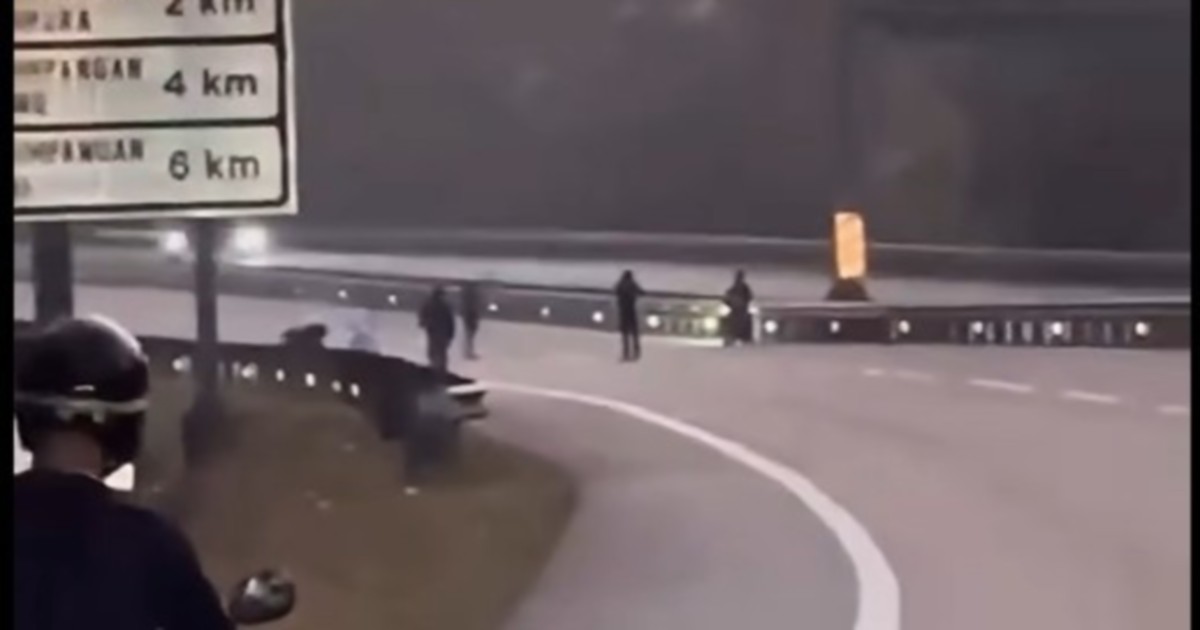
Law enforcement in Johor has expanded its investigation into a dangerous illegal street racing incident that occurred on the Second Link highway, with three additional men now in remand custody. The latest arrests bring the total number of individuals detained in connection with the incident to 11, signalling a comprehensive enforcement operation targeting those involved in organising and participating in the unlawful high-speed gathering.
The Second Link, which forms a crucial transport corridor connecting Malaysia to Singapore, has increasingly become a focal point for such illicit activities. Street racing events organised without proper permits not only violate traffic regulations but also pose severe risks to other road users who share the highway during peak and off-peak hours. The concentration of arrests in recent days suggests that police investigations have successfully identified and apprehended multiple participants across different roles in the racing operation.
The escalating crackdown reflects growing concern among Malaysian authorities about motorcycle racing gatherings that take place on major highways. These events typically involve coordinated groups of riders who temporarily occupy sections of busy roads, creating hazardous conditions for commuters and commercial vehicles. The Second Link, as a major arterial route handling substantial daily traffic between Malaysia and Singapore, represents a particularly sensitive location for such activities due to its strategic and economic significance.
Investigators appear to be pursuing a multi-pronged approach, targeting not only the riders themselves but also individuals who may have played supporting or organisational roles. The progression from initial arrests to additional remands suggests that police are systematically following leads and building comprehensive cases against those involved. This methodical approach typically involves identifying key organisers, tracking communication patterns, and establishing the extent of participation.
The legal implications for those arrested can be substantial, as street racing on Malaysian highways falls under various traffic and public safety legislation. Penalties may include fines, imprisonment, or both, depending on the severity of the offences and individual circumstances. Beyond immediate legal consequences, those convicted face potential suspension or cancellation of driving privileges, which carries significant practical implications for their mobility and livelihood.
For Malaysian motorists, particularly those who frequently use the Second Link for commuting to Singapore or conducting cross-border commerce, such incidents underscore the unpredictability and danger posed by unlicensed racing activities. The presence of organised groups of high-speed motorcycles on major highways creates sudden hazards that ordinary drivers cannot anticipate or avoid effectively. Safety campaigns by authorities often highlight how seconds of dangerous driving can result in catastrophic collisions.
The enforcement response also reflects coordination between different law enforcement agencies and potentially input from intelligence networks monitoring social media and online platforms where such events are sometimes promoted or coordinated. Organisers of illegal races frequently use encrypted messaging groups and social networks to recruit participants and share details about planned events, making digital investigation a critical component of modern enforcement efforts.
Regional implications extend to Singapore, as the Second Link serves as a key cross-border route that connects both nations' transport networks. Incidents of lawlessness on the bridge can affect bilateral security cooperation and raise concerns about traffic safety standards. Both governments maintain shared interests in ensuring smooth, secure passage across this vital infrastructure.
Beyond the immediate highway safety concerns, such enforcement actions carry broader significance for public order maintenance in Johor, Malaysia's second-largest state by population. Visible police responses to dangerous driving behaviour help reinforce community expectations about lawful conduct and deterrence value, particularly among younger riders who may be attracted to thrill-seeking activities.
The case also highlights resource allocation questions for law enforcement agencies managing sprawling highway networks. Preventing and responding to illegal racing requires consistent patrol presence, intelligence gathering, and intelligence-led enforcement. As arrests accumulate and cases proceed through the judicial system, courts will determine appropriate sentences that balance punishment with deterrence.
Motorcycle enthusiasts and legitimate riding communities have previously expressed concern that high-profile illegal racing incidents reflect poorly on responsible riders and sometimes invite overly broad regulatory responses. The distinction between legal recreational riding and illegal street racing remains important for public discourse, even as authorities address dangerous behaviour.
Moving forward, the outcome of these 11 cases will likely set precedent for how similar incidents are prosecuted in Johor's courts. If courts impose meaningful penalties, it may enhance deterrence value and reduce the attraction of participating in such events. Simultaneously, authorities may intensify public awareness campaigns explaining the severe risks and legal consequences associated with illegal highway racing.

