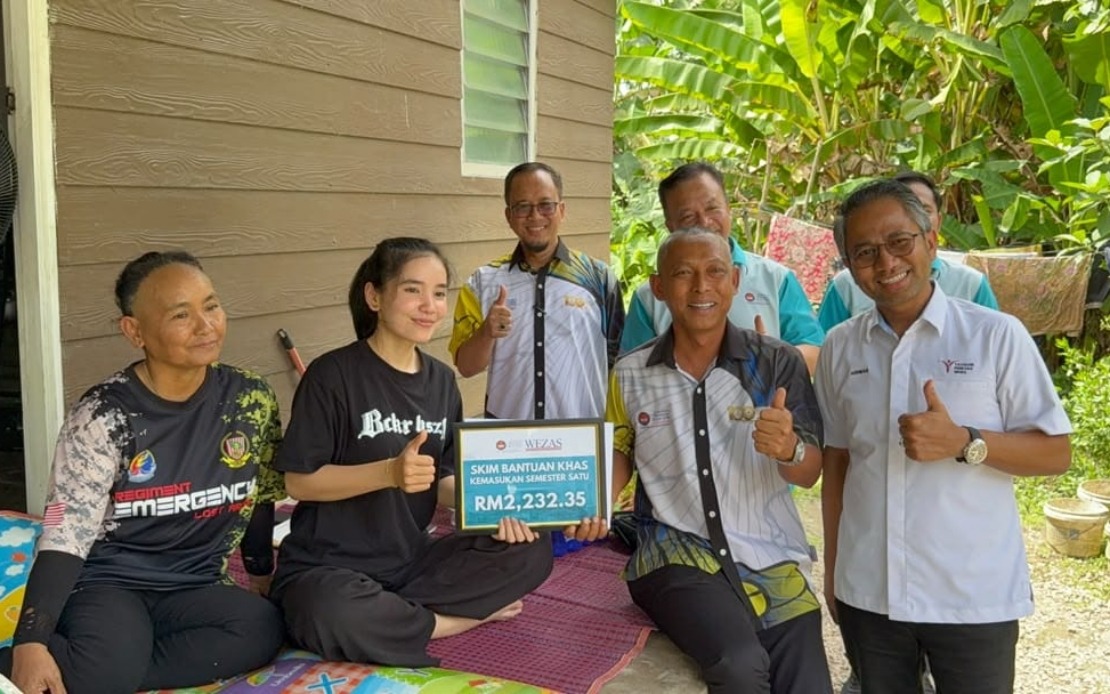
Three outstanding STPM students have secured financial assistance from Universiti Pendidikan Sultan Idris (UPSI) in a collaborative programme designed to remove economic barriers to higher education. The initiative particularly benefits Lovely Sabana Augustine, whose appeal for help covering registration fees and essential study costs sparked considerable social media attention before her scheduled enrolment in September at UPSI's Faculty of Human Sciences.
The financial hardship faced by Sabana became public when she struggled to raise funds for her university preparation, prompting intervention from UPSI and the Higher Education Ministry (MOHE). Her story resonated widely, illustrating the real challenges that capable students from low-income families encounter when attempting to access tertiary education. Alongside Sabana, Siti Nurdianis Nordin, who will study at the Faculty of Management and Economics, and Muhamad Ilias Danish, entering the Faculty of Languages and Communication, each received identical support packages.
The RM1,500 grant structure reflects a partnership between multiple stakeholders committed to student welfare. UPSI's Centre for Waqf, Endowment, Zakat, Khairat, and Sadaqah (WEZAS) contributed RM500 to each recipient, while Yayasan Perkasa Siswa (YPS) provided the remaining RM1,000. This collaborative approach demonstrates how Islamic charitable mechanisms combined with dedicated student foundation support can effectively address immediate financial pressures facing prospective undergraduates preparing for their academic transition.
Sabana's personal circumstances typify the socioeconomic challenges affecting many Malaysian students. The youngest of four children, she lives in Tumpat, Kelantan, with her mother Mek Kenui, who earns approximately RM800 monthly working as a school cleaner and serves as a Malaysian Volunteer Corps Department (RELA) member. Her father, a former military serviceman, passed away in 2017, placing substantial household responsibilities on her mother's modest income. Without external intervention, registration fees and basic necessities would have remained unattainable for her family.
The other two beneficiaries face similarly precarious economic circumstances. Siti Nurdianis comes from a household dependent on irregular daily-wage income, creating unpredictable monthly cash flow that renders planning and saving nearly impossible. Muhamad Ilias encountered tragedy when his father's death eliminated the family's primary income source, forcing him into a provider role supporting his mother and siblings despite being a university student himself. These cases illustrate how financial assistance addressing immediate needs can transform educational outcomes for vulnerable but capable youth.
Hirman Awang, director of the Department of Higher Education (JPT) Student Affairs Division, framed the assistance as concrete evidence of MOHE's determination to prevent financial circumstances from limiting talented students' access to higher learning. He emphasised that YPS positions itself as a frontline support mechanism for university student welfare, with the RM1,000 contribution intended to simultaneously boost morale and address practical registration and basic needs expenses. This psychological dimension—reinforcing that institutions actively care about students' success—complements the material assistance itself.
UPSI's Deputy Vice-Chancellor for Student Affairs and Alumni, Prof Dr Norkhalid Salimin, articulated the university's broader philosophy concerning student support. Rather than viewing financial aid as transactional assistance, UPSI conceptualises it as foundational engagement demonstrating institutional commitment from day one of a student's academic journey. The university's Student Affairs and Alumni Department (JHEPA) and WEZAS work proactively to identify prospective students requiring early intervention, recognising that students struggling financially before enrolment often face magnified challenges once campus-based expenses begin accumulating.
This initiative assumes significance within Malaysia's higher education landscape, where socioeconomic disparities increasingly determine who can successfully navigate transition into university studies. While entrance examination performance determines academic eligibility, financial capacity simultaneously functions as a gatekeeper determining whether qualified candidates can actually access their places. The RM1,500 grants address this tertiary barrier by ensuring registration completion and immediate settling-in costs do not force talented students to defer or abandon higher education pursuits.
The collaborative structure between UPSI, YPS, and JPT establishes a replicable model for addressing student financial vulnerability systematically. Rather than treating individual cases as isolated hardships requiring ad hoc rescue interventions, the formalised programme recognises structural patterns where promising students from disadvantaged backgrounds require targeted support before academic commencement. This approach aligns with national social mobility objectives by ensuring that family income levels do not predetermine educational attainment for high-achieving students.
The timing of assistance—several weeks before campus enrolment—optimises impact by addressing practical concerns at critical decision points. Students confirmed for university admission but lacking registration funds face genuine jeopardy of missing deadlines or experiencing cascading stress that compromises initial academic adjustment. By providing funds before these critical moments, the programme removes last-minute crises that might otherwise derail enrollments despite prior academic success.
For Malaysian readers and educational policymakers, Lovely Sabana's experience and the institutional response it prompted underscore ongoing tensions within the higher education system. Despite formal accessibility and merit-based admission processes, economic participation rates among lower-income populations remain disproportionately low, indicating that capability alone insufficient ensures access. Programmes like UPSI's demonstrate that strategic financial support at critical junctures can meaningfully expand educational opportunity, though questions remain about scalability and whether such assistance reaches all deserving students systematically.
The success of this initiative raises important questions about sustainable funding models for broader student support. While Yayasan Perkasa Siswa and UPSI's endowment mechanisms proved sufficient for three students, Malaysian universities collectively enrol hundreds of thousands of undergraduates, many facing comparable financial constraints. Replicating such targeted assistance across the entire higher education sector would require substantially enhanced funding mechanisms, whether through expanded government allocation, corporate partnerships, or enhanced waqf and endowment development. The question whether current institutional capacity and resources can systematically prevent talented students from accessing places they have earned academically remains pressing for Malaysia's educational future.

