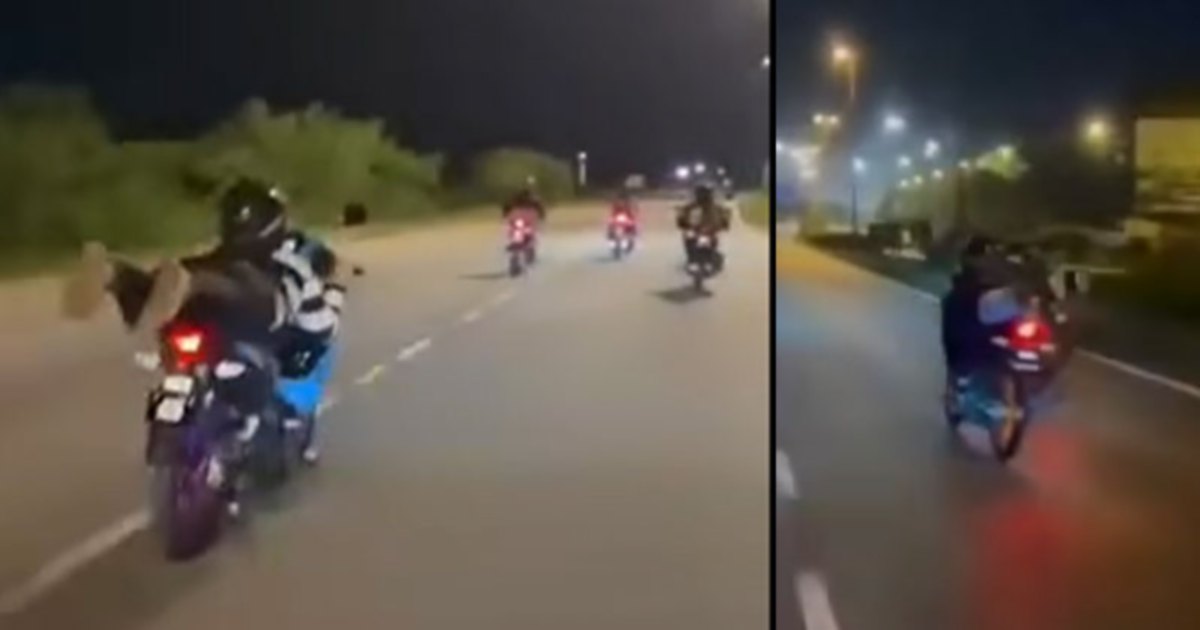
Three teenage girls arrested in connection with a dangerous motorcycle stunt that captured viral attention have been detained by authorities in Kuantan. The trio performed what is colloquially known as "Superman" manoeuvres on their motorcycles along the Jalan Kuantan Bypass-Gebeng road during the preceding week, generating significant online engagement before law enforcement intervention.
The Superman stunt, a high-risk motorcycle trick wherein riders momentarily abandon the saddle and extend themselves horizontally across the vehicle while maintaining forward motion, has become an increasingly common subject of social media content across Southeast Asia. These viral moments, though visually striking, pose substantial hazards to riders and other road users alike. The apparent thrill-seeking behaviour among young riders reflects a broader regional trend where dangerous driving practices are documented and shared across digital platforms, often attracting considerable viewership and inadvertently normalising reckless conduct.
The incident underscores the recurring challenge confronting traffic enforcement agencies throughout Malaysia. Dangerous riding exhibitions not only jeopardise the participants themselves but also expose innocent motorists and pedestrians to potentially catastrophic consequences. A moment of instability, an unexpected vehicular movement, or sudden road debris during such stunts can result in severe accidents with tragic outcomes. The Kuantan Bypass-Gebeng corridor, a relatively high-traffic zone, represents a particularly hazardous environment for attempting such manoeuvres.
Police intervention in this case demonstrates the escalating concern among Malaysian authorities regarding stunt-related viral content. In recent years, law enforcement agencies across the nation have intensified efforts to identify and apprehend individuals involved in publicising dangerous motorcycle behaviour, recognising that such content can inspire imitative behaviour among vulnerable audiences, particularly younger riders seeking social validation through online attention. The arrests signal a more proactive stance in countering this phenomenon.
Social media platforms have inadvertently transformed into stages where risk-taking behaviour achieves instant amplification and reward through engagement metrics. For young people navigating the pressures of digital-age celebrity, the prospect of viral fame—however transient—can override rational risk assessment. The psychological allure of content creation, combined with the algorithmic incentivisation of sensational material, creates conditions wherein dangerous activities become desirable performance pieces rather than serious safety violations warranting reconsideration.
The apprehension of these three teenagers carries implications beyond the immediate incident. It signals to other riders that such behaviour will not escape notice or consequence, potentially serving as a deterrent against similar stunts. However, experts in youth behaviour and digital culture note that arrest alone rarely proves sufficient to reshape underlying motivations. Effective intervention typically requires complementary educational initiatives, parental engagement, and digital literacy programmes that help young people understand the disconnect between online perception and real-world physical dangers.
Riders performing motorcycle stunts face multiple categories of legal jeopardy in Malaysia. Beyond potential charges related to dangerous or reckless driving under traffic legislation, those who document and disseminate such content may additionally face charges under laws governing public endangerment or online content regulations. Insurance implications also arise, as policies typically exclude coverage for incidents occurring during intentional performance of dangerous manoeuvres. The criminal and civil consequences thus extend considerably beyond the initial police detention.
The Pahang police force, responsible for law enforcement across the state where Kuantan is situated, has previously cautioned the public against engaging in such activities. This latest intervention represents a continuation of their ongoing campaign against dangerous motorcycle practices. Their actions are coordinated with broader national initiatives by the Royal Malaysian Police to enhance road safety and reduce the incidence of traffic-related mortality and injury across Malaysian highways and urban thoroughfares.
Parental responsibility intersects meaningfully with this incident. The involvement of teenage perpetrators raises questions regarding supervision, vehicle access, and family awareness of adolescent activities and online engagement. Many parents struggle to monitor their teenagers' digital behaviour and real-world activities simultaneously, creating spaces where risky conduct can develop without immediate detection. Educational partnerships between schools, law enforcement, and families may provide more comprehensive approaches to preventing such behaviour than enforcement mechanisms alone.
The broader context of motorcycle culture in Malaysia reveals a divide between responsible riding communities and a subset of riders for whom motorcycles represent platforms for dangerous exhibitionism. Traditional motorcycle enthusiast groups often criticise stunt performers and viral content creators, recognising that such behaviour reinforces negative public perceptions of motorcyclists generally. This criminal episode may intensify those tensions while also providing opportunities for responsible riders' organisations to engage constructively with younger riders about road safety and community reputation.
Looking forward, the arrests of these three teenagers may represent a turning point if authorities couple enforcement with sustained prevention efforts. Comprehensive road safety education, digital citizenship programmes addressing viral culture incentives, and community engagement initiatives can work synergistically with legal consequences. The incident itself serves as a cautionary narrative demonstrating that social media virality does not provide immunity from legal accountability, a message that resonates increasingly among young Malaysians navigating the intersection of digital creativity and real-world consequences.

