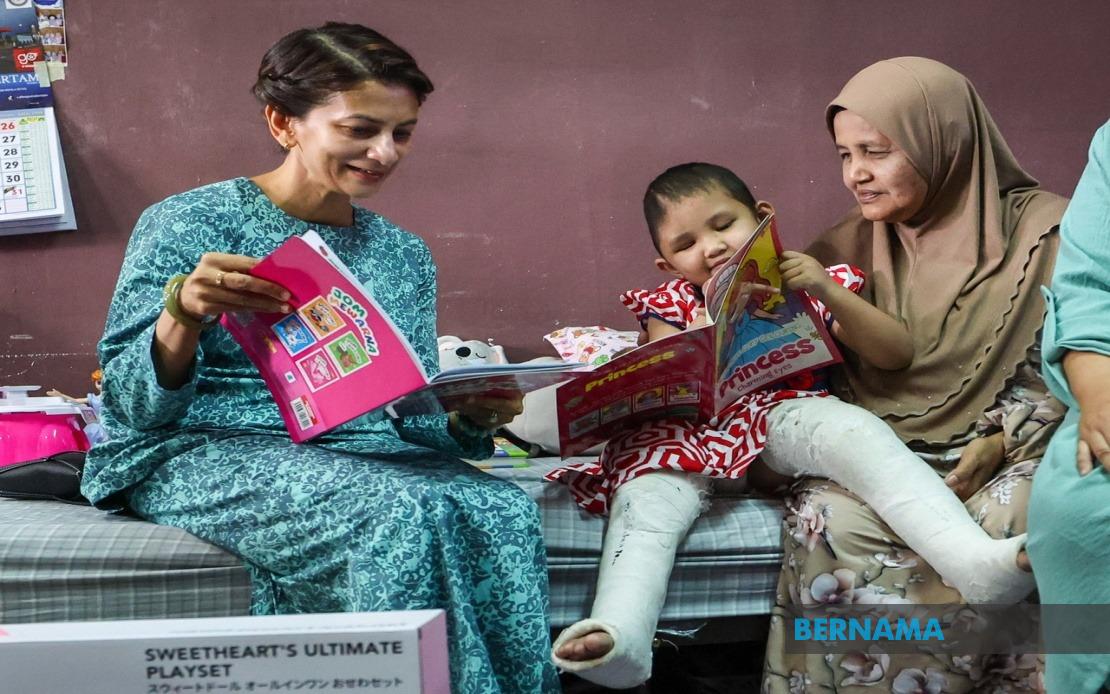
The remarkable recovery of three-year-old Aulia Sofia Ahmad Shafiq continues to inspire hope more than a month after the devastating collision that claimed the lives of six members of her family in Sungai Petani. Discharged from Sultanah Bahiyah Hospital in Alor Setar on July 2 following nearly four weeks of intensive treatment, the young girl is now under the care of her paternal aunt in Taman Bandar Bertam Putra, where medical professionals have observed steady progress in her physical and psychological healing.
The crash, which occurred at approximately 3.50 pm on June 7, involved a newly purchased Proton X50 sport utility vehicle colliding with a lorry as the family travelled from Penang toward Merbok. Among those killed were Aulia Sofia's parents, Ahmad Shafiq Ahmad Shukri, 27, and Jamaliah Sannusi, 29, her two-month-old brother Ahmad Mikail, her paternal grandmother Nora Mhd Husin, 55, her uncle Ahmad Fahim Ahmad Shukri, 27, and her seven-year-old cousin Iskandar Affan Ibrahim. The surviving child's escape from such a catastrophic event has been widely regarded as extraordinary, given the severity of injuries sustained by other passengers.
According to Siti Nor Atikah Ahmad Syukri, 32, who now provides daily care for Aulia Sofia alongside her immediate family, the child's progress has exceeded initial medical expectations. Speaking from her home, the aunt described the girl as displaying characteristics of a healthy, active young child, with energy levels that continue to improve steadily. Her extended family views Aulia Sofia's survival and recovery trajectory as nothing short of miraculous, particularly given that medical personnel initially assessed her chances of surviving the incident as extremely limited. The transformation from those early days in hospital care to her current state represents a powerful narrative of resilience and medical intervention.
Despite these encouraging developments, significant challenges remain on Aulia Sofia's recovery path. Both of her legs sustained fractures during the impact, leaving her currently unable to walk. Siti Nor Atikah confirmed that the family is maintaining close coordination with orthopaedic specialists, with a follow-up examination scheduled for July 26 to assess healing progression and discuss rehabilitation strategies. The immobility, while temporary in nature, underscores the severity of the physical trauma the child endured and highlights the months of physiotherapy that likely lie ahead before she regains full mobility.
Equally concerning is the eye injury sustained during the crash. Aulia Sofia suffered a ruptured eyeball and severe trauma to her left eye, necessitating surgical intervention by hospital physicians. While doctors successfully performed procedures aimed at preserving the eye itself, the extent of vision restoration remains uncertain at this stage. Medical professionals have cautioned that her sight may be completely restored, partially compromised with blurred vision, or permanently lost depending on how the injury heals and responds to further specialist examination. This prognosis uncertainty adds a layer of anxiety for her caregivers, who await results of additional assessments before understanding the long-term visual implications.
The child also sustained significant head injuries and severe psychological trauma stemming from the accident. Regaining consciousness approximately two weeks after the collision, Aulia Sofia has since been gradually informed about the deaths of her parents and other family members. Navigating this grief process while managing physical recovery presents considerable challenges for both the child and her extended family, particularly given her young age and limited capacity to process such profound loss. The integration of trauma counselling and psychological support into her recovery programme appears essential, though specific details regarding such services remain undisclosed.
On July 18, the Raja Muda of Kedah, Tengku Sarafudin Badlishah ibni Al Aminul Karim Sultan Sallehuddin, accompanied by Raja Puan Muda of Kedah Che Puan Muda Zaheeda Mohamad Ariff and their daughter Tunku Zara Bahiyah, visited Aulia Sofia at her home in Bertam. The royal visit, though brief, carried significant symbolic weight and practical support. During the engagement, the royal family presented essential aid to assist those caring for the child and established a National Education Savings Scheme (SSPN) account designed to secure funding for her future educational needs. The gesture demonstrated the institution's recognition of the family's loss and commitment to supporting the child's long-term welfare and development.
Siti Nor Atikah expressed profound gratitude for the royal visit, characterising the gesture as emblematic of the royal family's deep compassion toward families confronting personal tragedy. The timing of the visit—occurring while Aulia Sofia remains in the critical early stages of recovery—carries particular significance for the extended family, who are navigating grief, financial considerations, and the practical demands of providing comprehensive care for a young trauma survivor. The presentation of financial aid and educational investment signals ongoing institutional support at a time when the family faces considerable expenses related to medical follow-up appointments, rehabilitation services, and general childcare.
The practical arrangements for Aulia Sofia's future have been the subject of careful deliberation within her extended family. Siti Nor Atikah's husband, Ibrahim Ghazali, 39, a lorry driver by profession, has publicly stated the couple's intention to raise Aulia Sofia as their own daughter. Currently, the family is navigating legal guardianship procedures to formalise this arrangement and ensure clarity regarding guardianship rights and responsibilities. The decision reflects not merely familial obligation but also genuine affection, as Ibrahim noted that Aulia Sofia's cousins have maintained close relationships throughout her childhood and that she has expressed comfort in her familiar surroundings.
This domestic stability, anchored in existing family relationships and established social connections, provides important psychological grounding for a young child processing unimaginable loss. Ibrahim emphasised that the cousins remain constantly present in the household, creating an environment of consistent companionship and normalcy that typically supports children's emotional recovery. The permanence of this arrangement, once legal procedures conclude, should provide assurance regarding long-term security and continuous family support as Aulia Sofia progresses through her medical recovery and eventual psychological healing.
The broader implications of this accident extend beyond the individual tragedy to raise questions about vehicle safety standards, road safety protocols, and the protection afforded to passengers in unexpected collisions. The Proton X50, being a newly purchased vehicle at the time of the crash, should theoretically incorporate contemporary safety features, yet the incident resulted in fatalities and serious injuries. Such questions merit consideration by relevant authorities and safety advocates, particularly regarding prevention measures that might protect vulnerable passengers, including young children, in high-impact collisions. Additionally, the case underscores the critical importance of emergency medical response capability and trauma centre capacity in rural and semi-rural areas, where access to specialised care may significantly impact survival outcomes following serious accidents.

