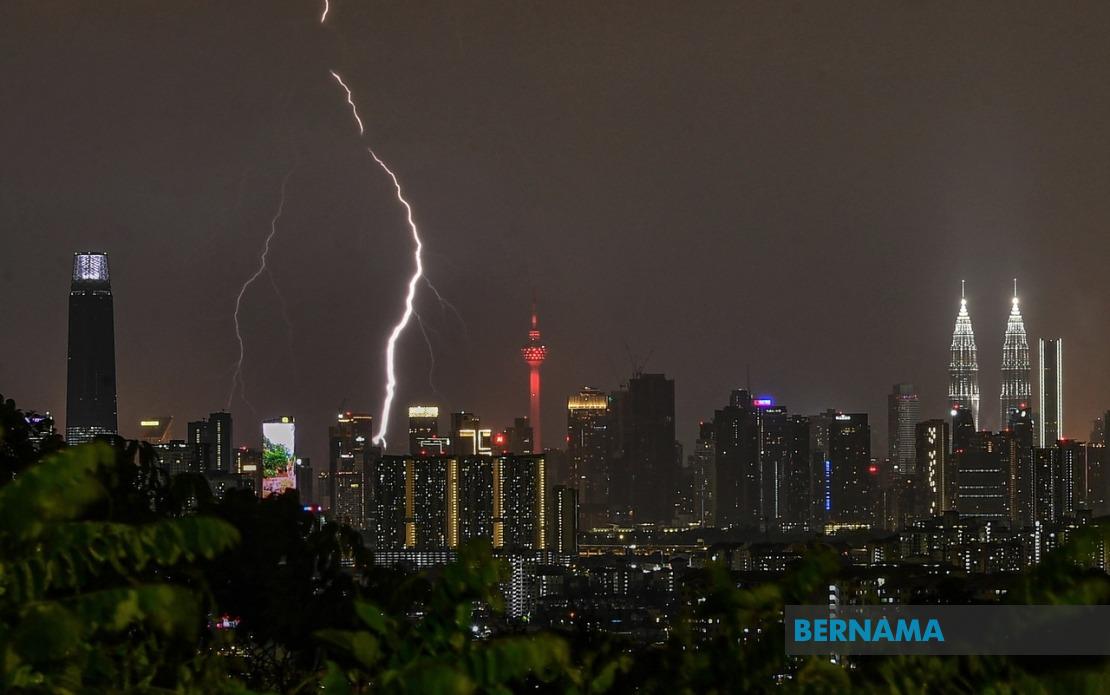
The Malaysian Meteorological Department issued an urgent weather alert on Thursday affecting a large swathe of the country's densely populated west coast and central regions. The thunderstorm warning, announced at 2 pm, encompasses the entirety of Melaka and Penang alongside substantial portions of five other states, including the federal capital, with potentially severe conditions forecast to continue until 5 pm the same day. The breadth of the warning underscores the scale of the weather system approaching, with forecasters indicating that residents across multiple states should prepare for rapid deterioration in atmospheric conditions.
In Peninsular Malaysia's northern reaches, several districts within Kedah face the brunt of the expected disturbance. The affected zones include Kuala Muda, Sik, Baling, Kulim and Bandar Baharu, areas that encompass both rural agricultural regions and growing urban centres. These localities, home to hundreds of thousands of residents, will experience the combination of torrential rainfall and potentially damaging gusts of wind that typically accompany such severe weather phenomena. The warning for this state reflects the expansive nature of the weather system, which appears to be advancing across a broad geographical front.
Perak's warning coverage extends across an even more extensive network of districts, reflecting the state's large territorial expanse. The departments and localities placed on alert comprise Kerian, Larut, Matang and Selama in the northern sections, alongside Hulu Perak, Kuala Kangsar, Kinta, Kampar, Batang Padang and Muallim scattered throughout the state's interior and southern portions. This geographical distribution indicates that the threatening weather pattern will impact communities ranging from coastal lowlands to inland highlands, with particular concern for areas prone to flash flooding or landslides in elevated terrain.
The eastern state of Pahang, strategically positioned across the peninsula's mountainous spine, faces warnings for Cameron Highlands, Lipis, Raub, Bentong, Pekan and Rompin. The inclusion of Cameron Highlands—a substantial highland district and popular tourist destination—carries particular significance, as such elevated areas can experience rapid runoff and dangerous conditions during heavy precipitation events. The warning demonstrates that meteorological authorities anticipate the system will affect the full breadth of Pahang's diverse geography.
Selangor, the nation's most economically significant state and home to nearly six million residents, faces widespread exposure to the forecasted conditions. The affected areas encompass the entire Klang Valley metropolitan region through zones such as Sabak Bernam, Kuala Selangor, Klang, Petaling and Gombak, regions that contain Malaysia's largest concentration of commercial, industrial and residential infrastructure. The warning also covers Hulu Selangor, Hulu Langat and Jelebu in neighbouring Negeri Sembilan, indicating that the Greater Kuala Lumpur region faces comprehensive exposure. Given the density of urban development and critical infrastructure in these zones, such weather events carry significant implications for transportation networks, electrical systems and public safety.
The southern state of Johor, Malaysia's second-largest state by population, also falls within the warning perimeter across six districts. Tangkak, Segamat, Muar, Batu Pahat, Kluang and Mersing span from the state's western plateau regions through to its southeastern coastal areas and the island zones. This distribution pattern suggests that the meteorological system possesses sufficient spatial extent to simultaneously affect communities separated by considerable distances, typical of major pressure systems capable of generating severe local conditions.
The combination of thunderstorms, heavy rainfall and strong winds poses multifaceted risks to affected populations. Beyond the obvious dangers of lightning strikes during electrical storms, heavy downpours can rapidly overwhelm drainage infrastructure in urban areas, leading to localized flooding in low-lying zones and basement areas. Strong winds can damage structures, uproot trees and create hazards for outdoor workers and motorists. In agricultural regions, such weather can damage crops and threaten livestock, while in forested areas, wind-driven storms can increase fire risk if lightning ignites vegetation.
MetMalaysia's advisory emphasized the importance of public vigilance and continuous monitoring of weather updates, reflecting the fluid nature of atmospheric conditions and the potential for the situation to deteriorate further or persist beyond the initial forecast timeframe. Residents and authorities were urged to maintain awareness of developing conditions, as meteorological forecasts can be refined as new observational data becomes available. The warning system operates on the understanding that conditions may change rapidly, necessitating updated information for public safety decision-making.
For those planning outdoor activities, commuting or engaging in weather-sensitive operations across the affected regions, the warning suggests postponement or relocation of non-essential activities. Essential services including transportation authorities and emergency responders typically heighten preparedness during such periods. Motorists face particular risks during thunderstorms on highways and secondary roads, while those in areas historically vulnerable to flooding should consider evacuation or elevated positioning of valuable belongings. The coordinated nature of this multi-state warning indicates that meteorological authorities have detected a significant weather system warranting immediate public notification and precautionary measures across a substantial portion of the country.

