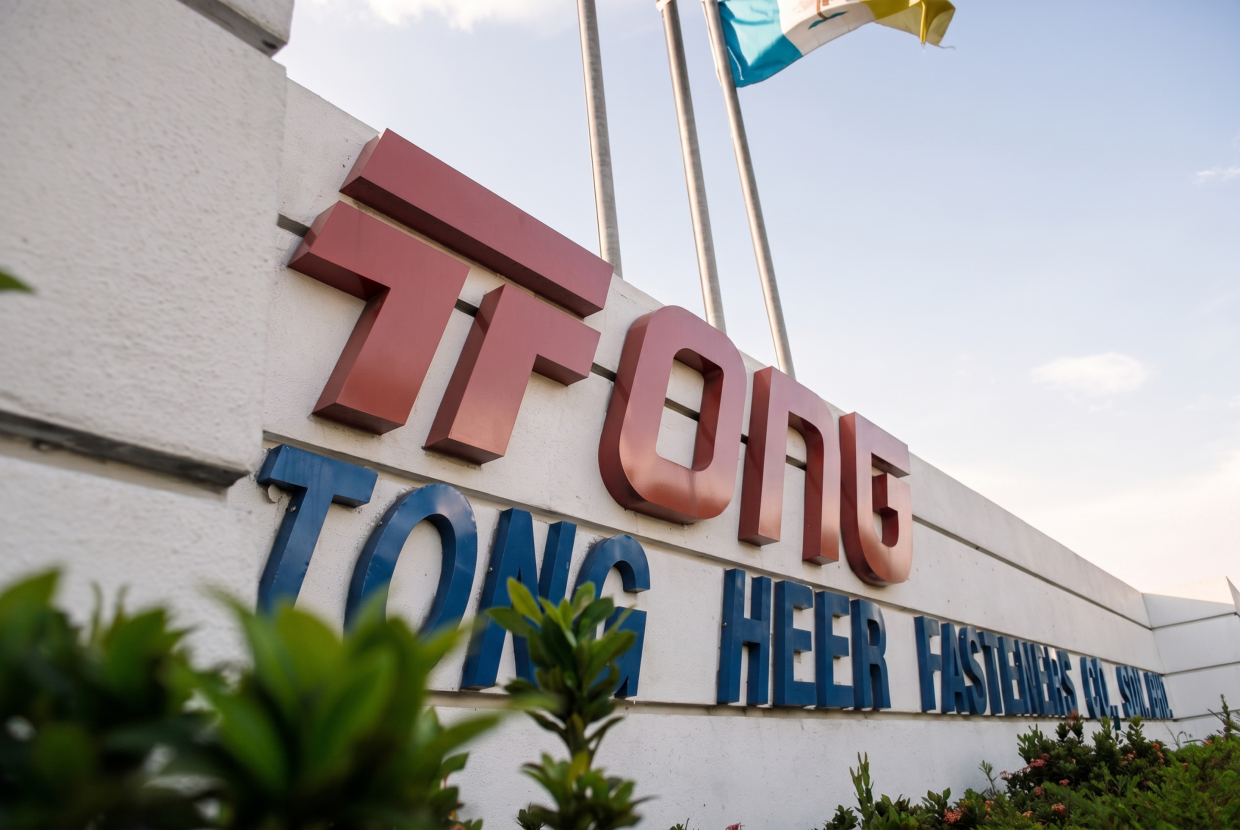
Two major shareholders controlling nearly three-quarters of Tong Herr have jointly proposed taking the stainless steel fasteners manufacturer private at RM2.55 per share, a move that would represent a substantial return for existing investors while fundamentally restructuring the company's governance. The offer price signals confidence in the business fundamentals despite weak equity market performance, and reflects a strategic decision to exit public markets entirely. Allrich Corp and Richard Holdings Ltd together hold approximately 74.5% of the company's issued capital through their combined stakes of 39.68% and 31.95% respectively, alongside their related parties and persons acting in concert, giving them decisive control over any privatisation process.
The proposed price of RM2.55 translates to a 34.2% premium above Tong Herr's closing price of RM1.90 at the time of the announcement, making the offer comparatively attractive to shareholders seeking liquidity. However, the offerors have also referenced a longer calculation window, noting that the RM2.55 figure represents a 41.7% premium to the RM1.80 closing price recorded on 5 August 2026, when measured against the company's closing price and volume weighted average price over the preceding period. This methodology suggests the shareholders have carefully calibrated the offer to reflect recent market conditions while building in a buffer to incentivise acceptance from minority shareholders who would otherwise remain locked in an illiquid investment.
The privatisation would be structured as a selective capital reduction and repayment exercise, a common mechanism in Malaysian corporate restructuring that allows companies to return capital to shareholders while simultaneously delisting from public markets. Through this approach, minority shareholders would have an immediate exit opportunity, receiving cash payment in exchange for their holdings. The joint offerors have made clear their intention to seek delisting from Bursa Malaysia's Main Market upon completion of the transaction, signalling their belief that the company no longer requires the regulatory framework and investor scrutiny associated with public company status.
Tong Herr's remarkable illiquidity provides crucial context for understanding why the controlling shareholders have chosen this path. The company has recorded an average daily trading volume of just 21,075 shares over the past three years, representing merely 0.05% of its free float. This negligible trading activity means that even modest sell orders from major shareholders would face significant market impact, making the capital markets an impractical exit channel. For minority investors, the liquidity situation presents an even more constrained position, as accumulated shareholdings often cannot be disposed of without material price concessions. The privatisation offer thus provides genuine value by converting shareholdings that are essentially illiquid into immediate cash, addressing a fundamental market failure.
The strategic rationale underpinning the privatisation focuses on the operational constraints imposed by maintaining public company status. The joint offerors argue that delisting would grant Tong Herr substantially greater flexibility in managing its business operations, allowing the company to pursue long-term growth initiatives and value creation without the compliance costs, regulatory reporting burdens, and management attention demanded by Bursa Malaysia listing rules. For a company in the industrial products sector with a relatively limited shareholder base and minimal institutional investor involvement, these ongoing costs may represent a material drag on profitability and strategic agility. Operating as a private entity would eliminate requirements for quarterly financial disclosures, annual general meetings, and the extensive governance apparatus that smaller listed companies often struggle to justify economically.
Tong Herr operates in the manufacturing and sale of stainless steel fasteners, aluminium extrusions, and related industrial products—sectors that typically require sustained capital investment in production facilities, technology, and working capital rather than external equity financing. The company's business model does not align naturally with the public capital markets, where investor focus typically concentrates on quarterly earnings performance and short-term trading dynamics rather than the patient capital requirements of industrial manufacturing. Privatisation would enable management to pursue multi-year strategic initiatives without pressure to demonstrate quarter-on-quarter earnings growth or accommodate activist investors seeking near-term returns.
The privatisation process remains subject to substantial approval requirements that provide meaningful protection for minority shareholders. The transaction requires approval from non-interested shareholders through a special resolution at an extraordinary general meeting, necessitating support from at least a majority in number of non-interested shareholders as well as 75% of voting value from that group. Additionally, the proposal must not be voted against by more than 10% in value of votes attached to all shares held by non-interested shareholders, creating a multiple-layer approval framework. These protections reflect Malaysian securities law requirements designed to ensure that controlling shareholders cannot force through fundamental corporate restructuring without demonstrating broad acceptance among the broader investor community.
The High Court confirmation requirement introduces an additional layer of judicial scrutiny into the process. Malaysian courts, when reviewing selective capital reduction schemes, examine whether the proposal treats all relevant shareholder classes equitably and whether the pricing reflects fair value considering company circumstances. This judicial overlay adds procedural legitimacy while reducing the risk that the transaction would be subsequently challenged as unfairly oppressive to minorities. The involvement of courts in confirming privatisation schemes represents an important safeguard that distinguishes structured delisting processes from situations where controlling shareholders simply exercise their voting power to achieve predetermined outcomes.
Tong Herr's non-interested directors now face the responsibility of deliberating on the privatisation proposal and determining whether to support or oppose it on behalf of minority shareholders. These independent directors serve a critical fiduciary function, particularly given the inherent conflict of interest when controlling shareholders propose transactions directly affecting all shareholders. The board's position on the offer will significantly influence the outcome of the shareholder vote, as minority investors typically rely on independent director recommendations when evaluating complex corporate restructuring proposals. The company has indicated that further announcements regarding the board's deliberations will follow in due course.
For Malaysian investors and the broader regional business community, the Tong Herr privatisation represents a broader trend of illiquid smaller companies reassessing whether public market status generates sufficient value to justify ongoing compliance costs. Southeast Asia's equity markets contain numerous companies with minimal share trading activity, raising questions about whether traditional listings serve minority shareholders or primarily benefit controlling shareholders seeking regulatory legitimacy. The Tong Herr proposal demonstrates a mechanism—structured capital reduction with court oversight—through which controlling shareholders can address this inefficiency while providing exit liquidity to minorities. Whether other illiquid listed companies in Malaysia and the region adopt similar approaches may reshape the composition and quality of public equity markets across Southeast Asia.
The transaction highlights tensions within the Malaysian capital markets between liquidity and ownership concentration. Many small and medium-sized Malaysian enterprises prefer retaining family or founder control while maintaining public listings for credibility and potential future financing flexibility, yet this structure often results in traded shares finding few buyers or sellers. Privatisation through selective capital reduction offers one solution, though it eliminates the theoretical possibility of future equity capital raising from public markets. For Tong Herr's controlling shareholders, the apparent view is that the costs of maintaining public status outweigh speculative future benefits from remaining listed, a calculation that may increasingly characterise Malaysian corporate finance decisions as listing requirements become more stringent and investor scrutiny intensifies across Southeast Asian capital markets.

