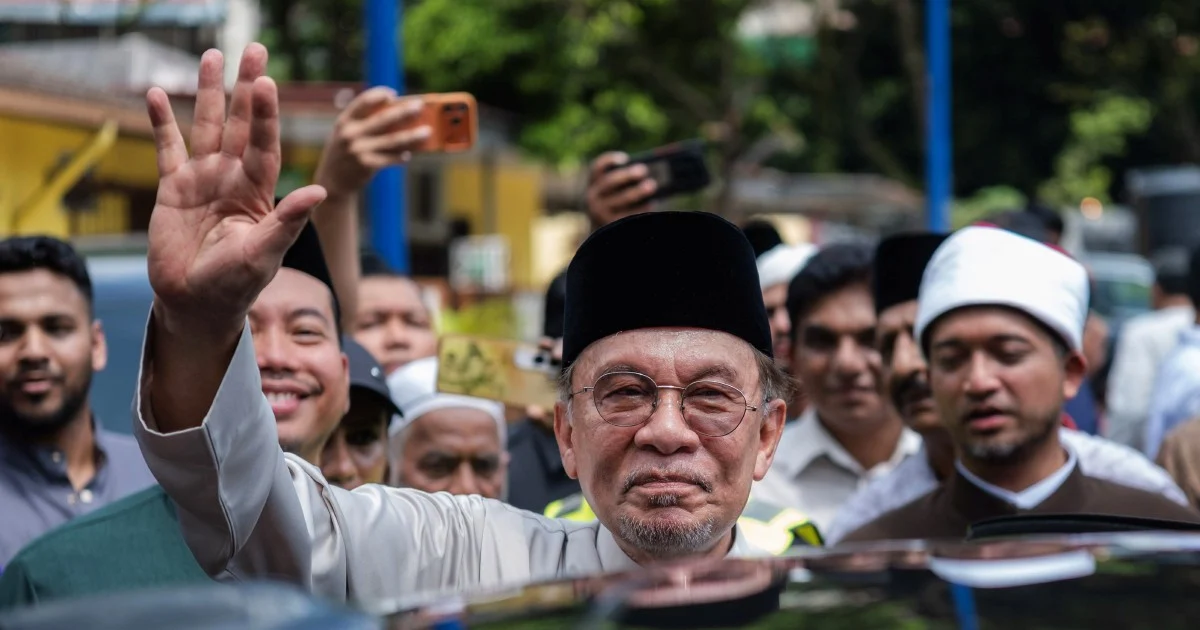
The Johor state election is entering a decisive phase as the nation's most senior political figures prepare to descend on the state this weekend for a concentrated burst of campaign activities. The arrival of Prime Minister Anwar Ibrahim, Deputy Prime Minister Zahid Hamidi and other cabinet-level leaders underscores just how consequential Johor remains in Malaysia's electoral calculus. Their presence signals that both the federal government and opposition camps view the contest as strategically vital, with implications that extend well beyond the state's borders into national political dynamics.
For Johor, these high-profile visits carry particular weight. The southern state has long been a political heavyweight, commanding significant parliamentary representation and wielding considerable influence over the composition of any federal government. When national leaders make the trip south to conduct campaigns rather than delegating to local politicians, it sends a clear message about the stakes involved. The scheduled ceramahs and public rallies this weekend will see these established political figures address crowds directly, attempting to translate their national profiles into local voter support.
Anwar Ibrahim's participation deserves particular attention given his dual role as Prime Minister and Pakatan Harapan coalition leader. His personal investment in the Johor campaign reflects the coalition's determination to consolidate control in a state where it holds significant influence. The Prime Minister's involvement lends institutional weight and gravitas to his party's messaging, allowing him to frame the election within the broader context of his administration's policies and vision. Similarly, Zahid Hamidi's attendance as Deputy Prime Minister, combined with his traditional base of support in the region, creates a dual appeal to Johor voters who may be sensitive to both local representation and federal governance considerations.
The concentration of campaign activity into a single weekend reflects how modern Malaysian electoral contests have evolved into intensive, high-stakes affairs where timing and messaging precision matter enormously. Rather than spreading campaign appearances thinly across numerous visits, political strategists now favour compressed scheduling that generates maximum media coverage and creates a sense of momentum. This approach allows parties to dominate news cycles and shape public conversation during critical periods immediately before polling.
From a Southeast Asian perspective, Malaysian elections increasingly command attention as indicators of regional political trends. Johor's election could signal whether governing coalitions can maintain electoral momentum in an era of greater voter volatility and fragmentation. The mobilisation of top national leaders reflects concerns that local factors—constituency boundaries, community grievances, incumbent performance—may no longer be sufficient to guarantee outcomes, necessitating intervention from the federal level.
For Malaysian business and investor communities, the election's trajectory matters significantly. Johor's economic importance as a trade hub connecting Malaysia to Singapore and broader ASEAN markets means political stability and clear governance direction are commercially relevant. Leadership transitions in the state administration can affect infrastructure projects, regulatory clarity, and regional economic coordination. National leaders' direct engagement in the campaign reflects their awareness that voters increasingly evaluate state-level contests partly through an economic competence lens.
The involvement of multiple senior politicians also suggests coalition building and factional management within the broader political structures. Different leaders appeal to distinct voter constituencies—Anwar to urban middle-class and reform-minded voters, Zahid to traditional bases and rural constituencies. By fielding a diverse leadership roster, parties maximise their ability to address the state's heterogeneous electorate across different demographic and geographic lines.
The weekend campaign blitz also provides opposition parties with urgency and opportunity. If government-aligned candidates are receiving elevated attention and resources, opposition forces must respond proportionately to maintain relevance and demonstrate competitive strength. This creates an escalatory dynamic where political intensity ratchets upward as election day approaches, and strategic choices made during crucial weekend appearances can shift momentum considerably.
Historically, Johor elections have demonstrated surprising volatility despite the state's seeming political predictability. Previous contests have seen unexpected swings in particular constituencies, shifts in voter sentiment on specific issues, and instances where national political trends have failed to translate uniformly into state outcomes. This unpredictability may explain why national leaders feel compelled to campaign personally rather than trusting local machinery entirely, seeking to stabilise support through direct persuasion.
The scheduling of these campaign events also intersects with Malaysia's monsoon season and the practical logistics of conducting mass gatherings. Weekend appearances allow working voters and rural residents to attend without work disruptions, while Saturday and Sunday ceramahs can attract different audience compositions than weekday events. Political strategists understand that voter demographics shift throughout the week, with different populations available and receptive at different times.
Looking forward, how effectively these top leaders connect with Johor voters during the weekend campaign will likely influence election outcomes and subsequent national political developments. The state's electoral verdict could strengthen or weaken these leaders' positions within their respective coalitions, affecting their leverage in future inter-party negotiations and government formation processes. For Malaysian political observers and analysts, watching Johor's response to these high-level campaign efforts will provide valuable insights into contemporary voter behaviour and the continuing relevance of personality-driven politics in Malaysia's electoral landscape.

