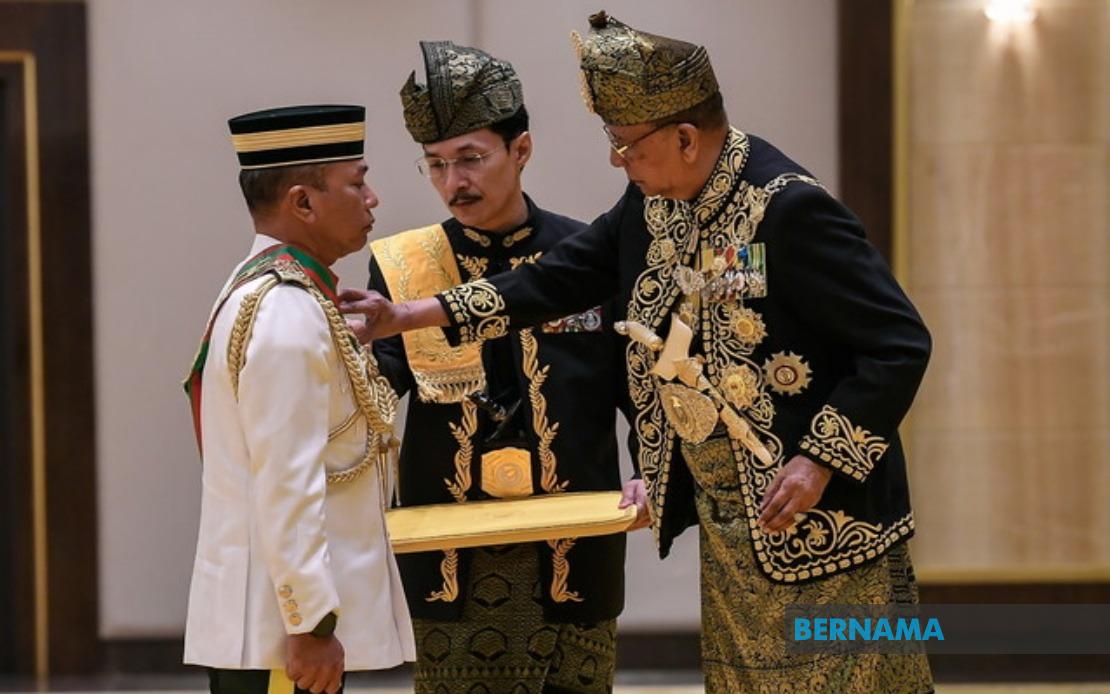
The Sultan of Kedah, Al Aminul Karim Sultan Sallehuddin Sultan Badlishah, presided over an honours ceremony at Istana Anak Bukit in Alor Setar that recognised the nation's most senior defence and law enforcement leadership. Chief of Defence Forces General Tan Sri Malek Razak Sulaiman and Inspector-General of Police Tan Sri Mohd Khalid Ismail both received the Darjah Dato' Seri Setia Pahlawan Yang Amat Dihormati, the highest honour conferred during the 84th birthday celebrations. Their inclusion at the head of the honours list underscores the monarchy's continued recognition of the armed forces and police force as critical pillars of national stability and security.
The conferment of honours during royal birthday celebrations holds particular significance in Malaysia's constitutional framework, as state sultans exercise this prerogative to recognise service and contribution to their respective realms. In Kedah, such ceremonies provide an occasion to celebrate achievements across multiple sectors of society. The breadth of recipients spanning security, health, agriculture, and real estate development reflects the diverse ways in which individuals contribute to the state's progress and prosperity.
Among those receiving the Orang Besar Enam Belas honour was Datuk Syed Khairol Anuar Syed Abidin, while Datuk Mohamad Che Nai obtained the Orang Besar Tiga Puluh Dua title. These ranks within Kedah's traditional hierarchy carry both ceremonial and substantive weight, positioning recipients as senior advisors within the sultanate's administrative and advisory structures. Four additional recipients earned the Darjah Dato' Setia Diraja Kedah, reflecting the state's commitment to recognising sustained contributions from its senior civil and political leadership.
Kedah police chief Datuk Adzli Abu Shah received the Darjah Dato' Setia Pahlawan in recognition of his role overseeing law enforcement operations in the northern state. The honour acknowledges the critical work of state police forces in maintaining public order and responding to emerging security challenges. For Major (Retired) Mansor Zakaria, a member of Kedah's state executive council, and PAS Youth Chief Afnan Hamimi Taib Azamudden, the conferment of the Darjah Setia Sultan Sallehuddin Kedah represented recognition of their roles in both governmental administration and political party leadership.
Nine individuals received the Darjah Setia Diraja Kedah, a cohort that included Kedah State Islamic Religious Affairs Department director Syeikh Mohamad Subhi Abdullah. Religious affairs leadership remains crucial to the sultanate's role as guardian of Islam in the state, and the honour reflects the importance placed on religious administration and spiritual guidance. Maznim Ismail, deputy chief executive (Management) of the Langkawi Development Authority, was similarly recognised for contributing to tourism development and infrastructure that benefits the island and state economy.
The health sector featured prominently among the honoured recipients, with Sultanah Bahiyah Hospital's head of Neurosurgery Department Dr Adam Mohd Zakaria and senior consultant general surgeon Dr Manisekar K. Subramaniam both receiving recognition. Additionally, Dr Jamaliah Omar, deputy director of the Health Ministry's Dental Health Programme, was honoured for advancing oral health services across the nation. These appointments underscore the health sector's ongoing importance in Malaysia's development agenda, particularly as the country navigates post-pandemic healthcare priorities.
Agricultural development and land administration also featured significantly in the honours list. Zulkifli Romli, general manager of the Muda Agricultural Development Authority, received recognition for his stewardship of one of the nation's most productive agricultural regions. Such honours reinforce the state's commitment to supporting farmers and rural development in an era when agricultural innovation and productivity remain central to regional food security and rural livelihoods.
Yeoh Su Guan, chairman of the Real Estate and Housing Developers Association for Kedah and Perlis, and Jaffri Ahmad, president of Bismi Empire Sdn Bhd, represented the private sector and business community among the honourees. Their inclusion acknowledges the symbiotic relationship between government and the private sector in driving economic development and creating employment opportunities within Kedah and the broader northern region.
Beyond the most senior recipients, the Sultan conferred honours to broader cohorts recognising service across government and society. Thirty-one individuals received the Ahli Mahkota Kedah, while five were appointed as Ahli Setia Pahlawan. The Bintang Perkhidmatan Cemerlang Kedah went to 31 recipients, and the Bintang Kebaktian Masyarakat recognised contributions to community service with 43 appointments. These tiers of recognition ensure that dedicated service across multiple institutions and sectors receives formal acknowledgment.
Further tiers of service-based honours distributed during the ceremony included five appointments to the Ahli Cemerlang Semangat Jerai Kedah. The most numerous recognition came through the Pingat Perkhidmatan Cemerlang Kedah, with 55 recipients selected for their sustained excellence in their respective domains. Forty individuals received the Pingat Jasa Kebaktian in recognition of voluntary service and community dedication, whilst 15 long-serving officials were appointed to the Pingat Perkhidmatan Lama, acknowledging decades of faithful government employment.
The comprehensive honours list demonstrates the monarchical institution's role in consolidating national identity and rewarding meritorious service across sectors ranging from security and health to agriculture and business. For Malaysian readers, particularly those in Kedah and neighbouring states, such ceremonies represent opportunities to recognise the often-invisible contributions of thousands of civil servants and private sector professionals who advance the nation's development. The prominence accorded to military and police leadership reflects continuing official prioritisation of security institutions amid regional geopolitical dynamics and domestic counterterrorism operations.

