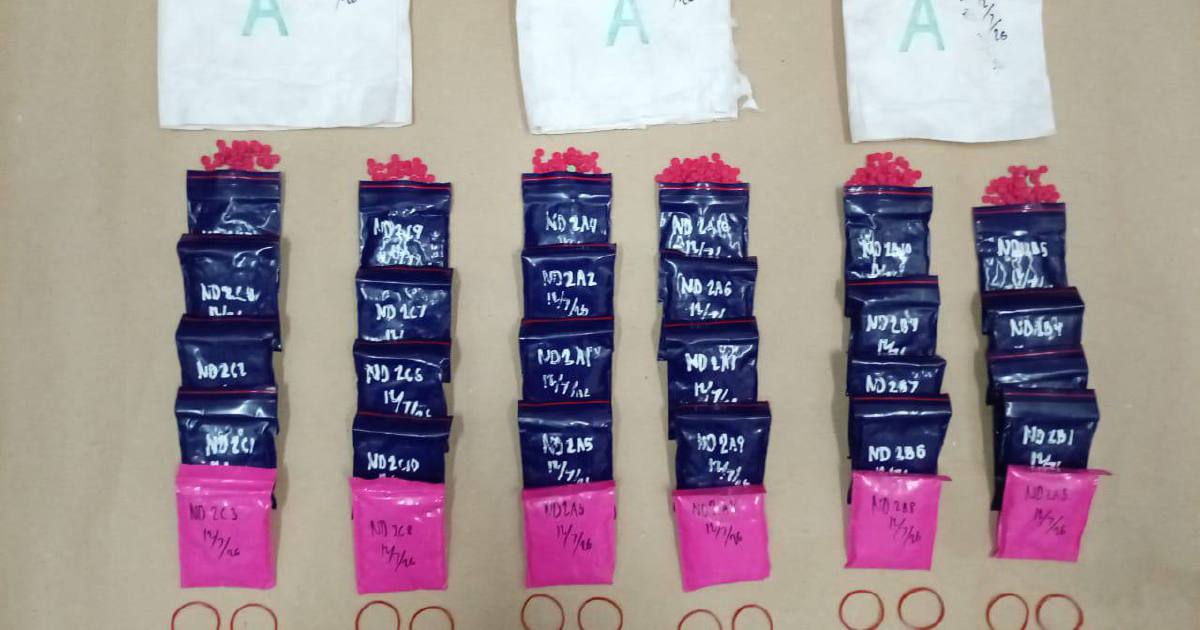
Police in Kelantan arrested a 35-year-old tow truck agent yesterday after discovering a significant cache of yaba pills during an operation near Wakaf Bharu. The seizure of 6,000 tablets, estimated to be worth RM60,000 on the street market, marks another notable drug interdiction in the northeastern state where trafficking networks continue to operate across porous borders and transportation corridors. The suspect was apprehended at Jalan Kubang Batang following intelligence-led enforcement action that revealed the concealment of controlled substances within a motor vehicle.
Yaba, a methamphetamine-based tablet increasingly prevalent across Southeast Asia, represents a significant public health and law enforcement challenge throughout Malaysia. The drug combines amphetamine and caffeine, producing potent stimulant effects and carrying severe addiction potential alongside serious cardiovascular risks. Unlike powder-form methamphetamine, yaba's tablet format makes it easier to traffic, conceal, and distribute at street level, facilitating rapid dissemination through communities. The drug maintains particularly strong demand among younger demographics and within nightlife sectors, where its stimulant properties appeal to users seeking prolonged wakefulness and energy enhancement.
Kelantan's geographic position adjacent to Thailand presents inherent vulnerabilities in drug interdiction efforts. The state's porous northern boundaries, combined with existing trafficking infrastructure developed over decades, create persistent supply-chain opportunities for organised criminal networks. Intelligence agencies across the region have documented substantial methamphetamine production facilities operating across the Thai border, with yaba tablets manufactured in significant quantities for distribution throughout Malaysia and beyond. The proximity of Tumpat and surrounding areas to international smuggling routes elevates law enforcement priorities in the region considerably.
The arrest highlights broader patterns observed by the Royal Malaysian Police's drug enforcement divisions, which have recorded escalating yaba seizures alongside expanding consumer markets. Traffickers increasingly exploit transportation workers and logistics sector employees to move contraband, recruiting individuals through financial incentives or coercive tactics. A tow truck agent's occupation provides legitimate movement capabilities and reduced suspicion during routine vehicle operations, making such professionals attractive targets for criminal recruitment. This modus operandi reflects sophisticated criminal adaptation to law enforcement responses across supply chains.
The estimated street valuation of RM60,000 reflects current market pricing dynamics in Malaysian distribution networks. Individual yaba tablets typically retail between RM10 and RM15 depending on location, purity, and transaction volume, though prices fluctuate based on supply availability and local competition. A single trafficking incident involving 6,000 tablets represents substantial supply intended for mid-level distribution rather than street-level retail, suggesting the suspect may have served as a consolidation point within a larger supply operation. The magnitude of seizure indicates the sophistication of criminal networks operating within the state.
Kelantan's law enforcement agencies have intensified counternarcotics operations in recent months, responding to intelligence assessments identifying the state as a transit zone for methamphetamine destined for peninsular distribution networks. The Bukit Aman Narcotics Division coordinates multiagency efforts combining highway interdictions, intelligence networks, and community informant development. Such targeted operations aim to disrupt mid-level supply chains while generating intelligence about supplier networks and downstream distribution territories. Individual arrests function simultaneously as enforcement actions and information-gathering mechanisms for broader criminal organisation mapping.
The investigation into the suspect's sourcing, intended recipients, and distribution targets will likely yield significant intelligence for narcotics units. Police procedures typically examine financial records, communication logs, and social networks to identify criminal associates and upstream suppliers. Such investigations frequently expand initial single-suspect cases into multiagency operations targeting larger trafficking organisations. The suspect's cooperation level and prior criminal history will substantially influence investigative scope and potential charges under the Dangerous Drugs Act.
This seizure aligns with documented trends showing yaba's entrenchment within Malaysian drug markets despite consistent enforcement efforts. The drug's potency, affordability relative to cocaine or heroin, and tablet format supporting convenient consumption drive continued demand growth. Public health implications extend beyond addiction concerns to encompass mental health deterioration, cardiovascular complications, and social disintegration affecting affected individuals and surrounding communities. Treatment capacity across Malaysian rehabilitation systems remains inadequate relative to increasing methamphetamine-related dependency cases.
The case underscores persistent challenges facing regional drug enforcement cooperation frameworks. While Malaysia coordinates with Thai authorities through bilateral mechanisms, fundamental asymmetries in enforcement capacity, resource allocation, and institutional priorities complicate sustained collaborative efforts. Production facilities across Thai territory continue operating with varying degrees of official tolerance or oversight deficiency, enabling suppliers to maintain consistent manufacturing volumes. Malaysian interdiction efforts address downstream consequences while upstream production remains insufficiently disrupted through transnational cooperation.
Prosecution under the Dangerous Drugs Act typically results in substantial imprisonment, with trafficking charges involving quantities exceeding 200 grams of methamphetamine carrying mandatory capital punishment provisions in Malaysia's sentencing framework. The distinction between trafficking and consumption quantities fundamentally shapes prosecutorial strategy and sentencing outcomes. The suspect's legal representation and potential mitigation factors will significantly influence final sentencing, though yaba possession for distribution represents among the most serious drug offences within Malaysian jurisprudence.
Beyond immediate law enforcement outcomes, this seizure contributes to broader situational awareness within narcotics intelligence communities regarding trafficking patterns, operational methods, and criminal network capabilities. Systematic recording and analysis of seizure data, suspect demographics, and distribution indicators enable law enforcement agencies to refine targeting strategies and resource allocation. Successful interdiction of major consignments disrupts street-level supply continuity, potentially elevating prices and reducing user accessibility temporarily. However, sustainable impact requires sustained organisational commitment combined with effective transnational cooperation addressing source-country production and transit-state vulnerabilities.

