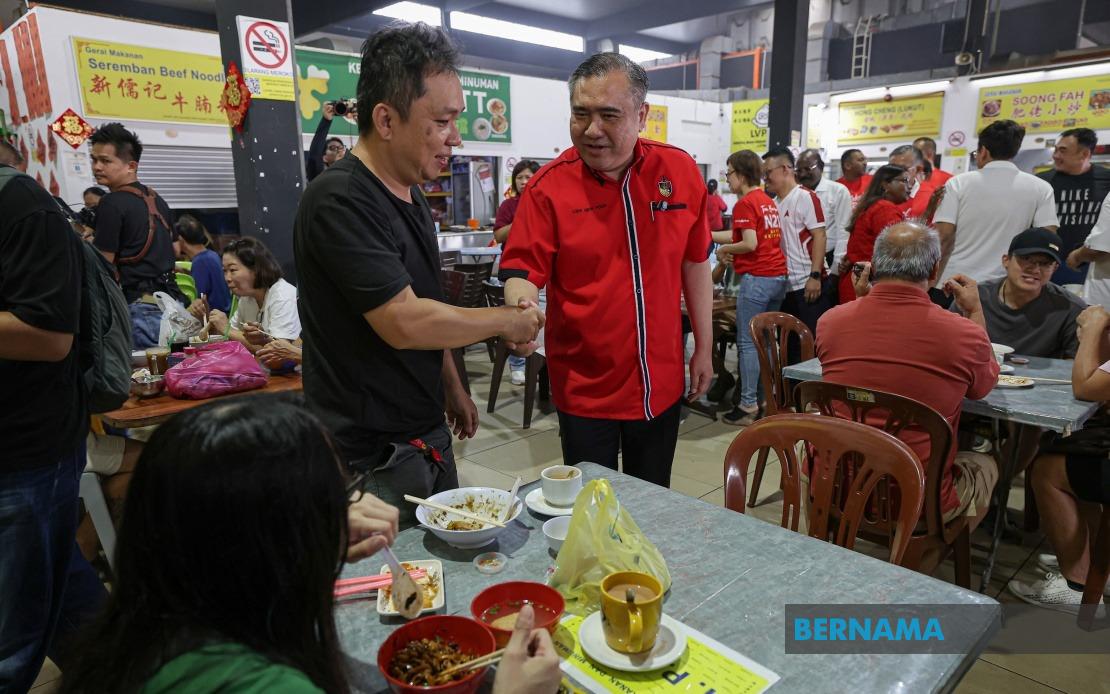
Transport Minister Anthony Loke has established an uncompromising position on road safety during the 16th Negeri Sembilan state election campaign, making it clear that traffic compliance will not be negotiable regardless of campaign pressures or the desire to win votes. Speaking in Seremban following a walkabout with Pakatan Harapan candidates, Loke underscored that preventing accidents and maintaining an orderly campaign environment takes precedence over the competitive race for electoral victory.
The DAP secretary-general's directive extends to his own party machinery, where he has personally ordered all campaign teams to consistently wear safety helmets whenever operating motorcycles. This reflects a broader push to normalise safety practices across the political spectrum, establishing a baseline expectation that transcends party affiliations and individual candidate preferences. The emphasis on helmet use represents the most visible and easily enforceable aspect of Loke's campaign safety protocol.
Loke illustrated his commitment through concrete action during the nomination process on the previous day. He participated in a convoy journey between Pekan Titi and Kuala Klawang, where he communicated a clear entry requirement to all participants: no helmet meant exclusion from the convoy. This approach demonstrates that safety conditions are not merely suggestions but actual prerequisites for campaign participation, creating a practical enforcement mechanism rather than relying solely on voluntary compliance.
Beyond helmet requirements, Loke has specifically flagged the dangerous practice of supporters riding on the tailgates of moving four-wheel-drive vehicles as reckless and unacceptable. This practice, which sometimes emerges during enthusiastic campaign rallies and convoy movements, poses genuine risk to participants who lack secure seating or handholds. By naming this behaviour explicitly, Loke signals that even seemingly minor campaign activities will be scrutinised for safety implications.
The minister's appeal extends to all contesting parties and their leadership structures, framing traffic law observance as an essential component of election integrity and campaign professionalism. His call for all parties and leaders to lead by example creates a shared responsibility framework, recognising that enforcement cannot succeed through ministerial directive alone but requires genuine buy-in from political actors across the spectrum. This shared accountability approach reflects awareness that campaign culture can either normalise or discourage risky behaviours depending on what leaders actively model.
The Negeri Sembilan state assembly was dissolved on June 5, with the Election Commission designating August 1 as polling day and July 28 for early voting. This timeline provides approximately six weeks for the campaign period, a window during which safety practices will be consistently tested as campaign intensity increases. The early voting provision for military personnel and police officers represents an important logistical element, with 16,884 military personnel and their spouses plus 5,455 police officers eligible to vote early, adding complexity to the overall election management framework.
Approximately 889,490 registered voters are eligible to participate in this state election, comprising 867,151 ordinary voters alongside the designated early voter categories. This substantial electorate means that campaign activities will involve significant movement of candidates, volunteers, and supporters across multiple constituencies and locations, multiplying the frequency of situations where traffic safety practices become relevant. The scale of voter engagement inherent in reaching nearly 890,000 citizens creates genuine logistical challenges that make structured safety protocols essential rather than optional.
Loke's intervention reflects broader recognition that election periods can generate distinctive safety hazards. Campaign convoys, candidate movements between multiple venues, enthusiastic supporter gatherings, and the pressure to maintain high-visibility activities sometimes create environments where participants become complacent about routine safety precautions. The combination of excitement, time pressure, and competitive intensity can erode the judgement that normally governs daily behaviour. By establishing clear expectations before the campaign intensifies, Loke attempts to create a protective cultural baseline.
The political context matters significantly here. Negeri Sembilan has historically been a competitive state, and the involvement of Pakatan Harapan candidates across multiple constituencies indicates serious engagement from the ruling coalition. When high-stakes elections combine with ambitious campaign strategies, the temptation to cut safety corners can increase. Loke's stance suggests awareness that ministerial authority, combined with party discipline, offers the best mechanism for maintaining standards that individual candidates might otherwise sacrifice in pursuit of electoral advantage.
From a public health perspective, election-related accidents carry particular significance because they can affect not only campaign participants but also innocent road users and bystanders. Unsafe campaign practices essentially create externalities that affect the broader public. This reality strengthens the justification for regulatory intervention and ministerial involvement in establishing campaign safety standards, moving the issue beyond mere party discipline into genuine public safety territory.
The enforcement challenge remains substantial. While Loke can control DAP campaign practices and set expectations for Pakatan Harapan partners, ensuring compliance across all competing parties and independent candidates requires sustained attention and potentially cooperation with traffic enforcement agencies. The six-week campaign period will test whether established safety norms actually hold under competitive pressure or whether they erode as election day approaches and stakes intensify.

