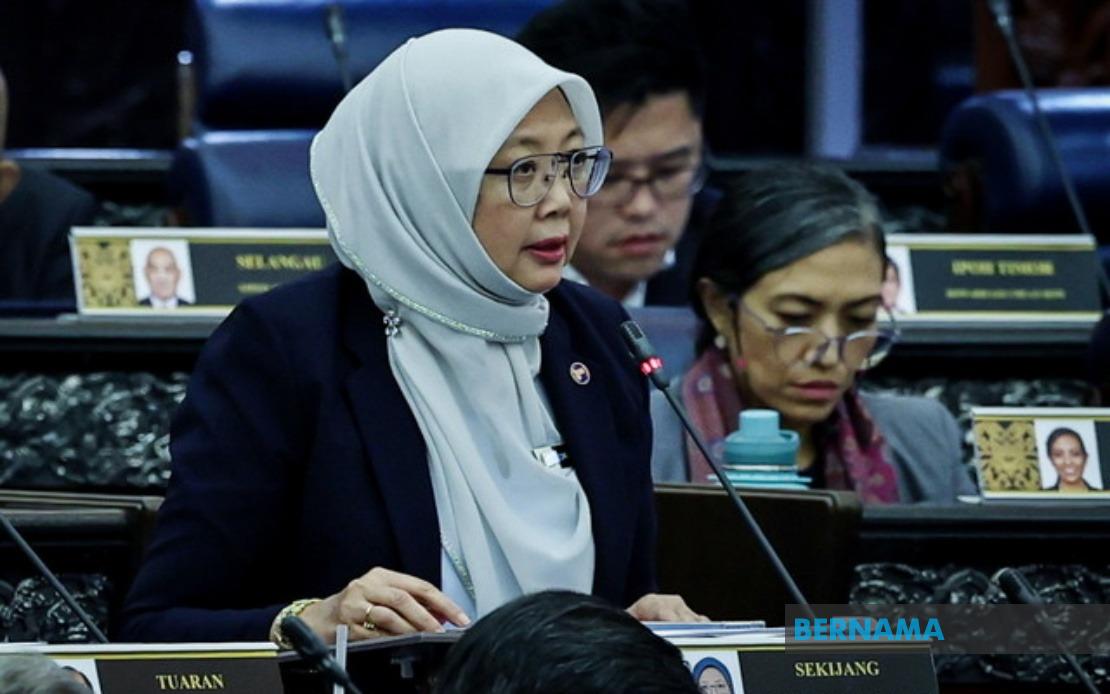
Datuk Seri Dr Zaliha Mustafa, chairman of the Government Backbenchers Club and Member of Parliament for Sekijang, has made a compelling case for opening the books on Tabung Haji's recovery trajectory. Speaking during a parliamentary debate following a ministerial briefing on the Royal Commission of Inquiry report, she advocated for the full disclosure of both implementation progress on the 25 RCI recommendations and concrete details of efforts to recoup the institution's losses. Her intervention reflects growing parliamentary concern that the national pilgrimage fund—a cornerstone institution managing savings for millions of Malaysian Muslims—requires unprecedented openness to rebuild public confidence.
The timing of Dr Zaliha's call carries weight. Tabung Haji has implemented 75 per cent of the RCI's recommendations as of late July, yet the 211-page inquiry report itself languished in relative obscurity until recently, despite having been submitted to the Yang di-Pertuan Agong in August 2022. For an institution entrusted with the financial aspirations of Muslim Malaysians seeking to perform the Hajj, such opacity runs counter to the institution's foundational purpose. The financial crisis that prompted the RCI in 2021 and the subsequent inquiry, which examined management failures spanning 2014 to 2020, revealed systemic weaknesses that demand sustained public scrutiny as corrective measures take hold.
Dr Zaliha framed her intervention within a broader critique of institutional accountability and good governance. She proposed that Parliament receive a detailed status update articulating which of the 25 recommendations have been fully completed, which remain ongoing, and crucially, a realistic timeline for those still pending implementation. Such granular disclosure would replace vague assurances with measurable benchmarks against which both the government and the institution can be held accountable. For Malaysian depositors—many of whom are modest savers channelling their resources toward one of Islam's Five Pillars—this level of transparency is not administrative nicety but fundamental to restoring their faith in institutional stewardship.
The former chairman of Tabung Haji emerged as a focal point in Dr Zaliha's parliamentary contribution. She raised pressing questions about Datuk Seri Abdul Azeez Abdul Rahim's dual roles and conflicted positions within the TH ecosystem. Although he held the position of non-executive chairman, evidence suggests his involvement in major investment negotiations was far more hands-on than his title implied. Dr Zaliha specifically requested government clarification on the scope of his operational authority and decision-making influence across multiple TH subsidiaries and associated entities. These structural ambiguities likely contributed to the governance failures the RCI identified, and resolving them publicly is essential to preventing recurrence.
A particularly troubling allegation that Dr Zaliha raised concerns accounts linked to the former chairman that reportedly accumulated cash balances reaching RM170 million at one point. The veracity and implications of such substantial holdings require government explanation. For depositors who entrusted their haj savings to TH, knowing that liquid resources of this magnitude were concentrated in accounts associated with leadership raises uncomfortable questions about asset deployment and fiduciary responsibility. Dr Zaliha's parliamentary demands for clarification signal that explaining away such matters with bureaucratic silence is no longer tenable.
The RCI's central finding that political pressure preceding a general election materially contributed to TH's financial distress carries profound implications for institutional independence. Dr Zaliha invoked the concept of Muslim unity—often deployed to discourage scrutiny of Islamic institutions—while arguing that genuine unity cannot be built on compromised trust or the normalization of mismanagement. Her intervention reflects a maturing parliamentary discourse in which defending institutional integrity takes precedence over tribal solidarity. For Malaysian Muslims navigating the intersection of faith and finance, this distinction is clarifying and necessary.
Tabung Haji's role extends beyond individual pilgrims' savings. As a foundational financial institution within the Malaysian Islamic economy, its stability and governance standards influence broader confidence in faith-based financial instruments. The losses that precipitated the RCI and the subsequent recovery efforts represent not merely internal accounting matters but tests of whether Malaysia's Islamic institutions can operate with the same rigorous oversight and transparency expected of conventional financial entities. The fund manages billions in depositor assets and intermediates complex investment portfolios, making public accountability a non-negotiable requirement.
The government's establishment of the RCI in 2021 and its appointment of commissioners in January 2022 represented a significant acknowledgment that Tabung Haji's governance crisis warranted independent investigation. Yet the initial restriction of the final report's circulation created an information vacuum that Dr Zaliha and her parliamentary colleagues moved to address. By demanding comprehensive public reporting on both the implementation roadmap and the recovery trajectory, parliamentarians are asserting their constitutional role as guardians of public accountability. This dynamic reflects a broader regional trend toward greater scrutiny of governance practices in state-linked entities and institutions managing public assets.
The 75 per cent completion rate on RCI recommendations, while respectable, invites deeper inquiry. Which recommendations have been fully implemented, and which remain partial or pending? What concrete milestones define completion? Without answers to such questions, the percentage becomes a statistical abstraction divorced from actual institutional change. Dr Zaliha's call for detailed timelines transforms an opaque metric into actionable transparency. For depositors who continue to remit funds to Tabung Haji and for prospective pilgrims planning major expenditures, such clarity is foundational to informed decision-making and institutional trust.
Looking forward, Dr Zaliha's parliamentary intervention signals that the Tabung Haji recovery narrative will not unfold solely through government-controlled channels. Opposition and backbench parliamentarians will demand evidence, timelines, and accountability measures. This parliamentary scrutiny, while sometimes uncomfortable for government agencies, ultimately strengthens institutional legitimacy. Malaysian Muslims deserve an institution managing their haj aspirations that operates with the same financial controls, governance frameworks, and transparency standards that would satisfy the most discerning custodian of public funds. Anything less invites continued erosion of the trust that remains central to Tabung Haji's social contract with its millions of depositors.

