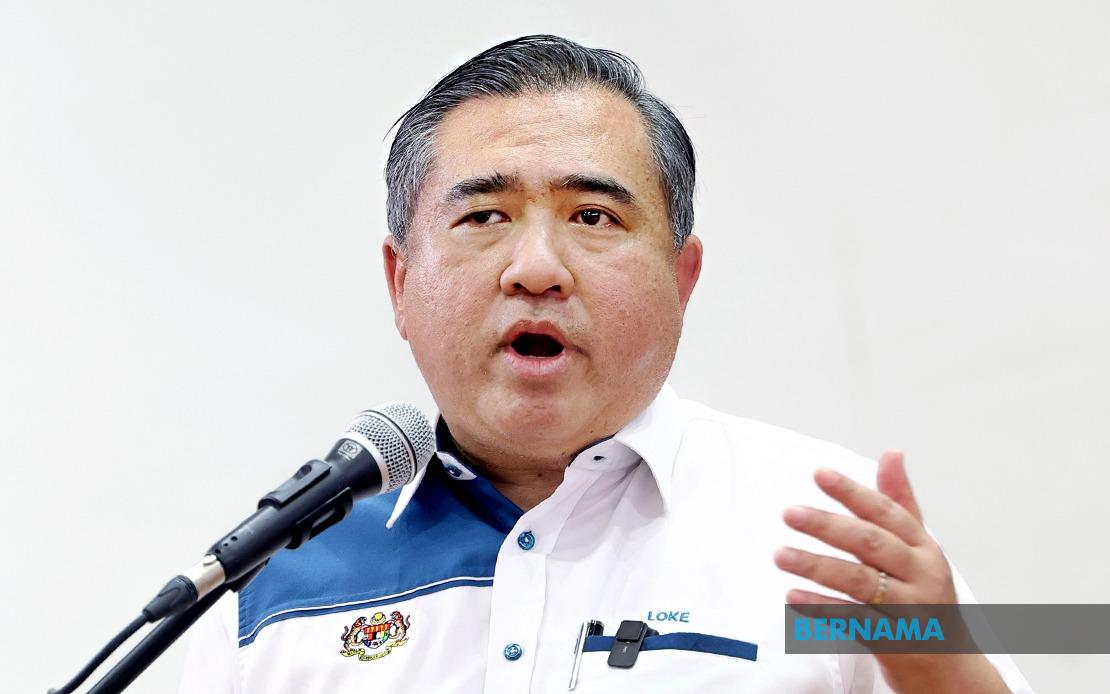
Transport Minister Anthony Loke has directed the Road Transport Department to prosecute motorcyclists found riding without protective headgear during the ongoing Johor state election campaign, drawing on evidence from videos circulating on social media. The enforcement action represents a broadening of the ministry's road safety compliance efforts, with officials emphasising that violators will face charges irrespective of their political affiliations. This stance extends to members of Loke's own Pakatan Harapan coalition, which faced scrutiny when campaign workers, including those from the Democratic Action Party, were filmed riding motorcycles unhelmed while canvassing voters across the state.
Loke's announcement underscores a commitment he has maintained consistently across multiple election cycles. Nearly six years ago, during the Slim by-election campaign, he raised identical concerns about Barisan Nasional leaders engaging in similar conduct, emphasising then that whilst motorcycle campaigning itself poses no regulatory violation, riders must nonetheless comply with mandatory helmet legislation. The minister stressed that such compliance serves a broader public interest by demonstrating responsible behaviour to Malaysian motorists. He framed his position as transcending partisan considerations, noting that road safety statutes make no distinction between supporters of competing political movements and that all citizens remain equally bound by these regulations.
The ministry's decision to activate enforcement mechanisms reflects growing official sensitivity to the spectacle of political campaigners apparently disregarding basic safety requirements whilst seeking public office. Videos documenting helmetless riders affiliated with PH circulated widely across digital platforms, prompting public discourse around whether politicians applying for authority to govern were themselves observing the law. This tension between the symbolic power of such images and the substance of road safety compliance has motivated the transport authority's intervention. By acting swiftly and explicitly, the ministry aims to counter any perception that elected representatives or their campaign apparatus operate under different rules than ordinary Malaysians.
Loke's insistence that his own party members face the same scrutiny as opposition campaigners carries particular weight in Malaysia's polarised political environment. By declining to shield DAP workers or other Pakatan Harapan volunteers from summonses, the transport minister deliberately positions road safety as a non-negotiable principle that supersedes factional loyalty. This rhetorical positioning attempts to restore public confidence in institutional impartiality, a concern that resonates across Southeast Asia where public cynicism about selective law enforcement remains prevalent. The willingness to discipline one's own supporters, whilst symbolically powerful, also reflects the political risks of appearing permissive toward lawbreaking by campaign associates.
The Johor campaign provides an important testing ground for these enforcement principles. The state, which has historically served as a political bellwether for Malaysia, currently witnesses intense competition between Pakatan Harapan and Barisan Nasional. During such high-stakes contests, campaign intensity often escalates, potentially encouraging organisers to prioritise voter outreach over regulatory compliance. The transport ministry's pre-emptive stance signals that even in election season, when political momentum might otherwise excuse minor infractions, compliance with road safety law remains mandatory. This messaging carries implications beyond the immediate Johor contest, establishing precedent for how future campaigns across Malaysia should operate.
Road safety enforcement has emerged as an unexpected flashpoint in Malaysian electoral politics, reflecting broader questions about leadership credibility. When candidates and their supporters visibly breach traffic laws whilst campaigning, critics argue this undermines claims to govern responsibly. Conversely, strict enforcement during political campaigns risks appearing partisan if applied inconsistently. Loke's approach attempts to navigate this dilemma by establishing transparent, equal-application protocols rather than selectively targeting opposition riders. Such neutrality, if maintained consistently, could gradually reshape campaign culture to treat safety compliance as a baseline expectation rather than a negotiable convenience during high-stakes political mobilisation.
The Road Transport Department's role in implementing these directives will test institutional capacity and political resilience. JPJ officials tasked with issuing summonses to campaign workers may face pressure from competing political interests, making the clarity of ministerial direction crucial. By publicly committing to action regardless of party affiliation, Loke creates accountability mechanisms that constrain bureaucratic discretion. Media coverage of enforcement actions will inevitably scrutinise whether summonses are indeed distributed equitably or whether opposition campaigners receive disproportionate attention. Maintaining genuine neutrality across an election campaign represents a significant institutional challenge.
For Malaysian riders broadly, the enforcement push carries practical implications. The visibility of high-profile enforcement during election season may reinforce compliance habits that persist beyond the campaign period. Conversely, if enforcement appears selective or politically motivated, public trust in road safety regulations may diminish. The transport ministry's messaging has emphasised that helmets provide essential protection against serious injury and death, framing compliance as a health imperative rather than merely bureaucratic procedure. This framing attempts to elevate road safety discourse above partisan squabbling and toward shared interest in public welfare.
The incident also highlights how social media documentation of campaign activities creates new accountability mechanisms. Where previously campaign conduct attracted limited public scrutiny, viral videos now subject politicians and their workers to immediate public judgment. This democratisation of surveillance cuts across political lines; whilst videos of Pakatan Harapan riders triggered enforcement, similar footage of opposition campaigners would presumably face identical consequences under the stated policy. The shift toward evidence-based enforcement derived from public documentation represents a subtle but significant evolution in how Malaysian political campaigns interact with regulatory authority.
Regionally, Malaysia's approach to campaign-related road safety may signal broader trends. As Southeast Asian democracies experience intensifying electoral competition, regulatory bodies face similar tensions between permitting robust campaigning and enforcing uniform application of the law. Loke's emphasis on consistency and principle-based decision-making offers a template that other countries' transport authorities might emulate when navigating similar dilemmas. The messaging that political candidacy does not exempt individuals from ordinary legal obligations resonates across a region where concerns about democratic institutions and rule of law remain significant.
Moving forward, the sustainability of this enforcement approach will depend on demonstrable even-handedness and transparent record-keeping. If published data subsequently reveals disproportionate enforcement against particular parties, the ministry's credibility will suffer considerably. Conversely, if enforcement genuinely proceeds equitably across all campaigns, this could establish a valuable precedent for Malaysian electoral culture that prioritises both political freedom and public safety compliance.

