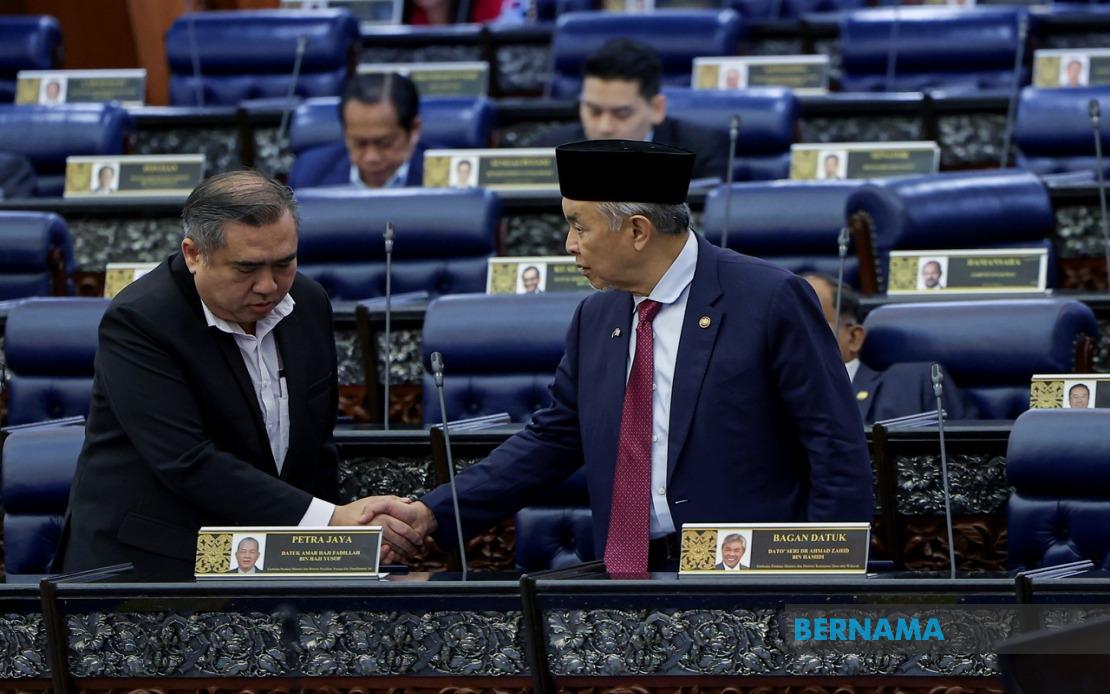
Transport Minister Anthony Loke brought the Road Transport (Amendment) Bill 2026 to its first reading in the Dewan Rakyat on June 22, signalling the government's intention to toughen enforcement mechanisms governing Malaysia's roads. The legislative move represents a comprehensive overhaul of penalties under the Road Transport Act, with the second reading scheduled during the current parliamentary session. The Bill seeks to enhance the regulatory apparatus available to traffic authorities while imposing steeper financial consequences for motorists who violate road safety regulations.
At the core of the proposed amendments lies a substantial hike in standard traffic fines. The Bill elevates minimum penalties from RM300 to RM500 across a range of common offences that contribute to road accidents and congestion. These infractions span failing to display vehicle registration numbers, operating a vehicle without a valid licence, speeding, breaching vehicle construction and safety standards, ignoring traffic signals and instructions, and participation in illegal street racing. The broadened scope suggests the government views these violations as interconnected components of a larger road safety problem rather than isolated incidents requiring individual responses.
One of the most consequential changes concerns driving with a suspended licence, an offence that poses acute dangers to public safety. The amendment increases penalties dramatically, introducing the possibility of three years' imprisonment or fines ranging from RM3,000 to RM10,000, compared to the previous maximum of one year in jail or RM5,000 in fines. This escalation reflects recognition that drivers operating without valid licences—often due to prior violations or disqualification—represent a concentrated risk category. The enhanced punishment framework aims to deter licence suspension evasion and reinforce the administrative consequences of previous infractions.
Street racing and unauthorised speed-testing on public roads emerge as particularly concerning problems warranting dedicated legislative attention. The Bill introduces Section 42A to criminalise these activities with escalating penalties. First-time offenders face fines of RM2,000 to RM10,000, imprisonment up to two years, or both. Subsequent convictions trigger substantially harsher sanctions: fines between RM5,000 and RM20,000 coupled with a minimum five-year prison sentence or both penalties combined. This two-tiered approach acknowledges that repeat offenders require stronger deterrence while also providing proportionate consequences for first-time participants in illegal racing activities.
False statements related to vehicle registration and licensing matters have also drawn legislative scrutiny. The Bill proposes penalties reaching RM200,000 in fines or imprisonment for up to 10 years for individuals who provide misleading information during official processes. This significant escalation addresses concerns about fraudulent documentation and misrepresentation that undermine the integrity of vehicle registration and licensing systems. By imposing criminal liability alongside substantial financial penalties, the amendments target organised schemes that circumvent legitimate registration requirements.
Compounding offences—where violators can settle matters administratively rather than through formal court proceedings—will also see their maximum settlement amounts increase. The Bill raises compounding amounts from RM300 to RM500, providing traffic officers greater flexibility in resolving routine violations without court intervention. This administrative adjustment balances swift enforcement with proportionate consequences, potentially reducing case backlogs while maintaining revenue collection for road safety programmes.
Beyond financial penalties and imprisonment terms, the amendments expand enforcement capabilities available to police and road transport officers. The legislation grants these authorities broader discretion in traffic control and redirection, enabling more proactive management of congested routes and accident-prone areas. Additionally, provisions governing micromobility vehicles—an emerging category encompassing e-scooters and similar devices—introduce procedures for detention and disposal, addressing regulatory gaps that have emerged as these modes become more prevalent in Malaysian cities.
Protecting enforcement personnel emerges as another legislative priority. The Bill designates obstructing or assaulting traffic and transport officers as arrestable offences, eliminating the need for arrest warrants and enabling immediate apprehension of perpetrators. This protection recognises that enforcement personnel face escalating dangers from aggressive motorists, particularly during traffic stops and accident investigations. The provision sends a strong signal that assaults on officials will trigger serious consequences independent of underlying traffic violations.
For Malaysian motorists and road users, these amendments represent a fundamental recalibration of the cost-benefit calculation surrounding traffic violations. The doubled minimum fines for standard offences mean casual disregard for speed limits or registration requirements now carries substantially higher financial consequences. The imprisonment provisions for suspended-licence driving and street racing establish that the most dangerous driving behaviours cross the threshold from civil infractions into criminal conduct warranting incarceration.
Regional context suggests Malaysia is aligning its enforcement framework with regional peers implementing stricter road safety measures. Singapore and Thailand have similarly enhanced penalties for dangerous driving and street racing in recent years, reflecting a Southeast Asian consensus that escalating penalties alongside improved enforcement reduces both accident rates and fatality figures. Malaysia's amendments position the country within this regional trajectory while accounting for local conditions and enforcement capacity.
The practical impact will depend substantially on consistent application and public awareness campaigns. Police and traffic enforcement officers require clear guidance on applying new penalty structures, particularly distinguishing between compoundable offences and those requiring formal prosecution. Public education will prove critical for motorists accustomed to existing fine structures, as the doubling of standard penalties may otherwise appear arbitrary rather than rationally calibrated to severity.
Stakeholder responses will likely diverge along predictable lines. Road safety advocates and grieving families who have lost loved ones to traffic accidents will welcome the enhanced penalties as reflecting the seriousness of dangerous driving. Motoring associations may express concerns about disproportionate impacts on ordinary drivers, while law enforcement agencies could welcome expanded tools though potentially noting resource constraints in consistent enforcement. Transport operators may face elevated operational costs if violations increase within their fleets.
The Bill's passage would represent a significant legislative moment in Malaysia's approach to road safety, shifting from relatively lenient administrative penalties toward a criminal framework targeting the most dangerous behaviours. Whether implemented penalties and expanded enforcement powers ultimately reduce accident rates and fatalities will become an important measure of the amendment's effectiveness in achieving stated objectives.