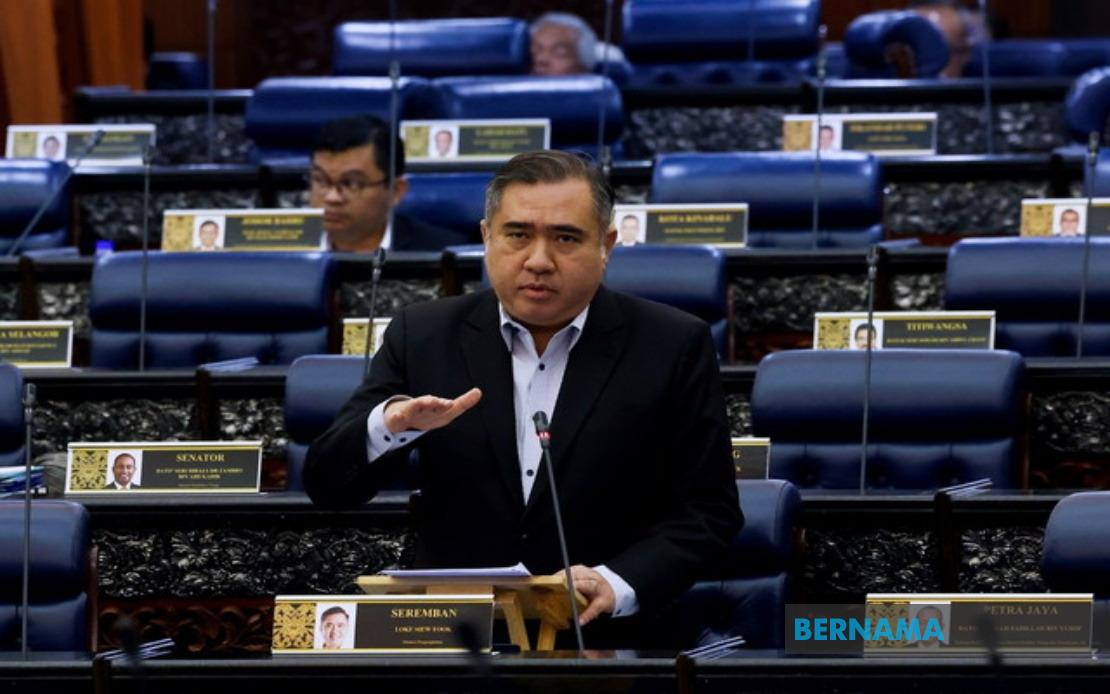
The Transport Ministry has unveiled proposals to fundamentally reshape how Malaysia's legal system addresses the aftermath of fatal and catastrophic road accidents, moving beyond traditional traffic penalties to establish a formal compensation framework for victims and their dependents. Minister Anthony Loke disclosed the initiative during parliamentary proceedings on July 14, positioning the move as part of a broader government strategy to treat serious driving offences with greater severity and accountability.
Under the proposed amendments to the Road Transport Act 1987, courts would gain explicit authority to impose compensation orders against individuals convicted of serious traffic violations. The determination of compensation amounts would not follow a rigid schedule but would instead rest on judicial discretion, evaluated against a range of relevant factors specific to each incident. These considerations would encompass the degree of physical harm sustained, the extent of financial losses incurred by victims and their families, and the financial capacity of the offender to meet such obligations.
This approach represents a conceptual departure from Malaysia's existing framework, which typically relies on fines and imprisonment as primary deterrents and punishments. By introducing compensation as a mandated court tool, the legislation acknowledges that monetary restitution serves both restorative and symbolic functions—addressing the tangible economic devastation experienced by bereaved families while simultaneously signalling that drivers responsible for deaths through reckless conduct face consequences proportionate to the gravity of their actions. Loke framed the initiative as a reflection of government commitment that those who cause fatal accidents through dangerous driving or illegal street racing would not be treated as ordinary traffic offenders subject to standard traffic regulations.
The compensation mechanism arrives alongside enhanced criminal provisions targeting illegal racing, a persistent public safety concern across Malaysia. The Road Transport (Amendment) Bill 2026, already passed by the Dewan Rakyat, introduces a dedicated offence category specifically for illegal racing activity through a new Section 42A. First-time offenders face fines ranging from RM2,000 to RM10,000 or imprisonment up to two years, or both. Subsequent convictions carry substantially heavier penalties of between RM5,000 and RM20,000 in fines or up to five years imprisonment, or both. This tiered penalty structure reflects legislative intent to escalate consequences for repeat offenders.
A particularly significant dimension of the new legislation is its preventative scope. Previously, authorities could only pursue charges following an actual accident, meaning individuals engaged in illegal racing could evade legal consequences if no collision occurred. The amended framework eliminates this loophole by criminalising illegal racing itself as a standalone offence, enabling enforcement action regardless of whether an accident transpires. This proactive enforcement capability marks a structural change in how authorities can intervene in dangerous driving behaviours before they result in loss of life.
Enforcement intensity has already begun reflecting this legislative direction. Recent operations, notably a coordinated initiative in Johor, resulted in the apprehension of sixteen individuals suspected of involvement in illegal racing activities and the impoundment of 260 motorcycles. These enforcement efforts underscore the ministry's commitment to moving beyond legislative proposals toward concrete operational implementation. The urgency behind such enforcement operations gained additional impetus following a catastrophic accident on June 1 at Kilometre 27 of Jalan Renggam-Simpang Renggam in Johor, which claimed five lives and prompted the Attorney-General's Chambers to direct that investigations proceed under Section 302 of the Penal Code, the provision addressing culpable homicide.
The incident also prompted consideration of a more ambitious institutional response: a cross-ministerial national strategy to systematically address illegal racing. Loke acknowledged that road safety transcends the Transport Ministry's remit alone, requiring coordinated action across government agencies, community organisations, and civil society. This recognition reflects an understanding that legislation and enforcement, while necessary, prove insufficient without complementary efforts in public awareness and behavioural change. The ministry pointed to national statistics indicating that road accidents claim more than 6,000 lives annually, a figure that contextualises the scale of the public health crisis underlying these policy interventions.
For Malaysian drivers and families, the compensation mechanism carries direct implications. Victims of accidents caused by negligent or illegal drivers would theoretically gain legal pathways to financial recovery through court orders rather than relying solely on insurance mechanisms or civil lawsuits. However, the framework's effectiveness will depend critically on judicial implementation and whether compensation orders are calibrated to genuinely address victims' losses. Questions also remain regarding enforcement mechanisms for compensation orders, particularly against offenders with limited financial resources.
The legislative approach also signals shifting political consensus around road safety as a priority issue. Loke explicitly cautioned against politicising road safety, emphasising that achieving meaningful improvements requires transcending partisan divisions and building consensus across political parties and society broadly. This appeal reflects implicit acknowledgment that past road safety initiatives may have suffered from inconsistent implementation or competing political narratives. The emphasis on generating genuine societal will rather than relying solely on enforcement and penalties suggests ministry recognition that sustainable progress requires cultural shifts in driving behaviour and attitudes toward road safety.
The proposals place Malaysia alongside other jurisdictions exploring restorative and compensatory justice frameworks in traffic law. However, Southeast Asian regional comparisons reveal varying approaches to victim compensation in road accident cases. The Malaysian framework's integration of court-ordered compensation with enhanced criminal penalties for specific offences like illegal racing creates a multifaceted approach targeting both accountability and victim redress. Implementation will likely reveal whether this combination effectively deters dangerous driving or requires further refinement based on observed outcomes.

