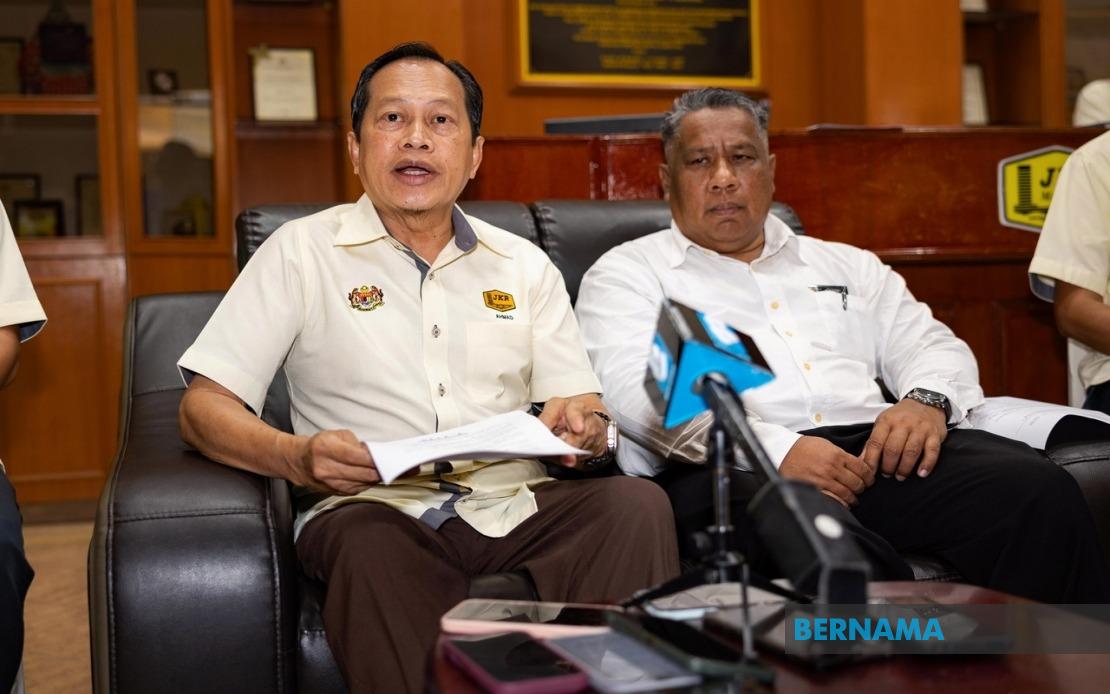
The responsibility for managing trees along Malaysia's federal roads rests squarely with local authorities, according to Deputy Works Minister Datuk Seri Dr Ahmad Maslan, who sought to clarify jurisdictional boundaries following renewed calls for better tree maintenance after a fatal incident in Bentong. Speaking during a visit to the Manjung District Engineer's Office in Perak, Ahmad explained that the legal framework governing tree management is explicitly set out in Section 101(b) of the Local Government Act 1976, which grants local authorities the power to plant, prune, or remove trees within their administrative boundaries, including those situated on federal road reserves that fall under their purview.
The clarification comes in response to suggestions from Bentong MP Young Syefura Othman, who had urged the Public Works Department and maintenance concessionaires to strengthen collaboration with certified arboricultural experts to conduct regular technical assessments of mature trees and slopes along federal routes. This appeal followed a tragic incident on the FT68 Bentong-Kuala Lumpur Old Road, where a falling tree claimed the lives of four family members, prompting fresh discussions about liability and oversight mechanisms for roadside vegetation management across the country's federal highway network.
Ahmad was careful to distinguish between the department's actual responsibilities and areas where it operates under contractual limitations. He emphasized that JKR's role is confined to managing road furniture and signage along federal routes, not vegetation, and that the legal opinion sought regarding tree planting authority on federal road reserves was referenced precisely to establish these boundaries. The minister noted that he was not attempting to evade responsibility but rather to ensure clarity about which agency holds statutory authority over different aspects of roadway infrastructure and maintenance.
Under the existing concession agreements that govern maintenance of federal roads, JKR and private maintenance contractors operate under restrictive provisions regarding tree management. Ahmad explained that these contracts contain no provision enabling the cutting or removal of trees unless they have already fallen and pose an immediate safety hazard. Only in such circumstances can fallen trees be cleared from the roadway. This constraint reflects the original contractual framework, which was drafted before considerations of proactive tree management for road safety became a central policy concern.
The minister's visit to Manjung provided an opportunity to review the operational structure and functions of district-level engineering divisions and to assess progress on infrastructure projects throughout the area. During the briefing, Ahmad stressed the critical importance of continuous monitoring and intensive coordination between the Ministry of Works, state-level JKR operations, and district engineering offices to maintain the highest standards of project execution and maintenance work. He underscored that all undertakings must conform to required technical specifications, established timelines, and allocated budgets.
For Malaysian readers and residents, the implications of this jurisdictional division are significant. Local authorities in peninsular Malaysia and the federal territories bear the legal obligation to proactively manage roadside vegetation within their jurisdictions, including on federal routes passing through their areas. This means that residents living near federal roads should direct complaints and requests for tree maintenance to their respective municipal or district councils, rather than to JKR directly. However, the minister's acknowledgment that JKR and maintenance contractors remain willing to cooperate with local authorities suggests that coordination mechanisms should facilitate faster responses to safety concerns.
The tragic Bentong incident has exposed potential gaps in how falling tree hazards are identified and mitigated. While local authorities possess the statutory power to conduct tree assessments and removals, the practical challenge lies in ensuring they have sufficient expertise, funding, and motivation to conduct regular inspections along federal routes that may stretch across their territories. Many local councils in Malaysia face resource constraints that can limit their capacity to maintain comprehensive vegetation management programmes, particularly on high-traffic corridors where regular monitoring is essential.
The minister's reaffirmation of existing legal boundaries, while technically correct, does not fully address the broader question of accountability when preventable incidents occur. If a falling tree kills or injures motorists, the chain of responsibility becomes complex: a local authority failing to inspect or remove an obviously hazardous tree might face criticism or potential liability, yet the road maintenance concessionaire and JKR are contractually restricted from taking preventive action. This structural gap suggests that policymakers may need to reconsider whether the current division of responsibilities adequately prioritises public safety on federal routes.
Ahmad's emphasis on strengthened coordination between the Ministry of Works, JKR at all levels, and district authorities indicates awareness of these coordination challenges. Enhanced monitoring and closer inter-agency communication could help bridge gaps where trees approaching hazardous conditions fall through bureaucratic cracks because no single entity is clearly tasked with proactive assessment. The visit to Manjung illustrated the ministry's intent to reinforce these vertical and horizontal linkages to ensure consistent delivery of technical services and infrastructure maintenance quality across the country.
Looking forward, the government faces pressure to balance Ahmad's clarification of jurisdictional responsibility with public expectations for safer roads. Many Malaysian highway users would prefer a system where any agency discovering a potentially dangerous tree can initiate its assessment and removal, regardless of technical responsibility allocation. The current framework, which relies on local authorities to be sufficiently vigilant and resourced to manage trees on federal routes passing through their areas, depends heavily on the capacity and diligence of these local bodies.
The deputy minister's visit underscores that infrastructure maintenance in Malaysia is ultimately a multi-layered responsibility requiring genuine cooperation across government levels. While JKR and maintenance concessionaires cannot unilaterally remove trees, their expertise in road safety and regular presence on federal corridors positions them to identify hazards and communicate concerns to appropriate local authorities. Similarly, local authorities must recognize that their legal powers over roadside trees on federal reserves carry corresponding obligations to monitor and maintain them to acceptable safety standards.
Moving forward, the ministry's commitment to stronger coordination offers a pathway to better outcomes, but sustained attention to mechanism and accountability will be necessary. The Bentong tragedy underscores that Malaysians on federal roads deserve assurance that potentially hazardous trees will be identified and managed promptly, regardless of which agency technically holds legal responsibility. This requires not merely clarity about who is responsible, but also transparent systems ensuring that responsibility translates into timely action to protect public safety.

