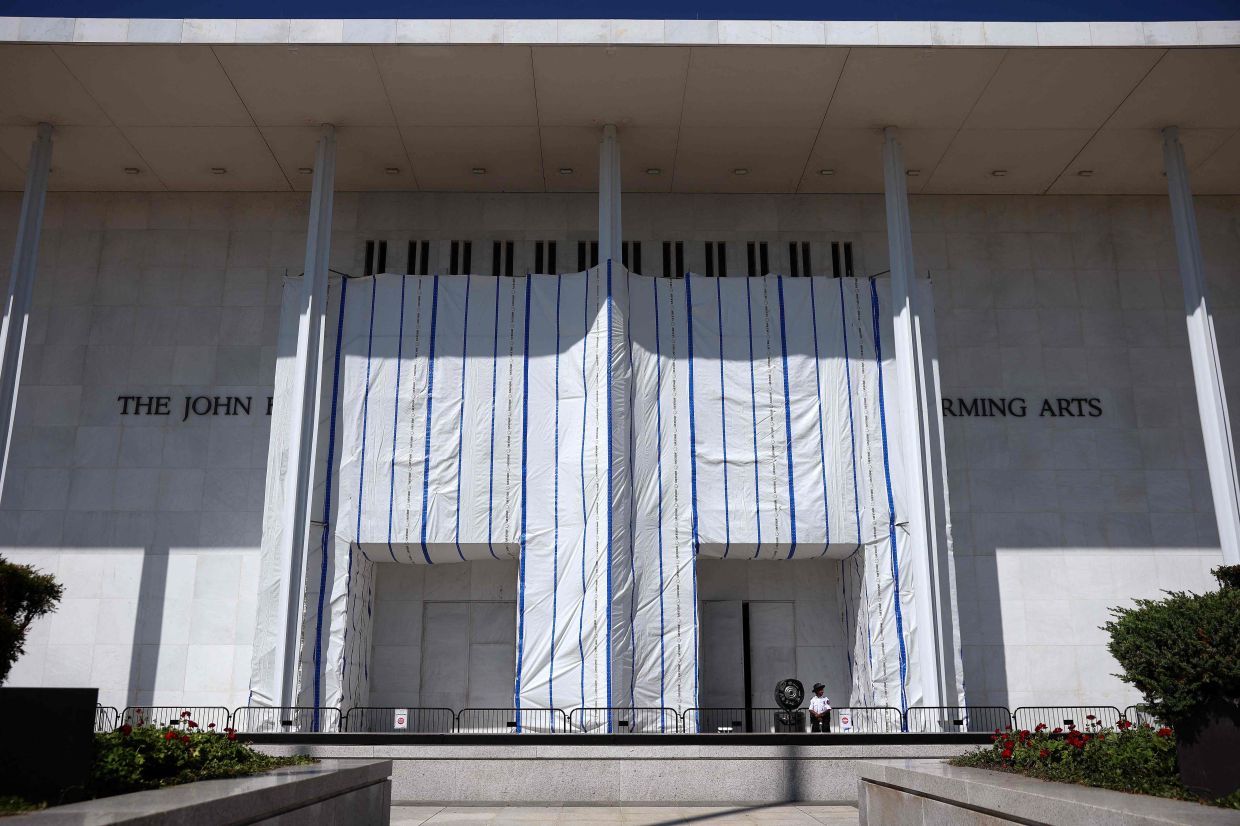
In a striking escalation of a political dispute over one of America's most celebrated performing arts institutions, the Trump administration has suggested in court filings that the Kennedy Center in Washington could face demolition if judicial challenges block the president's renovation plans and attempts to attach his name to the building.
The warning emerged from a Justice Department submission filed on Tuesday in response to Democratic efforts seeking to prevent both the extensive two-year restoration project and the prominent placement of Trump's name on the venue. While the filing stops short of announcing a formal demolition plan, it frames destruction as an inevitable consequence should Trump's involvement and fundraising efforts be thwarted by the courts. Justice Department attorney Brantley Mayers argued that without the president's restoration initiative, the aging structure would deteriorate into an unsafe and decrepit condition requiring demolition.
The legal strategy deployed by Trump's administration reveals the contentious nature of the broader cultural and political battle engulfing the Kennedy Center. By characterising the building as "structurally unsound, fundamentally unsafe, and embarrassing to the nation's capital," the Justice Department has positioned the president as uniquely capable of rescuing what it portrays as a failing institution. This rhetorical approach attempts to reframe the naming dispute as secondary to an urgent preservation necessity rather than a vanity project.
According to the administration's statements, Trump's team has secured US$258 million (approximately RM1 billion) in Congressional funding for restoration work and has cultivated a new donor base to support the project. Justice Department lawyers contend that recognising Trump's role is essential to maintaining this financial commitment, suggesting that donors have tied their contributions to acknowledgment of the president's involvement. This argument positions naming rights as integral to the centre's financial viability rather than a matter of political preference.
Mayers even sketched an alternative future for the site, proposing that a demolished Kennedy Center could be replaced with a large outdoor amphitheater overlooking the Potomac River. While acknowledging that such a structure would "fail to adequately honor" the memory of slain president John F. Kennedy, the filing suggested this option would prove cheaper to construct and maintain than preserving the existing building. This proposal underscores the high stakes of the ongoing legal battle.
The Trump-appointed Kennedy Center board voted recently to inscribe "Restored and Renovated by President Donald J. Trump" beneath the institution's official name and to redesignate the surrounding plaza as the "President Donald J. Trump Plaza." These decisions prompted legal action from Congresswoman Joyce Beatty, an ex officio board member who argues that only Congress possesses authority to name the centre, given its status as a congressionally established "living memorial" to Kennedy.
Federal courts have already intervened in the naming controversy. A federal judge previously sided with those challenging Trump's signage, determining that the board lacked unilateral power to rename the institution and ordering earlier Trump-related signs removed. The administration is currently pursuing an appeal of this decision, setting the stage for further judicial review. The upcoming Thursday hearing will determine whether courts will permit the naming changes and allow the restoration project to proceed under Trump's preferred terms.
The characterisation of the Kennedy Center as critically unsafe represents a significant departure from how cultural officials have previously described the facility. Kennedy Center administrators had stated that planned renovation work would primarily address extensive electrical systems, stage equipment, and leak-prevention mechanisms. These officials noted that the restoration would neither substantially alter the building's exterior appearance nor reduce it to its structural skeleton, suggesting that routine maintenance and upgrades rather than emergency interventions drive the project.
This dispute carries particular resonance for Southeast Asian observers interested in how democratic institutions navigate questions of legacy, naming, and political influence. The Kennedy Center battle reflects broader tensions in American political culture regarding the appropriate boundaries between executive power and institutional autonomy, between private fundraising and public memorialisation. The threat of demolition, whether sincere or rhetorical, represents an extraordinary assertion of executive leverage in a cultural dispute.
For Malaysia and the wider region, the case illustrates how political figures in established democracies seek to cement their legacies within major cultural institutions. The administration's willingness to invoke demolition as a potential consequence of judicial resistance suggests a confrontational approach to checks on executive power. The outcome of Thursday's hearing will reveal whether American courts maintain institutional independence or defer to executive priorities framed as preservation necessities.
The broader implications extend beyond the Kennedy Center itself. The dispute demonstrates how disputes over naming rights can evolve into fundamental conflicts between different branches of government and between political authority and institutional integrity. The Justice Department's demolition warning transforms what might have been a straightforward naming dispute into a high-stakes confrontation where the survival of a historic structure appears to hinge on political outcomes.

