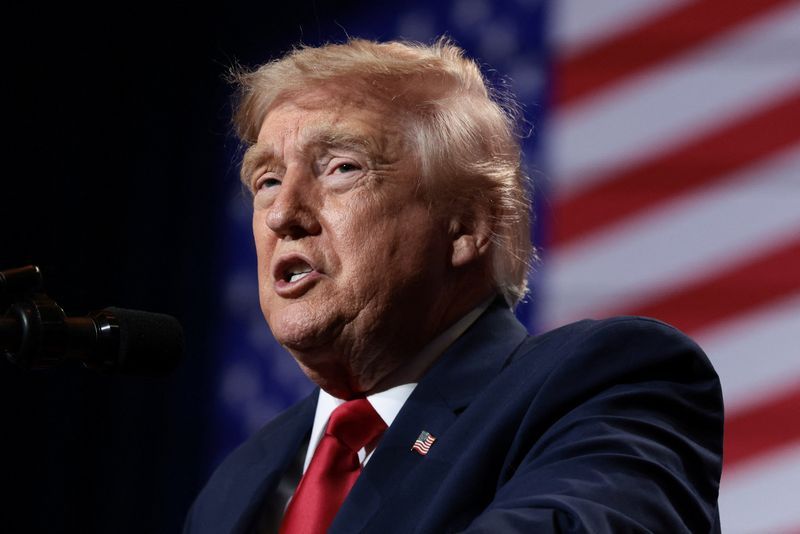
President Donald Trump has signed a national security presidential memorandum that authorizes the United States federal government to work with private sector technology companies in executing cyber operations against transnational criminal organizations based abroad. The directive, signed on Wednesday, represents a significant shift in how American law enforcement and intelligence agencies approach cybercrime emanating from foreign jurisdictions, particularly operations that target American citizens and interests.
The memorandum seeks to tap into the technological capabilities and innovation resident within America's private technology sector to strengthen the country's defensive and offensive cyber posture. Under the framework established by the order, private companies will operate under direct governmental direction, control, and authority, ensuring that any cyber activities undertaken remain integrated within broader federal law enforcement and national security strategies. This structural arrangement attempts to balance the speed and technical sophistication of the private sector with the oversight mechanisms that democratic governance requires.
The White House identified several categories of criminal activity that prompted this action, including large-scale ransomware campaigns that have targeted critical American infrastructure and private businesses, financial fraud schemes that have victimized American consumers and organizations, and other sophisticated crimes orchestrated by what the administration terms transnational criminal organizations. These groups, often operating across multiple jurisdictions and exploiting the difficulty of international law enforcement coordination, have posed an escalating threat to American economic security and national defence.
The memorandum establishes a formal mechanism whereby private sector entities can enter into agreements with federal, state, local, tribal, and territorial agencies to share intelligence about criminal threats and propose cyber operations designed to disrupt or degrade the capabilities of these organizations. This collaborative framework recognizes that criminal networks often exploit gaps between government agencies and jurisdictions, and that information sharing across sectors and levels of government could provide more comprehensive situational awareness. The Department of Homeland Security, operating through its National Coordination Center within the Homeland Security Task Force, will serve as the administrative hub coordinating these activities, with the Department of Justice providing legal oversight.
Once vetted by federal authorities, participating private companies will be authorized to conduct both cyber surveillance operations and what the memorandum describes as cyber effects operations against designated targets. The latter category encompasses a broad range of activities, including the potential manipulation, disruption, denial, degradation, or destruction of information systems and networks controlled by criminal organizations, as well as physical or virtual infrastructure dependent on information systems. This expansive definition grants considerable latitude in how companies might tactically respond to identified threats, raising questions about operational boundaries and proportionality.
Participating firms must maintain financial safeguards, including a bond or escrow account of at least one million dollars, presumably to ensure accountability and provide recourse should operations produce unintended consequences. This financial requirement reflects recognition that private companies conducting offensive cyber operations pose inherent risks of escalation or collateral damage, and that some form of security deposit could theoretically incentivize careful operational planning. However, experts question whether such measures adequately address the systemic risks that emerge when private actors engage in offensive cyber activities.
The delegation of cyber operations to private sector companies is not novel in the American security landscape, but it remains contentious among cybersecurity practitioners, legal scholars, and international relations experts. Previous initiatives involving private firms in intelligence gathering and cyber activities have generated controversy centred on concerns about inadvertent escalation, the potential for operations to affect unintended targets, and coordination failures between different government agencies operating alongside private partners. The lack of transparency in cyber operations, combined with the difficulty of attributing attacks with absolute certainty, creates risks that private companies, operating under government contract, might inadvertently trigger international incidents or provoke retaliation.
For Malaysia and other Southeast Asian nations, this development carries important implications. The region hosts significant financial centres and digital infrastructure that criminals exploit as staging grounds and conduits for transnational operations. Enhanced American capacity to disrupt foreign-based criminal organizations could reduce threats to Malaysian financial institutions and businesses. However, the broader proliferation of offensive cyber capabilities among American private companies also raises questions about cybersecurity norms and whether other nations might cite this framework as justification for their own private sector cyber programmes.
The memorandum underscores how the Trump administration views cybercrime as a national security matter requiring aggressive response rather than purely a law enforcement challenge. This reframing potentially accelerates the militarization of cyberspace, where distinctions between offensive and defensive operations, and between state and non-state actors, become increasingly blurred. Southeast Asian cybersecurity experts will likely monitor how this policy develops in practice, particularly whether operations remain tightly controlled or gradually expand in scope.
The Department of Homeland Security and White House have not yet released detailed implementation guidelines, leaving significant questions unanswered about how companies will be vetted, what operational approval processes will govern specific missions, and how the government will prevent private actors from exceeding their authorized mandate. These operational details will prove critical in determining whether the framework succeeds in disrupting genuine threats or instead creates new vulnerabilities through poorly coordinated or inadequately supervised cyber activities conducted by firms prioritizing contractual objectives over broader security considerations.

