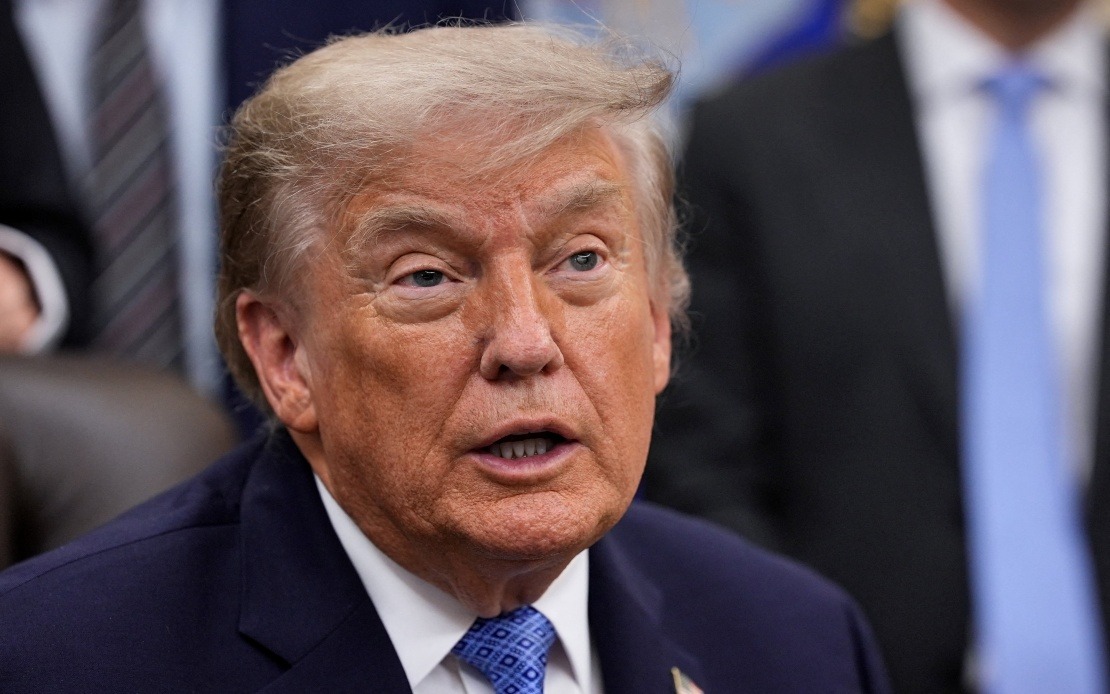
US President Donald Trump escalated tensions with Canada on Friday by pinpointing the country as responsible for wildfire smoke engulfing parts of the northeastern United States and threatening retaliatory trade measures. In a message posted to his Truth Social platform, Trump declared that the environmental cost of the pollution should be factored into tariffs Canada already faces, signalling his willingness to weaponise trade policy in response to the cross-border air quality crisis.
The smoke originating from numerous blazes across Ontario and Minnesota has created hazardous conditions across a vast geographic region, blanketing major population centres including Toronto, Chicago, Detroit, and Washington. New York City residents have experienced particularly severe impacts, with visibility plummeting and the acrid smell of smoke permeating the air throughout the metropolitan area. The situation represents one of the most visible environmental consequences of North American wildfires in recent years, directly affecting hundreds of millions of people on both sides of the border.
Trump's response centred on allegations of Canadian negligence, asserting that authorities in Ottawa had failed to maintain forests adequately or clear accumulated brush and debris that he contended contributed to the fires' spread and intensity. The president described the resulting air quality as a form of invasion, using inflammatory language to characterise the situation as an infringement of American sovereignty. He indicated intentions to telephone Prime Minister Mark Carney to demand action, framing the call as an opportunity to clarify Canada's intentions regarding the crisis.
The tariff threat represents Trump's characteristic approach to international disputes—using economic leverage as a pressure tool to compel compliance with his policy demands. By explicitly linking environmental pollution to trade arrangements, he has created a new frontier for US-Canada trade friction, adding the wildfire issue to an already complex set of disputes between the nations. This manoeuvre reflects his broader strategy of treating trade agreements as negotiating instruments rather than settled arrangements.
However, the scientific consensus on North American wildfires diverges sharply from Trump's interpretation. Research across multiple disciplines points to climate change as the primary driver of increased fire frequency, intensity, and geographic spread. Warmer temperatures, extended drought periods, and shifts in precipitation patterns create conditions favourable to wildfire initiation and propagation, factors that transcend any single jurisdiction's forest management practices. This disconnect between Trump's diagnosis and scientific evidence underscores how trade politics and environmental reality operate on different planes.
Ontario Premier Doug Ford's response struck a notably different tone, implicitly criticising the blame-game approach by suggesting that the appropriate response to cross-border environmental crises should involve mutual aid rather than recrimination. Ford pointed out that Ontario and Canada generally have historically extended assistance to American jurisdictions facing similar emergencies, establishing a precedent of cooperation rather than confrontation. His remarks suggested that framing the situation as an instance of one nation wronging another misses the point of emergency response during natural disasters.
The dispute underscores the increasingly fraught state of US-Canada relations under Trump's second term, with environmental and trade concerns becoming entangled. The wildfire smoke crisis, while a temporary phenomenon that air circulation will eventually disperse, has triggered diplomatic consequences that may persist. For Southeast Asian readers observing North American politics, the episode illustrates how climate-related disasters—which the region itself faces with increasing frequency—can become weaponised in trade disputes, potentially complicating international responses to shared environmental challenges.
Canada's role as a critical trading partner and neighbour positions it in a uniquely vulnerable position relative to American tariff threats. Unlike more distant nations, Canada lacks meaningful alternatives to the US market for many products, making it susceptible to economic coercion through trade policy adjustments. The precedent of linking environmental phenomena to trade arrangements potentially opens avenues for future disputes unrelated to traditional commercial grievances, expanding the scope of protectionist leverage available to Washington.
For Malaysia and ASEAN nations, the Trump-Canada dispute carries instructive lessons about the intersection of trade negotiations and environmental governance in the contemporary international system. As climate impacts intensify across Southeast Asia—including transboundary smoke from Indonesian and Malaysian fires affecting neighbouring countries—the question of how to structure accountability and responsibility becomes increasingly urgent. The Canadian example suggests that blame-oriented approaches may prove counterproductive, whereas frameworks emphasising shared vulnerability and coordinated response might generate more durable solutions.
The wildfire crisis, while grounded in environmental science and natural phenomena, has thus become a vehicle for expressing broader political friction between the Trump administration and the Canadian government. The decision to link tariffs to smoke pollution represents a calculated political move designed to demonstrate strength to Trump's domestic constituency while pressuring Canada into responses that might extend beyond forest management into trade concessions. As this dispute develops, it may reshape how North American partners address transboundary environmental challenges, potentially establishing new precedents for using trade policy as an environmental enforcement mechanism—a development with implications extending far beyond the immediate bilateral relationship.

