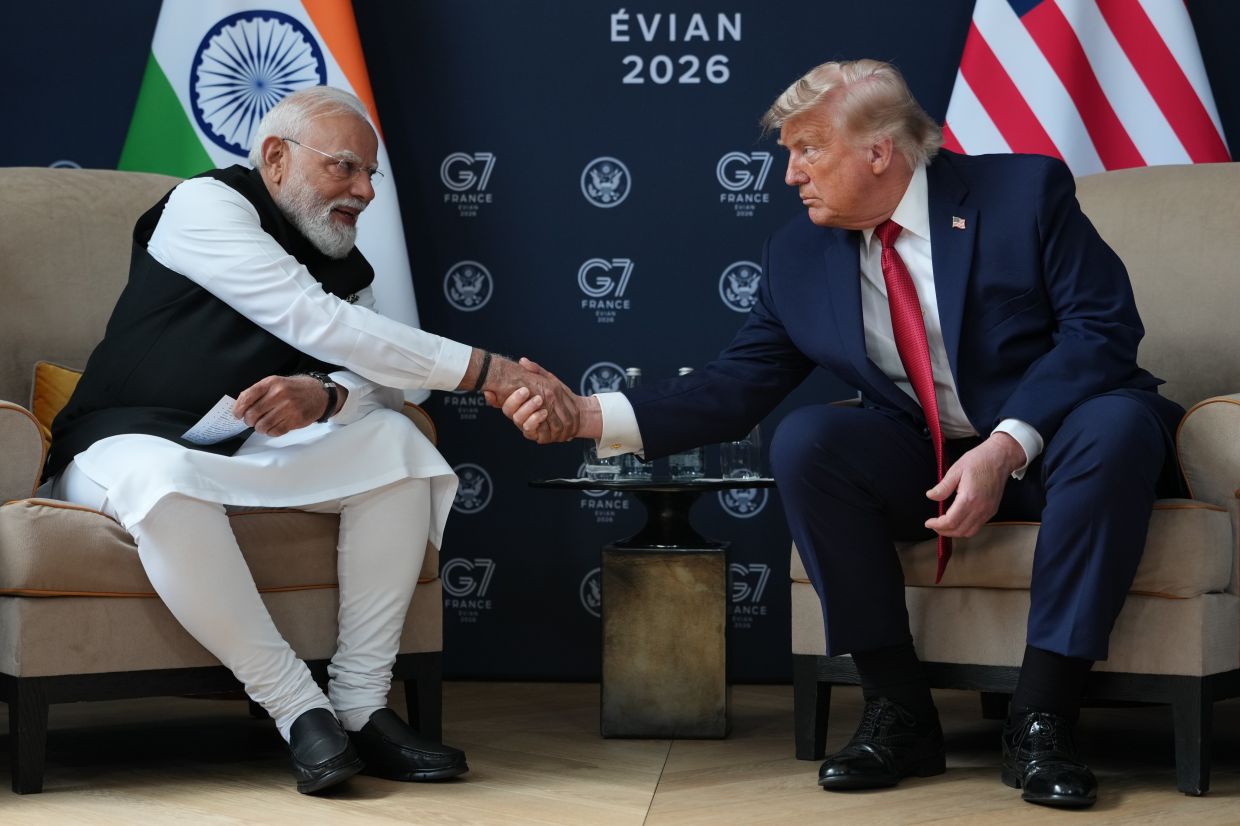
Donald Trump has displayed a striking lack of remorse following the deaths of three Indian nationals killed in a US military strike on a commercial vessel, drawing sharp criticism from New Delhi and sparking public anger across India. Speaking to media after his first bilateral meeting with Prime Minister Narendra Modi in 16 months, Trump acknowledged the incident in passing but refrained from offering any formal apology or expression of sympathy for those who perished. His dismissive characterization of the deaths as a routine hazard of maritime work signals deepening tensions between Washington and New Delhi even as both governments attempt to portray their relationship as strengthening.
The friction stems from a controversial military action last week when US Central Command forces launched missiles at the Palau-flagged MT Settebello, a commercial vessel operating in the Strait of Hormuz, killing the three Indian sailors aboard. American forces justified the strike and subsequent attacks on two additional commercial ships carrying Indian crew members as necessary responses to alleged violations of a unilateral American blockade on Iranian ports. The incidents have exposed the precarious position India occupies as it attempts to balance its strategic partnership with Washington while protecting the interests of its maritime workers and commercial operations in contested waters.
Trump's approach during the press conference reflected a broader American position that maritime deaths, particularly those occurring during enforcement of economic sanctions, represent an unavoidable cost of geopolitical strategy. When Trump remarked that "this has been happening throughout time," he appeared to normalize the casualties rather than address the specific circumstances that led to Indian deaths. His assertion that both nations "work together" on the issue glossed over fundamental disagreements about the legitimacy of unilateral blockades and their enforcement against neutral commercial traffic. This rhetorical minimization contrasted sharply with the gravity of the situation from India's perspective, where ordinary maritime commerce has become entangled in American-Iranian tensions.
External Affairs Minister S. Jaishankar had previously registered a "strong protest" through diplomatic channels following the incident, signaling official Indian displeasure at the highest levels. However, the State Department's official readout of his communication revealed Washington's refusal to acknowledge wrongdoing, instead emphasizing that "violations of the US blockade and the illicit transport of Iranian oil will not be tolerated." This intransigent stance transformed what might have been a bilateral disagreement into a test of how far India would go in accommodating American security priorities at the expense of its own citizens and commercial interests.
The incident triggered immediate and visible public backlash within India that extended beyond elite political circles. Videos circulated on social media showing auto-rickshaw drivers in Delhi actively destroying Trump campaign posters that formed part of the US embassy's outreach initiative, complete with "Happy Birthday America" messaging. These scenes of material protest reflected deeper popular sentiment that the United States government had crossed a line by taking Indian lives without demonstrating remorse or accountability. Such grassroots anger posed a political liability for Modi, who has cultivated a close working relationship with successive American administrations as a cornerstone of his foreign policy.
Indian opposition figures seized on the government's muted response to attack Modi's handling of the crisis. Congress leader Rahul Gandhi explicitly characterized the Prime Minister as "compromised," arguing that a truly independent nation would never accept the language American officials had employed regarding the incident. Gandhi's social media posts suggested that Modi was functioning more as an obedient subordinate to American interests than as an independent leader capable of defending Indian citizens. The accusation cut at the heart of how Modi has positioned himself domestically—as a strong nationalist figure—and exposed the contradiction between that self-image and his apparent acceptance of American military action resulting in Indian deaths.
Despite the underlying tensions, Trump used the bilateral platform to emphasize the closeness of personal relations between himself and Modi, suggesting that personal rapport could transcend disagreements over substantive issues. He stated that "we cannot be closer" and referenced shared commitment between the two nations without specifying concrete mechanisms for addressing legitimate Indian grievances. This approach reflected a transactional view of international relationships in which bilateral warmth and personal chemistry could substitute for institutional accountability or procedural justice. For Indian observers accustomed to more formal diplomatic protocols, such an approach seemed to accept that powerful nations could disregard the concerns of smaller allies as long as rhetoric remained affectionate.
Trade negotiations between the two countries remain ongoing despite the tensions surrounding the maritime incident. Trump and Modi had begun discussions toward a comprehensive bilateral trade agreement during their February 2025 meeting in Washington, positioning India among the earliest countries to negotiate with the new American administration. However, the deaths of the Indian sailors complicated an already intricate negotiating dynamic where New Delhi seeks favorable terms while avoiding antagonizing Washington. The unresolved status of these trade talks has likely constrained India's ability to register stronger diplomatic protests about the military incident, since punitive actions could derail negotiations with significant economic implications.
Secretary of State Marco Rubio subsequently visited India to reinforce America's strategic commitment to the relationship, characterizing the country as one of Washington's "most important strategic partners" in the Indo-Pacific region. Rubio's visit appeared designed to manage the damage and reassure Indian leadership that the incident would not fundamentally alter American strategic priorities regarding India. The emphasis on partnership and shared strategic interests represented an attempt to move beyond the immediate controversy and refocus attention on longer-term security cooperation. Yet such diplomatic choreography risked appearing hollow to Indian audiences who had witnessed the government's inability to secure acknowledgment of responsibility from American officials for deaths of their fellow citizens.
For broader Southeast Asian observers, the episode illustrated the vulnerabilities that accompany dependence on American security guarantees and economic partnerships. Nations navigating complex relationships with Washington must contend with the reality that American officials may view regional concerns through the lens of American strategic interests rather than through principles of reciprocal respect or equal consideration. India's experience demonstrates how economic interdependence and strategic partnership can constrain a nation's diplomatic leverage even when its citizens face direct harm from American military actions. The incident raises uncomfortable questions about the terms on which smaller nations engage with American power in an era when economic coercion and military enforcement operate in tandem to advance American policy objectives.
The contrast between Modi's public silence on the Indian deaths and his previous positioning as a strong nationalist leader suggests the constraints that alliance politics imposes on even prominent regional powers. For Malaysia and other Southeast Asian nations considering their own strategic partnerships with Washington, the Indian case study offers important lessons about how initial partnership commitments can gradually constrain policy autonomy in unexpected ways. What begins as mutually beneficial cooperation can evolve into asymmetrical relationships where one partner's domestic political needs override the other's fundamental interests, particularly when the weaker partner lacks sufficient alternative partnerships to offset American leverage.
%22%2F%3E%3C%2Fpattern%3E%3C%2Fdefs%3E%3Crect%20width%3D%22100%25%22%20height%3D%22100%25%22%20fill%3D%22url(%23ph366w1g)%22%2F%3E%3Crect%20width%3D%22100%25%22%20height%3D%22100%25%22%20fill%3D%22url(%23ph366w1p)%22%2F%3E%3Ctext%20x%3D%2250%25%22%20y%3D%2250%25%22%20text-anchor%3D%22middle%22%20dominant-baseline%3D%22central%22%20fill%3D%22rgba(255%2C255%2C255%2C0.95)%22%20font-family%3D%22Georgia%2C%20'Times%20New%20Roman'%2C%20serif%22%20font-weight%3D%22700%22%20font-size%3D%22320%22%20letter-spacing%3D%22-0.02em%22%3ETV3%3C%2Ftext%3E%3C%2Fsvg%3E)
%22%2F%3E%3C%2Fpattern%3E%3C%2Fdefs%3E%3Crect%20width%3D%22100%25%22%20height%3D%22100%25%22%20fill%3D%22url(%23ph50o6fg)%22%2F%3E%3Crect%20width%3D%22100%25%22%20height%3D%22100%25%22%20fill%3D%22url(%23ph50o6fp)%22%2F%3E%3Ctext%20x%3D%2250%25%22%20y%3D%2250%25%22%20text-anchor%3D%22middle%22%20dominant-baseline%3D%22central%22%20fill%3D%22rgba(255%2C255%2C255%2C0.95)%22%20font-family%3D%22Georgia%2C%20'Times%20New%20Roman'%2C%20serif%22%20font-weight%3D%22700%22%20font-size%3D%22170%22%20letter-spacing%3D%22-0.02em%22%3EMalaysia%3C%2Ftext%3E%3C%2Fsvg%3E)
%22%2F%3E%3C%2Fpattern%3E%3C%2Fdefs%3E%3Crect%20width%3D%22100%25%22%20height%3D%22100%25%22%20fill%3D%22url(%23ph5vazwg)%22%2F%3E%3Crect%20width%3D%22100%25%22%20height%3D%22100%25%22%20fill%3D%22url(%23ph5vazwp)%22%2F%3E%3Ctext%20x%3D%2250%25%22%20y%3D%2250%25%22%20text-anchor%3D%22middle%22%20dominant-baseline%3D%22central%22%20fill%3D%22rgba(255%2C255%2C255%2C0.95)%22%20font-family%3D%22Georgia%2C%20'Times%20New%20Roman'%2C%20serif%22%20font-weight%3D%22700%22%20font-size%3D%22170%22%20letter-spacing%3D%22-0.02em%22%3EMalaysia%3C%2Ftext%3E%3C%2Fsvg%3E)