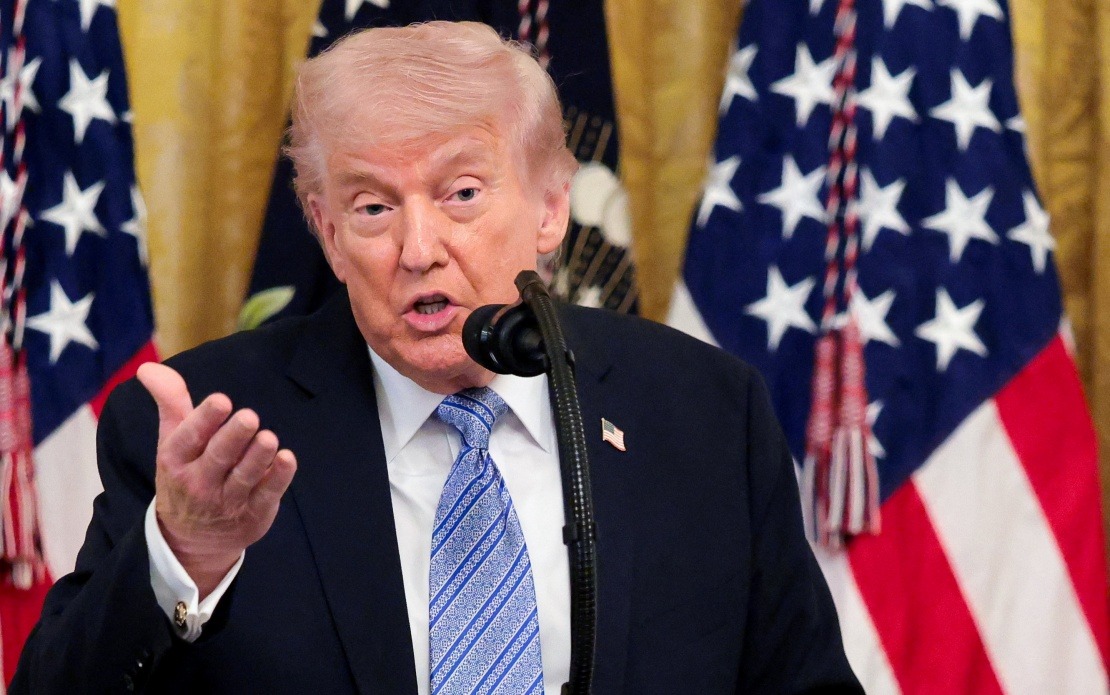
US President Donald Trump announced Monday that he had conducted a productive telephone conversation with Andy Burnham, the newly appointed Prime Minister of the United Kingdom, signalling the maintenance of strong diplomatic channels between Washington and London as the UK's political landscape shifts. Speaking via his Truth Social platform, Trump characterised the exchange as successful and expressed optimism about future engagement between the two nations, underscoring the continuity of the transatlantic relationship despite recent British electoral changes.
The discussion touched on a remarkably broad spectrum of geopolitical and economic concerns, reflecting the interconnected nature of US-UK strategic interests. Trump specifically referenced dialogue on North Sea oil resources, a sector that remains crucial to energy security in the Atlantic region and continues to bear significance for supply chains affecting the broader European and global markets. This focus on energy infrastructure suggests Washington's ongoing attention to ensuring stable hydrocarbon supplies amid persistent global energy market volatility.
Trade negotiations featured prominently in Trump's account of the conversation, a logical emphasis given that commerce forms the foundation of modern bilateral relations. The US and UK maintain one of the world's largest trading relationships, and any new administration in London typically prioritises negotiating trade arrangements and commercial frameworks with Washington. For Southeast Asian observers, the nature and terms of US-UK trade discussions carry indirect implications, as they may establish precedents influencing how America structures economic arrangements with other major partners across the Indo-Pacific region.
Military and defence cooperation also emerged as a central topic, reflecting the enduring NATO alliance and the deeper security architecture binding the two nations. The Trump administration has consistently emphasised the importance of defence partnerships and military modernisation, so this dimension of the conversation aligns with broader strategic doctrine. Such discussions often encompass shared intelligence operations, technology transfer agreements, and coordinated military positioning in regions of mutual concern, all matters with ripple effects throughout global security arrangements.
Notably, Trump mentioned the demining of the Hormuz Strait, a waterway of exceptional international importance through which vast quantities of global oil shipments transit daily. This particular focus underscores the shared concern between Washington and London regarding maritime security and freedom of navigation in strategically vital passageways. For Malaysia and other Southeast Asian nations dependent on stable shipping corridors, the commitment of major Western powers to maintaining secure transit routes carries direct relevance to regional prosperity and stability. Any concerted US-UK effort to address maritime security challenges in the Persian Gulf may establish frameworks or precedents applicable to similar challenges in Asian waters, including the Strait of Malacca.
Trump indicated that the conversation proceeded smoothly and productively, describing the call itself as noteworthy. He extended good wishes to Burnham as the latter assumes office, a conventional but symbolically significant diplomatic gesture. The tone of cordiality and substance suggests that despite potential policy differences between a Trump administration and the new British government, the fundamental relationship remains robust and forward-looking. This matters for global stability, as fractures in the transatlantic alliance can create vacuums that adversarial powers may exploit.
The American president announced plans for an in-person meeting with Burnham in the near future, indicating a priority on personal diplomatic engagement. Face-to-face summits carry symbolic weight beyond their informational content; they signal commitment to relationship-building and allow leaders to establish personal rapport that can smooth negotiations on contentious issues. The decision to schedule such a meeting promptly after Burnham's assumption of office suggests Trump views the new British Prime Minister as a priority interlocutor worthy of early personal attention.
From a regional perspective, the substantive focus on military alliances, energy security, and maritime freedom of navigation reflects how major developed nations structure their foreign policy around interconnected concerns spanning Europe, the Middle East, and the broader Indo-Pacific. Malaysia, as a middle power navigating relationships with multiple major powers and deeply invested in maritime security through the Strait of Malacca, benefits from clarity about how Washington and London envision their strategic cooperation. Should the US and UK strengthen coordination on regional security matters, their actions may influence the strategic environment within which Southeast Asian nations operate.
The breadth of topics discussed—spanning energy, commerce, defence, and maritime security—illustrates how bilateral relationships between major powers inevitably encompass multiple dimensions simultaneously. Governments rarely conduct purely transactional exchanges on single issues; rather, they negotiate across a range of interconnected concerns, trading concessions in one domain for gains in another. This complexity means that developments in US-UK relations can have cascading effects on other partnerships and arrangements throughout the international system.
Trump's characterisation of the conversation as exceptionally productive may also reflect his administration's broader diplomatic strategy of emphasising personal relationships and direct communication channels with foreign leaders. Rather than delegating such discussions entirely to established diplomatic machinery, Trump has historically placed significant stock in personal telephone calls and summits, viewing them as superior mechanisms for conducting statecraft. Whether this approach yields superior outcomes remains debated among foreign policy analysts, but it clearly reflects his leadership style and approach to international engagement. For countries seeking to influence American policy, understanding that Trump values direct communication with his counterparts may inform their diplomatic strategies and resource allocation.

