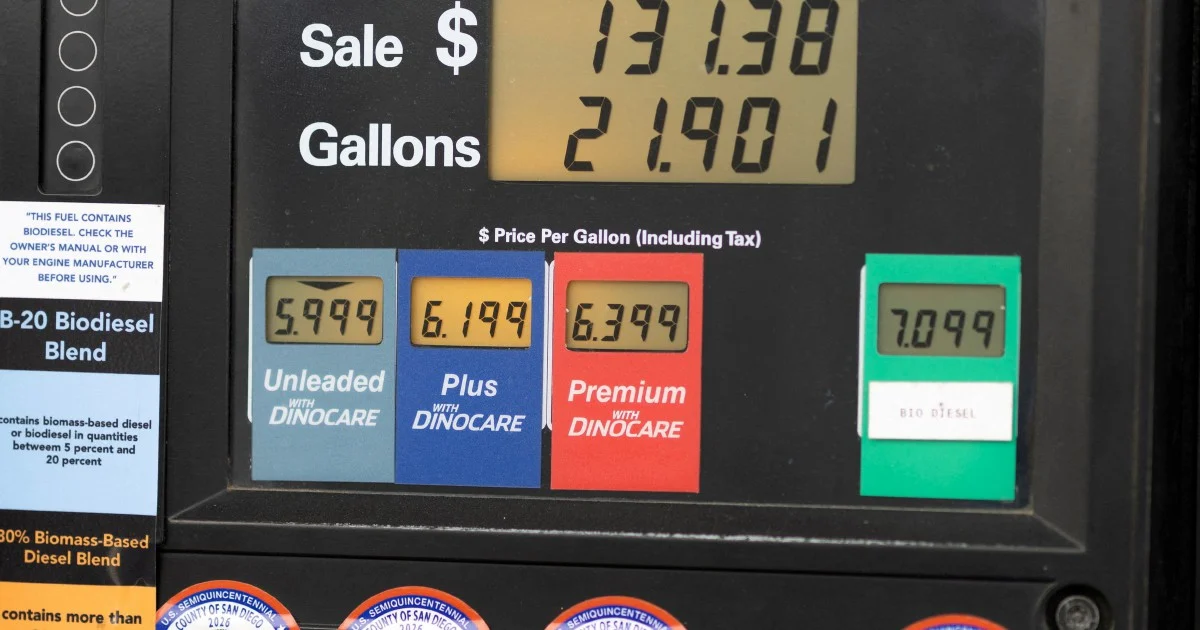
US President Donald Trump has directed federal authorities to launch a formal investigation into the nation's largest oil corporations, citing frustration that petrol prices at the pump have not declined as swiftly as he would prefer. The directive, announced on Wednesday, reflects mounting political pressure on the administration as Americans continue paying elevated prices for fuel, an issue that directly affects consumer sentiment and household budgets across the country.
The investigation signals Trump's determination to demonstrate responsiveness to voter concerns about energy costs, even as the underlying causes of global fuel prices remain largely beyond the direct control of any single administration. Oil pricing is influenced by a complex interplay of international supply disruptions, geopolitical tensions, currency fluctuations, and refining capacity constraints—factors that extend far beyond domestic corporate conduct. Nevertheless, the optics of investigating major energy suppliers provides Trump with a visible policy response to widespread public discontent.
The timing of the investigation carries particular significance given regional instability in the Middle East, where military tensions and potential supply chain disruptions have supported elevated crude prices worldwide. Trump's administration has faced criticism from various quarters—some contending that diplomatic strategies could have better insulated the US economy from escalating energy costs. By pivoting focus toward oil company conduct, the administration attempts to redirect accountability away from geopolitical factors and toward corporate behaviour, however tenuous that connection may be.
For Malaysia and other Southeast Asian economies heavily dependent on energy imports, developments in US energy policy carry downstream implications. A significant portion of regional crude oil procurement occurs on global markets where prices are influenced by such investigations and US policy shifts. Additionally, the energy sector represents substantial investment interests for Malaysian sovereign wealth funds and major corporations, making any regulatory actions in the world's largest economy strategically relevant to Kuala Lumpur's financial and industrial sectors.
The investigation likely encompasses examination of whether oil companies have engaged in anti-competitive practices, price manipulation, or artificial constraints on supply that might be driving margins higher than fundamental market conditions would justify. However, major integrated oil corporations typically maintain that their pricing reflects genuine supply-demand dynamics and upstream cost pressures rather than deliberate collusion. The burden of proof in establishing corporate malfeasance during volatile geopolitical periods remains considerably high.
Historically, similar investigations into oil industry practices have yielded mixed results in terms of tangible price reductions for consumers. The structural economics of petroleum refining and distribution, combined with the predominantly global nature of crude supply markets, impose genuine limitations on how much domestic corporate behaviour modification can influence retail prices. Nevertheless, the political imperative to be seen taking action often supersedes technical complexities in policy-making environments.
The petrol price issue resonates particularly acutely in the United States during election cycles and periods of economic uncertainty, when middle-class households experience measurable impacts on discretionary spending. A family's fuel costs directly affect purchasing power for other goods and services, creating multiplier effects throughout the broader economy. Trump's focus on this issue likely reflects polling data indicating that consumer energy costs remain a salient political concern among his base and swing voters.
The investigation also occurs within a broader context of energy transition debates in developed economies. As American policy gradually shifts toward renewable energy adoption and electrification, fossil fuel companies face evolving regulatory environments and long-term demand uncertainty. In this context, any perceived corporate profiteering during a geopolitically volatile period becomes easier political terrain for criticism, particularly if margins widen substantially relative to historical benchmarks.
Southeast Asian policymakers observing this development should recognize both the practical and symbolic dimensions of such investigations. While genuine anti-competitive conduct warrants regulatory action, energy security also depends on maintaining robust investment in exploration, refining, and distribution infrastructure. Excessive regulatory pressure without corresponding investment incentives can paradoxically constrain supply and elevate prices. Malaysia's own experiences managing energy sector regulation offer instructive models for balancing consumer protection with industry viability.
The investigation's ultimate scope remains undefined, but it will likely examine publicly available financial data, earnings calls, supply decisions, and competitive practices among major oil firms. Whether such scrutiny yields actionable evidence of misconduct will largely depend on investigators' findings rather than the political motivation behind the inquiry's initiation. Regardless, the investigation represents a continuation of oil industry engagement with US regulators—a dynamic that Malaysia's own energy companies understand well when operating internationally.