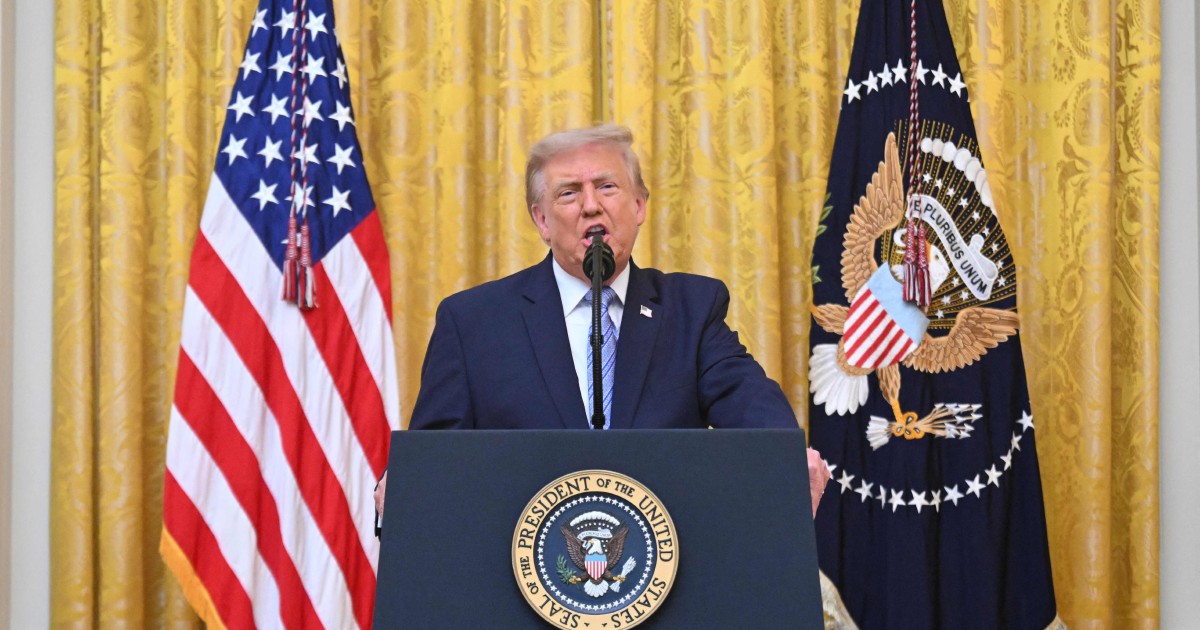
US President Donald Trump has revived a series of election fraud allegations during a public address on Thursday, reasserting claims that have been repeatedly investigated, rejected by courts, and refuted by election officials across both political parties. The contentions represent a continuation of the narrative Trump has pursued since losing the 2020 presidential contest, despite exhaustive scrutiny that has consistently found no evidence to support the central allegations.
Among the assertions Trump made was a claim that China orchestrated a large-scale theft of millions of American voter registration files. This allegation lacks substantiation from credible security experts, election officials, or intelligence agencies. The Department of Homeland Security and Cybersecurity and Infrastructure Security Agency have found no evidence of foreign actors successfully compromising voter databases at scale during the 2020 election cycle. Numerous audits and recounts conducted in contested states similarly failed to identify any irregularities consistent with such interference.
The president also suggested that Venezuela possessed the capability and intent to manipulate American voting machines, an assertion that conflates technical vulnerabilities with demonstrated actual interference. While cybersecurity researchers have identified theoretical weaknesses in some voting systems, there is no credible evidence that Venezuelan actors—or any foreign nation—successfully penetrated and altered vote tallies during 2020. Election security experts have consistently emphasized the distinction between identifying potential vulnerabilities and proving that such vulnerabilities were exploited to change outcomes.
For Malaysian and Southeast Asian observers, Trump's persistent repetition of these claims illustrates broader global challenges regarding election misinformation and the erosion of trust in democratic institutions. The ability of political figures to maintain false narratives despite extensive fact-checking and legal defeats poses questions relevant across the region, where elections have occasionally been contested and where misinformation campaigns can spread rapidly through social media platforms.
Over 60 legal challenges to the 2020 election results, many brought by Trump's own legal team, were dismissed by courts at various levels, including judges appointed by the Trump administration itself. State election officials, Republican and Democrat alike, certified results they deemed accurate. The Trump administration's own Department of Homeland Security called the 2020 election "the most secure in American history." These institutional rejections of fraud allegations form the foundation upon which fact-checkers' assessments rest.
The repetition of these claims carries implications beyond mere political rhetoric. Election fraud allegations, whether true or false, can undermine public confidence in democratic processes—a concern that extends globally. In the Southeast Asian context, where democratic institutions in some nations remain fragile or contested, the model of a sitting president making unsubstantiated election fraud claims may influence how political actors approach electoral disputes domestically.
Fact-checking organizations, drawing on investigative reporting and expert consultation, have systematically examined each major category of Trump's fraud allegations. Claims about voting machines switching votes, dead voters casting ballots, and fraudulent mail-in ballots have all been investigated in multiple states with publicly available evidence demonstrating their falsehood. Despite this documentation, the allegations continue to circulate, suggesting that repetition and political prominence can perpetuate narratives independent of evidentiary support.
The persistence of these claims also reflects the challenge democratic societies face in combating misinformation at the highest levels of government. When sitting or former leaders propagate false narratives, the resources required to continually fact-check and refute them multiply exponentially. Media organizations, election officials, and fact-checking bodies have invested substantial effort in debunking these specific allegations, yet the underlying claims resurface regularly.
For regional readers monitoring American political stability, Trump's continued promotion of false election fraud narratives raises questions about institutional resilience. Democratic systems depend partly on accepting election results and participating within established legal frameworks for dispute resolution. When prominent political figures reject court decisions and electoral certifications while advancing unsubstantiated allegations, it tests the system's ability to maintain legitimacy and public confidence.
The specific allegations involving China and Venezuela also warrant scrutiny from a geopolitical perspective. While foreign election interference represents a genuine concern that democracies must address, conflating real security challenges with false allegations creates confusion and potentially diverts attention from actual threats. Intelligence communities across democracies, including the United States, have documented specific instances of foreign interference efforts—such as social media campaigns—but these differ substantially from the direct election-rigging allegations Trump continues to make.
Moving forward, the question remains how democracies, and particularly smaller ones in Southeast Asia watching the American model, can maintain electoral integrity while simultaneously building public trust in institutions. The continued promotion of false fraud claims, regardless of source, complicates this task by normalizing the rejection of certified election results absent evidence of wrongdoing.

