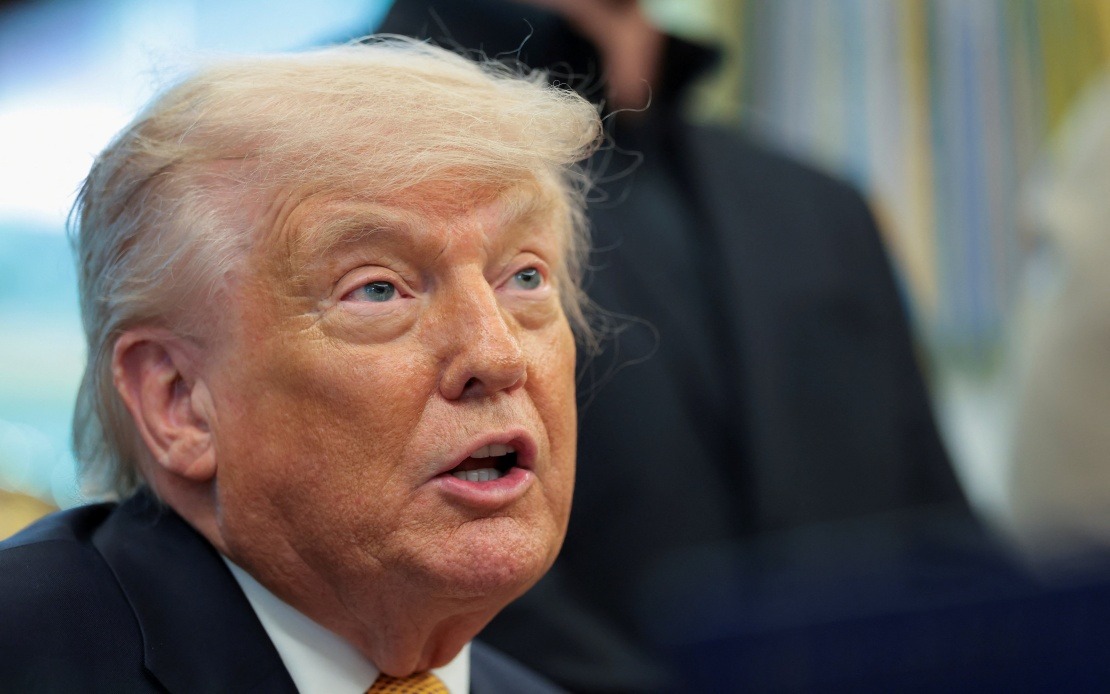
President Donald Trump indicated on Wednesday that negotiations with Iran over its nuclear programme are advancing satisfactorily, offering an optimistic assessment as American representatives continue deliberations in Qatar. Speaking before departing for North Dakota, Trump characterised recent meetings involving his senior envoys Steve Witkoff and Jared Kushner as productive, suggesting momentum in discussions aimed at resolving the nuclear question that has long complicated US-Iran relations. The characterisation represents a notable shift in tone following an intensive period of military escalation between the two countries.
The diplomatic initiative marks a significant turning point after months of military confrontation that began in late February. Trump's decision to emphasise talks over continued military action reflects a strategic calculation that negotiated settlement may achieve American objectives more effectively than sustained military pressure alone. While the president acknowledged that recent military operations "hit them very hard", he suggested that the current phase of diplomacy offers greater promise for sustainable resolution of longstanding disputes between Washington and Tehran.
Trump's public statements sought to alleviate concerns that renewed all-out warfare remained a possibility. He pointed to Iran's apparent willingness to engage and noted the country has "come a long way" in reconsidering its position, language designed to frame the nuclear issue as amenable to compromise. Technical discussions occurring in Doha appear to be generating substantive progress on specific aspects of a potential agreement, according to reporting from Bloomberg, indicating negotiators are moving beyond preliminary posturing into concrete problem-solving.
The memorandum of understanding brokered by Pakistan that underpins the current diplomatic framework represents a structured approach to managing multiple contentious issues simultaneously. Beyond the nuclear question, the agreement envisages addressing a comprehensive agenda including cessation of hostilities across all theatres of conflict, removal of international sanctions, restoration of normal shipping through the Strait of Hormuz, and broader arrangements for regional stability. This expansive scope reflects recognition that the US-Iran confrontation encompasses interconnected challenges requiring holistic resolution.
Tehran's official position maintains careful distance from the proceedings, with Iranian authorities denying that direct meetings with American representatives are occurring. Instead, Iranian officials characterise all communications as proceeding through intermediary channels, a formulation that allows both sides to maintain diplomatic flexibility while technically adhering to different domestic political constraints. This arrangement has enabled substantive discussions to proceed despite the absence of formal direct engagement, a common approach in sensitive international negotiations where public optics matter considerably for domestic audiences.
The presence of Jared Kushner among the American negotiating team carries particular significance given his previous involvement in Middle East diplomacy. His inclusion suggests the Trump administration views this initiative as sufficiently consequential to warrant involvement of senior figures beyond the traditional diplomatic corps. The choice of Qatar as the negotiating venue provides neutral ground comfortable to both parties, with Doha having established itself as a preferred location for sensitive international talks in recent years.
For Southeast Asian observers, the trajectory of US-Iran relations carries implications for broader regional stability and global energy markets. Malaysia's economic interests include maintaining stable shipping lanes through the Strait of Hormuz, a critical conduit for oil and gas supplies flowing to Asian markets. Any sustained military confrontation between the United States and Iran threatens these vital commercial routes, making de-escalation of direct benefit to Malaysia and neighbouring countries dependent on Persian Gulf energy supplies.
The nuclear dimension of the talks addresses concerns about Iranian capabilities that have preoccupied international security analysts for decades. Resolution of this issue could reshape geopolitical calculations throughout the region, potentially reducing the rationale for military buildups by countries concerned about Iranian nuclear advancement. Conversely, failure to reach agreement could prompt renewed military escalation and acceleration of nuclear programmes, outcomes carrying grave consequences for global security.
Trump's optimistic framing reflects confidence that American negotiating positions can secure Iranian concessions on multiple fronts simultaneously. The inclusion of sanctions relief as part of the negotiating framework suggests flexibility on economic pressure tactics that have constituted the primary non-military American leverage against Tehran. Whether such concessions can be calibrated to satisfy both American security objectives and Iranian demands for economic respite remains the central challenge as talks proceed.
The broader context of American military capability recently demonstrated against Iranian targets serves as implicit backdrop to these negotiations. Trump's mention of recent military strikes functions simultaneously as reminder of American capacity and willingness to employ force, while his preference for diplomacy signals that military options are not preferred instruments for resolving the nuclear question. This combination of demonstrated strength and willingness to negotiate represents classic strategy in high-stakes international talks.
Asian governments observe these developments with particular attention to implications for their own security environments and economic interests. The outcome of US-Iran talks could influence broader patterns of American engagement in the Middle East and by extension the Indo-Pacific region, affecting alliance relationships and strategic calculations throughout Asia. Malaysian policymakers particularly monitor these developments given the country's Muslim-majority status and balanced approach to regional power competition.
The apparent momentum in these negotiations suggests both sides perceive benefits from moving toward settlement rather than perpetuating military confrontation. Whether this diplomatic opening can translate into lasting agreement on Iran's nuclear programme, sanctions, and regional security arrangements will determine whether the current optimism proves justified or represents merely a temporary pause in protracted conflict.

