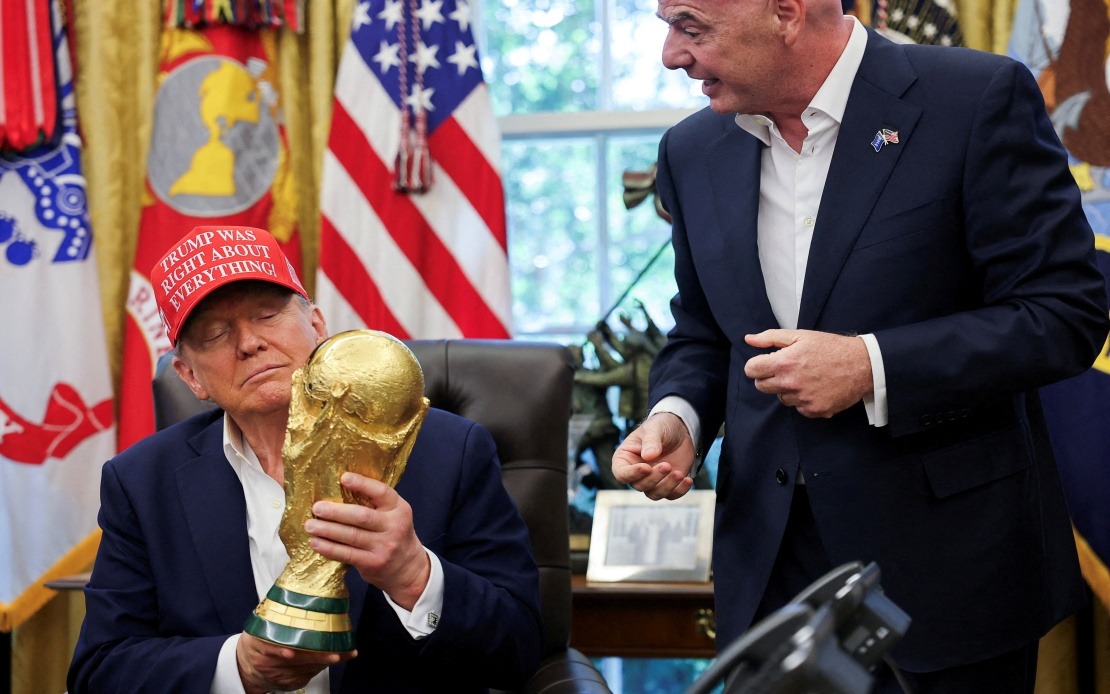
In a striking reversal of rhetoric, US President Donald Trump extended congratulations to Spain following the nation's 1-0 victory over Argentina in the FIFA World Cup final, declaring that he harbours no animosity towards Spanish Prime Minister Pedro Sanchez or Spanish officials more broadly. Speaking to journalists in Istanbul on Sunday, Trump characterised his relationship with Madrid's leadership as cordial and free of the tensions that had dominated headlines merely days earlier, suggesting that a major diplomatic rift may have been patched over with unexpected speed.
The timing of Trump's conciliatory remarks stands in stark contrast to a fiery denunciation he had delivered just weeks prior at a NATO summit held in Ankara, Türkiye. During that high-profile gathering, the American president had launched a scathing verbal assault on Spain, describing the nation as a "wasted cause" and castigating it as a "terrible partner in NATO." His frustration had stemmed primarily from Madrid's unwillingness to grant American military forces unrestricted access to Spanish military bases during the contentious standoff with Iran, as well as Spain's resistance to increasing defence spending to the five per cent threshold that Trump had demanded from alliance members.
The severity of Trump's earlier criticism had extended far beyond diplomatic language. At the NATO summit press conference, he had issued what amounted to an economic ultimatum, explicitly calling for a complete cessation of trade between the United States and Spain. "I don't want anything to do with Spain. Cut off all trade with Spain, please, including visits," he had stated emphatically. He had further intensified the rhetoric by characterising Spanish officials as "hopeless" and "bad people," language that suggested a fundamental breakdown in bilateral relations rather than a negotiable disagreement over policy.
When discussing Spain's World Cup triumph, Trump carefully avoided suggesting that Argentina's defeat had disappointed him personally. Instead, he credited Spanish players with superior performance on the field, acknowledging that "Spain played better," though he did concede that "it was a very close match." This measured assessment allowed him to praise Spain's achievement without appearing to dismiss Argentina's competitive showing, a diplomatic finesse that may have been calculated to avoid further alienating other regional partners.
Trump characterised the World Cup final itself as an "exciting" and "great event," using the sporting spectacle as a platform to reset his relationship with Madrid. By positioning himself as an appreciative observer of athletic excellence rather than a politically motivated antagonist, he created space for a normalisation of ties that had seemed irreparably damaged. The Spanish victory, therefore, provided an unexpected opportunity for diplomatic recalibration.
The rapid shift in Trump's public posture raises important questions about the substantive basis for his earlier complaints regarding NATO spending and military base access. Observers may wonder whether the underlying disputes over defence budgets and strategic cooperation have been genuinely resolved through quiet negotiations, or whether Trump's mercurial approach to international relations simply requires him to move on to different grievances and different targets. His assertion that he maintains "no tension with anybody" suggests a tendency to reframe or minimise past confrontations.
For Spain and other European NATO members, Trump's volatility presents both challenges and opportunities. The incident demonstrates that even serious threats of economic sanctions and diplomatic isolation may be subject to rapid reversal depending on Trump's immediate circumstances and moods. This unpredictability could embolden Madrid to maintain its positions on defence spending and military cooperation, betting that Trump's attention will shift elsewhere. Conversely, it might encourage appeasement, as Spanish officials could fear that any future disagreement might trigger another round of inflammatory rhetoric and potential trade restrictions.
The broader implications for NATO cohesion warrant consideration. If Trump's criticism of Spain and threats of trade isolation can be quickly forgotten or reframed in the aftermath of a sporting event, the credibility of his demands regarding military spending commitments becomes questionable. Allied nations may conclude that Trump's ultimatums carry less weight than his initially aggressive tone would suggest, potentially undermining efforts to achieve consensus on burden-sharing within the alliance.
From a regional Southeast Asian perspective, the incident offers instructive lessons about managing relations with an American administration that prioritises unpredictable personalised diplomacy over consistent institutional relationships. Malaysia and other ASEAN nations that maintain security partnerships with the United States may observe how Spain navigated this episode and adapt their strategies accordingly. The capacity to weather sudden verbal attacks without responding in kind, combined with opportunities to reset relations through non-political events, could emerge as valuable diplomatic skills.
Trump's comments also illustrate how sporting events can inadvertently serve geopolitical functions, transforming international competitions into moments of diplomatic recalibration. The World Cup final became an unexpected venue for resetting bilateral relations between Washington and Madrid, demonstrating that even highly contested policy disputes can be temporarily suspended or reframed when other national achievements command attention.
Looking forward, the substantive disagreements between Washington and Madrid regarding NATO commitments remain unresolved. Trump's congratulatory remarks should not be interpreted as indicating capitulation on the part of the United States regarding its demands for increased Spanish defence spending or expanded military base access. Rather, his comments suggest a deliberate decision to lower the temperature of the dispute publicly, potentially in anticipation of behind-the-scenes negotiations or simply because his immediate attention has been diverted elsewhere.
The incident ultimately reflects the challenges that American allies face in adapting to an unpredictable diplomatic style. Spain's experience suggests that maintaining resolve on substantive policy issues while simultaneously remaining open to relationship-building opportunities may represent the most prudent approach. For other nations considering their strategic partnerships with the United States, the lesson appears to be that rhetorical intensity does not necessarily correlate with policy durability, and that diplomatic reversals can occur with surprising speed.

