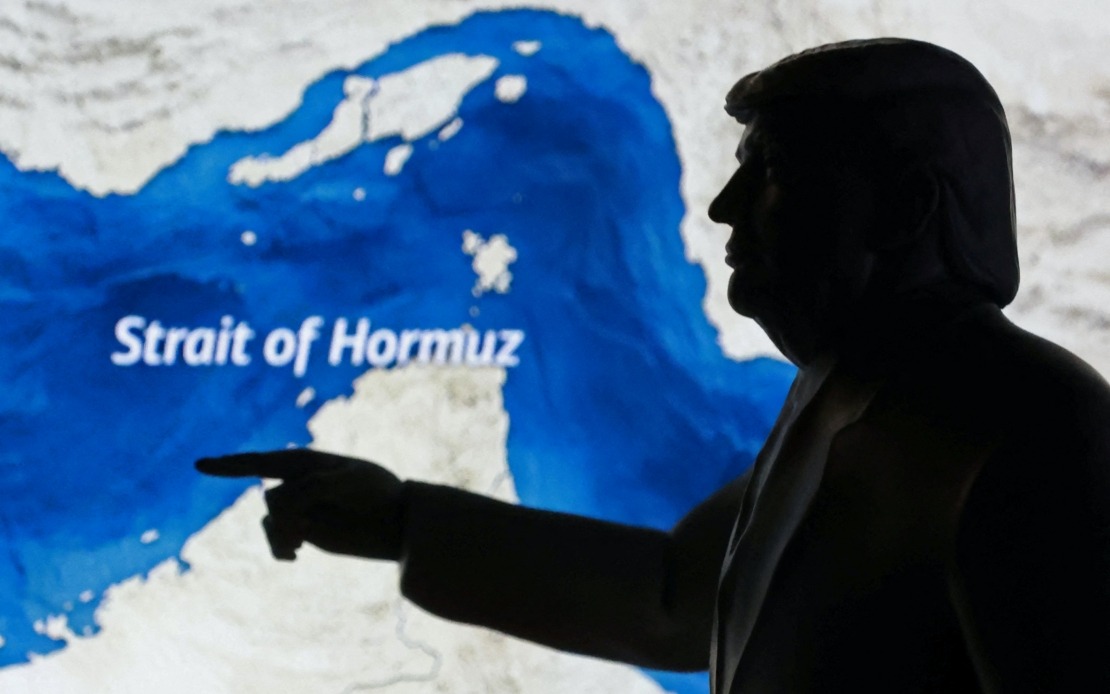
The military confrontation between the United States and Iran has entered a dangerous new phase of explicit threat escalation. President Donald Trump announced on Wednesday through his Truth Social platform that Washington would respond to any Iranian attack on commercial shipping in the Strait of Hormuz with retaliatory strikes against Iranian infrastructure, specifically naming bridges and power plants as potential targets. The stark ultimatum, which explicitly mentions possible strikes against facilities near or within Tehran itself, marks a significant hardening of rhetoric from the US administration as the regional conflict continues to deteriorate.
Trump's statement arrives amid an intensifying cycle of military exchanges between the two nations. The United States has conducted a series of air strikes into Iranian territory over the past week, prompting immediate retaliation from Tehran, which has launched its own attacks against American military installations and allied facilities scattered across the broader Middle Eastern region. This tit-for-tat pattern of escalation stands in stark contrast to diplomatic efforts undertaken just weeks earlier when both nations appeared to be moving toward de-escalation and potential resolution of underlying grievances.
The deterioration in relations is particularly noteworthy given the framework agreement brokered by Pakistan in June, which was designed to establish a pathway toward ending the broader conflict that ignited in February. That accord represented a significant diplomatic achievement, suggesting that both Washington and Tehran had recognized the dangers inherent in prolonged military confrontation and were willing to explore negotiated settlements. The framework contained provisions intended to lay groundwork for a comprehensive peace agreement that would address the root causes of tension between the two powers and their respective regional allies.
For Malaysia and other Southeast Asian nations, these developments carry substantial implications extending well beyond Middle Eastern borders. The Strait of Hormuz represents one of the world's most critical maritime chokepoints, with approximately one-third of all seaborne traded oil passing through its narrow waters annually. Any escalation affecting shipping lanes or international commerce through this strategic waterway has direct consequences for energy security, supply chain stability, and economic prosperity across Asia, including Malaysia's own import and export operations.
The implications for regional stability are considerable. If tensions between the US and Iran continue their current trajectory of escalation, the likelihood of miscalculation or unintended escalation grows substantially. Commercial shipping companies operating in the Strait of Hormuz face mounting insurance costs and navigational risks. The unpredictability introduced by Trump's threat of automatic infrastructure strikes creates a precarious situation where Iranian decision-makers must weigh their own security concerns against the certain knowledge that any maritime aggression will trigger predetermined American responses targeting civilian economic infrastructure.
The shipping industry has already expressed deep concern about the deteriorating security situation. International maritime organizations have issued warnings about the risks posed by military activities in the region, and some vessels have begun taking longer alternative routes around the Cape of Good Hope at substantially increased cost. These expenses ultimately filter through to consumers worldwide, including Malaysian businesses and households that depend on efficient international trade routes to maintain economic competitiveness and affordable access to imported goods and raw materials.
The breakdown of the Pakistani-brokered framework agreement raises fundamental questions about what drove both parties away from diplomatic resolution just weeks after achieving this supposedly significant accord. Analysts point to miscalculations by hardline factions within both governments, as well as disagreements over implementation details and verification mechanisms. The rapid unraveling suggests that the underlying structural tensions between Washington and Tehran remain far from resolution, and that military momentum has regained dominance over diplomatic channels.
For Southeast Asian policymakers, the current trajectory presents a profound dilemma. Nations throughout the region depend heavily on stable energy supplies and uninterrupted maritime trade, yet find themselves with limited capacity to influence outcomes in a conflict dominated by two nuclear-capable powers with deep ideological and strategic differences. Malaysia, as chair of the Non-Aligned Movement and a respected voice within international forums, may face pressure to take positions on the escalating crisis, yet must balance its own economic interests against broader principles of international peace and sovereignty.
The threatened targeting of Iranian power plants and bridges raises humanitarian concerns beyond the immediate military dimension. Such infrastructure disruptions affect civilian populations dependent on reliable electricity supply and transportation networks, regardless of military calculations. The distinction between military and civilian targets becomes blurred when infrastructure explicitly mentioned includes facilities within or near major population centers, raising questions about proportionality and adherence to international humanitarian law principles that Malaysia and other nations have long championed.
The financial markets have already begun reacting to heightened geopolitical risk. Oil prices have shown increased volatility, benefiting some producers while imposing burdens on energy-importing nations like Malaysia. Currency fluctuations tied to risk sentiment, insurance market adjustments, and shifts in investment patterns all create secondary economic consequences that ripple through interconnected global financial systems. Regional central banks and finance ministries have likely begun stress-testing their economies against various scenarios of further escalation.
Looking forward, the critical question remains whether diplomatic channels can be reopened before the current escalation spiral becomes irreversible. The explicit nature of Trump's threat, while potentially intended as deterrence, eliminates ambiguity about American responses and removes space for negotiated de-escalation once violence begins. This creates a particularly dangerous dynamic where neither side can afford to appear weak or accommodating without risking domestic political consequences and signaling vulnerability to regional adversaries.
For Malaysia and other Southeast Asian economies, maintaining engagement with both parties and quietly advocating for restraint through behind-the-scenes diplomacy may offer limited but valuable opportunities to influence outcomes. Regional organizations and respected neutral voices can emphasize the collective costs of escalation and the benefits of renewed negotiations, even as primary protagonists maintain their public positions. The stakes for international stability and prosperity extend far beyond the immediate combatants, and nations dependent on stable energy supplies and open maritime trade have legitimate interests in encouraging resolution of this conflict.

