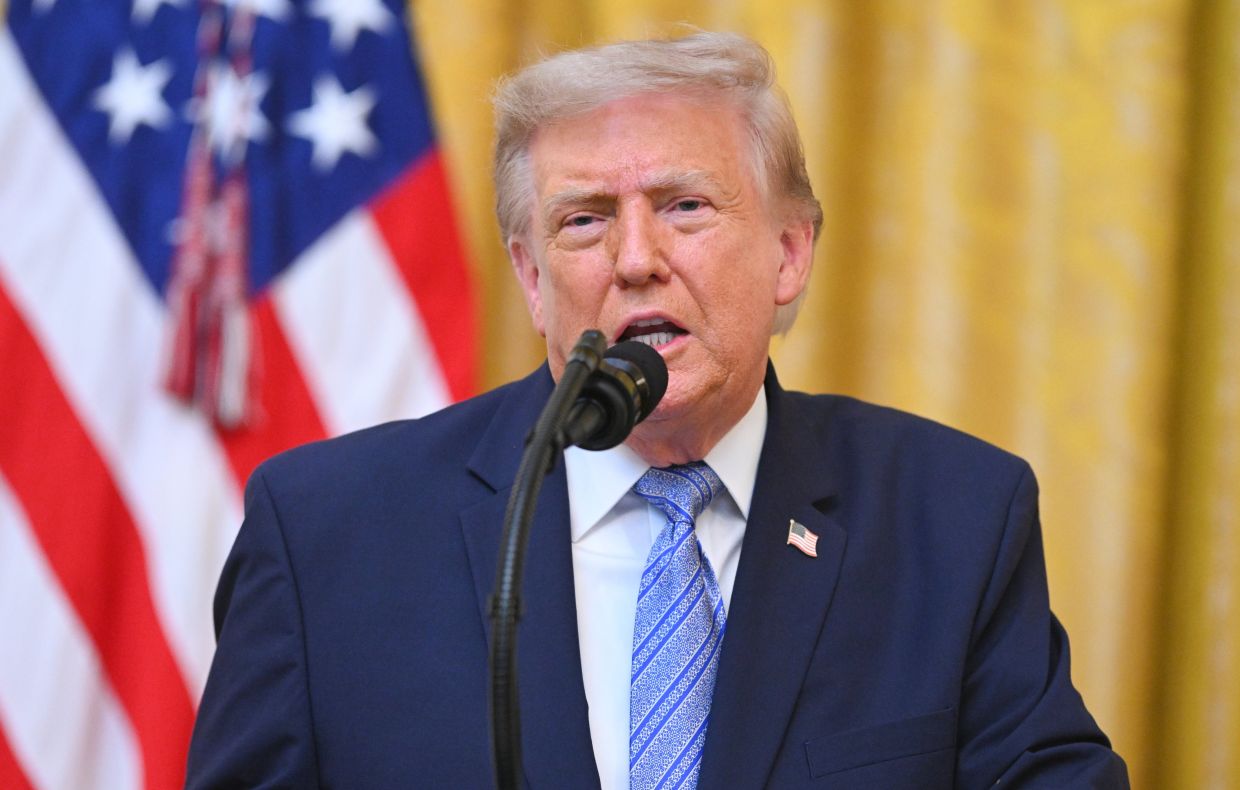
President Donald Trump has used a significant White House address to escalate rhetoric on multiple fronts simultaneously—attacking China over alleged election interference, advancing domestic voting restrictions, and signalling tougher geopolitical posturing. The speech represents one of the more confrontational statements of his second term, weaving together national security anxieties about Beijing's alleged interference with domestic electoral reform proposals aimed at the November midterms, while also escalating a dispute with American broadcast media.
Central to Trump's argument is the accusation that China orchestrated what he characterised as the "largest compromise of election data in history." By framing this alleged breach as a critical national security matter, Trump is positioning election integrity through the lens of foreign adversarial action rather than domestic systemic concerns. This framing is significant for Southeast Asian observers, as it reflects how great-power competition between Washington and Beijing increasingly encompasses the digital and informational domains that affect democratic processes across the region.
Beyond the election data claims, Trump alleged that China has engaged in systematic efforts to influence American business leaders and journalists to adopt anti-American positions or to turn against his presidency specifically. These accusations suggest a broader narrative of Chinese infiltration into American civil society and media ecosystems. Such claims, whether substantiated or not, contribute to an increasingly adversarial posture between the world's two largest economies—a dynamic with profound implications for regional partners like Malaysia and other ASEAN nations caught between competing geopolitical pressures.
Trump's speech singled out election interference as a targeted attack on his political survival during his first term, presenting the allegations as part of a coordinated campaign aimed at undermining his presidency. This personalisation of the China threat reflects a recurring pattern in his rhetoric, where national security concerns become intertwined with his own political fortunes. For Malaysian observers, this approach illustrates how domestic American politics and foreign policy increasingly blur together in ways that can affect international stability and bilateral relationships.
Domestically, the address doubled down on election integrity messaging ahead of the midterm contests. Trump emphasised concerns about electoral vulnerabilities and repeated claims about past fraud, though specifics regarding which elections or fraud claims remained somewhat general. This messaging feeds into an ongoing American debate about election security and voter access that has become sharply partisan, with Republicans typically favouring stricter identification requirements while Democrats warn of suppressed turnout.
The practical policy proposals emerging from the speech include voter identification requirements and proof of citizenship mandates—measures he tied to the SAVE America Act. These reforms represent a significant shift in electoral administration and reflect Trump's conviction that stricter voting protocols are necessary. Malaysian readers familiar with their own electoral processes may note that some countries, including Malaysia, do employ voter identification systems, though the debate over their necessity and effectiveness differs from American partisan divisions. The proposed changes in the United States represent an attempt to reshape the electorate's composition and participation patterns ahead of consequential midterm elections.
Beyond election-specific matters, Trump used the address to signal a broader reorientation of American strategy toward China, explicitly declaring an end to what he termed "complacency" in bilateral relations. This language suggests a more assertive posture across multiple domains including trade, technology, military presence, and ideological competition. For the Asia-Pacific region, such American strategic repositioning carries significant weight, as it affects alliance dynamics, economic relationships, and the regional balance of power that smaller nations like Malaysia must carefully navigate.
The geopolitical positioning in Trump's remarks extends to military matters, with the president defending American military actions presumably in reference to recent operations or strategic deployments. By coupling these military references with claims about Chinese interference, the address establishes a narrative linking domestic vulnerability to external threats and justifying enhanced military preparedness or deployments. This framing is consequential for regional stability, as it affects how the United States calibrates its military presence and commitments throughout Asia and the Indo-Pacific.
Trump also launched a pointed attack on major television networks, specifically threatening to revoke the broadcast licences of ABC and NBC. This media criticism appears designed to challenge what Trump perceives as unfavourable coverage of his presidency and policies. The threat of licence revocation—a power wielded through the Federal Communications Commission—represents a significant assertion of executive authority over the media landscape and raises concerns among press freedom advocates. For Malaysian readers, such American domestic media tensions provide perspective on how democratic societies grapple with polarisation and the relationship between political power and media independence.
The synthesis of these various elements—foreign adversary allegations, electoral reform proposals, military positioning, and media confrontation—creates a comprehensive political messaging strategy heading into midterm elections. Trump's address attempts to consolidate Republican support by presenting multiple existential threats: Chinese interference abroad, electoral vulnerability at home, and perceived media bias against his administration. This multi-front approach reflects calculations about what messaging will mobilise his political base effectively during a critical election cycle.
For Southeast Asian nations like Malaysia, the implications extend beyond mere American domestic politics. The escalation of US-China tensions over election security and influence operations may accelerate efforts by both powers to expand their respective spheres of influence in the region. Additionally, the American emphasis on stricter election security measures and voting restrictions provides a template that some regional actors might consider adopting, potentially affecting democratic practices across Southeast Asia. The speech ultimately underscores how American domestic political debates increasingly have transnational resonance, especially as great-power competition intensifies.

