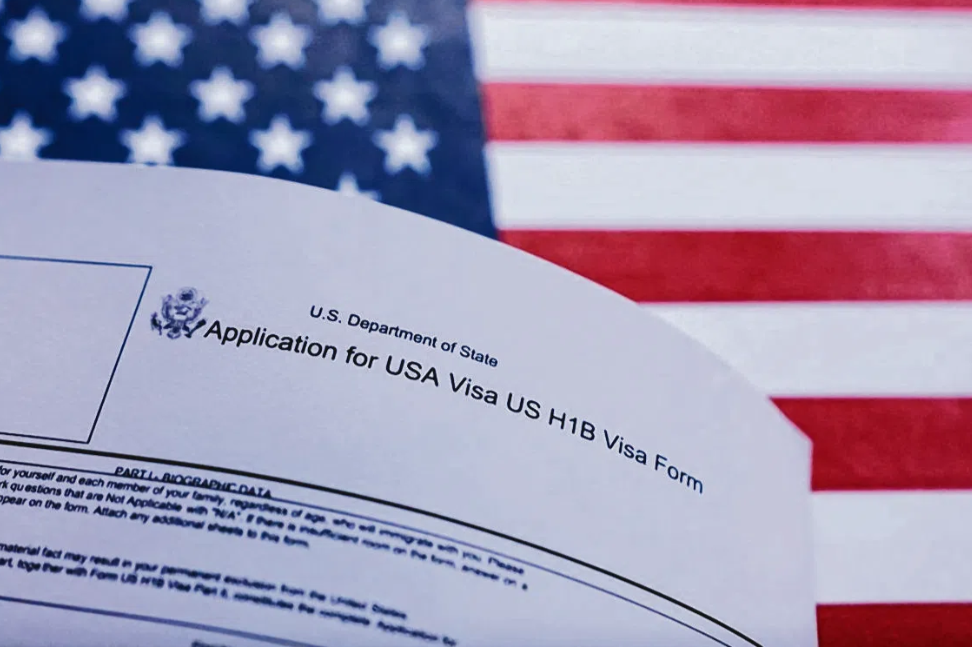
The exodus of skilled foreign technology workers from the United States has accelerated dramatically under the Trump administration's hardline immigration policies, marking a significant reversal of decades-long brain drain patterns that favoured American companies and innovation hubs. Professionals like Deepak, who spent 15 years building a life in the US, have concluded that the combination of tightening visa regulations, soaring compliance costs, and a deteriorating job market makes staying untenable. In May, he made the difficult decision to uproot his family of four and return to Kerala in southern India, effectively abandoning the material security he had constructed over more than a decade to escape the mounting anxiety surrounding his immigration status.
The Trump administration's assault on the H-1B temporary visa programme—historically the primary pathway through which American technology firms recruit globally trained talent—has fundamentally altered the calculus for foreign workers. The proposed introduction of a US$100,000 application fee for new H-1B visas, representing a 25-fold increase from the existing rate, sent shockwaves through the tech industry when announced. Although a federal judge invalidated this particular policy as unlawful in June, the administration has shown no signs of backing down. Instead, it has pursued alternative mechanisms to increase the financial and administrative burden, including a newly proposed US$4,000 surcharge on H-1B extensions and renewals beginning September, effectively squeezing employers and workers through incremental policy adjustments.
The uncertainty surrounding these constantly evolving regulations has proven as damaging as the regulations themselves. Deepak recalled the confusion that gripped technology companies when the US$100,000 fee was initially announced—employers struggled to determine whether the charge would apply to visa renewals, transfers, or only completely new applications. This regulatory ambiguity, combined with genuine restrictions, has fundamentally altered hiring behaviour. American technology giants that have historically served as the primary sponsors of H-1B visas, including Amazon, Meta, Apple, and Microsoft, have grown substantially more cautious about recruiting foreign talent, particularly when domestic alternatives exist, however limited.
Data from immigration consultancies and government sources paint a striking picture of this reversal. According to Xpheno, a Bengaluru-based talent consulting firm, approximately 15,100 Indian professionals returned to India in 2025, a significant increase from 9,800 in 2024, with an additional 7,300 departures recorded within the first months of 2026. While comparable figures for China remain less readily available, the Ministry of Education reported that 536,000 Chinese students returned to China after graduation in 2025, representing an 8.3 per cent year-on-year increase—a telling indicator of diminished enthusiasm for pursuing opportunities within the American system. These statistics reflect a fundamental shift in migration patterns after decades in which the United States possessed an almost magnetic pull on the world's most accomplished technology talent.
The deterioration is measurable across multiple indicators beyond migration figures. Analysis of data from the US Citizenship and Immigration Services reveals that H-1B visa petition approvals for major technology employers including Amazon, TCS, Infosys, Apple, and Microsoft are tracking toward a decline exceeding 10 per cent in fiscal year 2026 compared with 2025. This reduction occurs against the backdrop of broader technology sector contraction. Companies including Meta, Visa, and Amazon have conducted substantial layoffs affecting thousands of workers, many of them American citizens, simultaneously implementing hiring freezes that have shrivelled job vacancies even as the overall pool of jobseekers has swelled. This dynamic has created a particularly precarious position for foreign professionals, who face systematic discrimination in hiring processes as companies prioritise remaining positions for domestic workers.
The lived experience of individual professionals illustrates these macro trends with visceral clarity. Carrie, a Chinese national employed as a data analyst, found herself confronting the terrifying reality of H-1B visa dependency when her employer terminated her position. By June, having exhausted her job search options, she was forced to contemplate departure. At the peak of her desperation, she submitted up to 30 job applications daily, yet encountered rejection from virtually every technology company she approached. By the time her deadline to secure alternative employment approached in August, her daily applications had dwindled to five, reflecting the mathematical certainty that suitable positions had simply ceased to exist. She, like many others, discovered that regardless of expertise or determination, the combination of tightened H-1B sponsorship policies and depressed hiring markets rendered continuation in the American technology sector impossible.
The cumulative effect of policy hostility, economic contraction, and workplace discrimination has spawned an entirely new consulting industry focused on managing the return migration process. Nupur Dave, a Bengaluru-based consultant specialising in facilitating reverse migration, reports an unprecedented volume of inquiries from overseas Indian technology professionals seeking guidance on relocating. Many individuals who previously determined to persist through regulatory uncertainties have reconsidered following successive rounds of layoffs. The psychological dimension cannot be overlooked: professionals who endured years of H-1B visa precarity, always conscious that job loss triggered a 60-day countdown to forced departure, have increasingly concluded that the stress and anxiety no longer justify the economic benefits. Returning professionals cite psychological relief as a significant factor in their decision-making, emphasising that the perpetual insecurity associated with visa dependency outweighs material compensation.
Indian and Chinese nationals comprise approximately 82 per cent of the H-1B visa pool, with Indians accounting for roughly 70 per cent and Chinese nationals approximately 12 per cent. The overwhelming majority work in technology roles that should theoretically place them among America's most valued knowledge workers. However, the Trump administration has accompanied restrictive visa policies with what organisations including the AAPI Equity Alliance characterise as intensified social hostility and online racist targeting. This multi-layered campaign—combining regulatory obstacles, economic pressures, and cultural hostility—creates an environment fundamentally inhospitable to the skilled immigrants who have been instrumental in building American technological dominance.
Contrary to conventional assumptions about return migration, professionals relocating to India are not necessarily securing immediately superior employment. Although technology infrastructure development in India has accelerated, with approximately 2,000 Global Capability Centres (GCCs) established by multinational companies, hiring within information technology services and traditional outsourcing sectors has contracted. However, these GCCs collectively recruited approximately 100,000 employees annually since 2023, with the top 125 facilities absorbing around 7,000 mid and senior-level technology professionals possessing more than a decade of experience in the past year alone, including 2,800 individuals returning specifically from the United States. Nonetheless, returnees without specialised expertise in data science or artificial intelligence frequently encounter substantially lower compensation packages than they earned in America, complicating the financial calculus of relocation.
Some returnees have leveraged their unexpected displacement as an opportunity for personal reassessment that their H-1B visa existence rendered impossible. Ram, a 38-year-old product manager who returned to Bengaluru after nine years in Connecticut, has chosen to live off accumulated savings rather than immediately re-entering the technology labour market. He explicitly questions whether continuation in product management aligns with his actual professional aspirations, contemplating entrepreneurship or even agricultural pursuits as possibilities. The H-1B experience, he reflects, while financially secure and materially comfortable, afforded him no time or psychological space for such fundamental reconsideration. This phenomenon suggests that return migration encompasses not merely economic displacement but also existential repositioning—individuals reclaiming agency over life trajectories previously constrained by immigration status considerations.
For Malaysia and the broader Southeast Asian region, these developments carry substantial implications. The demonstrated capacity of India and China to reabsorb returning technology talent, however imperfectly, highlights the importance of developing comparable infrastructure and opportunity ecosystems. As the United States withdraws from its traditional role as the world's primary magnet for technology talent, competing nations and regions possess an unprecedented opportunity to cultivate homegrown innovation capacity. Malaysia's technology sector, while expanding, remains substantially smaller than India's increasingly sophisticated ecosystem, and policymakers must consider whether existing talent retention and attraction mechanisms remain adequate. The demonstrated willingness of skilled professionals to voluntarily abandon American opportunities—previously considered virtually irreplaceable—suggests that conditions in home countries, combined with hostile policies in traditional destination countries, can fundamentally reshape global talent flows.
The longer-term consequences extend beyond immediate employment statistics. For decades, the H-1B programme functioned as America's de facto global talent acquisition system, channelling the world's most accomplished science and technology professionals into American companies where they contributed to innovation, entrepreneurship, and economic growth. The deliberate dismantling of this system may represent the most significant reversal of American immigration advantage in modern history. As Indian and Chinese technology ecosystems mature and demonstrate genuine capacity for absorbing returning talent and pursuing domestic innovation, the asymmetric advantage that previously made American employment nearly irresistible diminishes. The exodus currently underway may represent not merely a cyclical adjustment but a structural realignment of global talent flows, with profound implications for American technological competitiveness, the relative advancement of Asian technology sectors, and the future architecture of global innovation.

