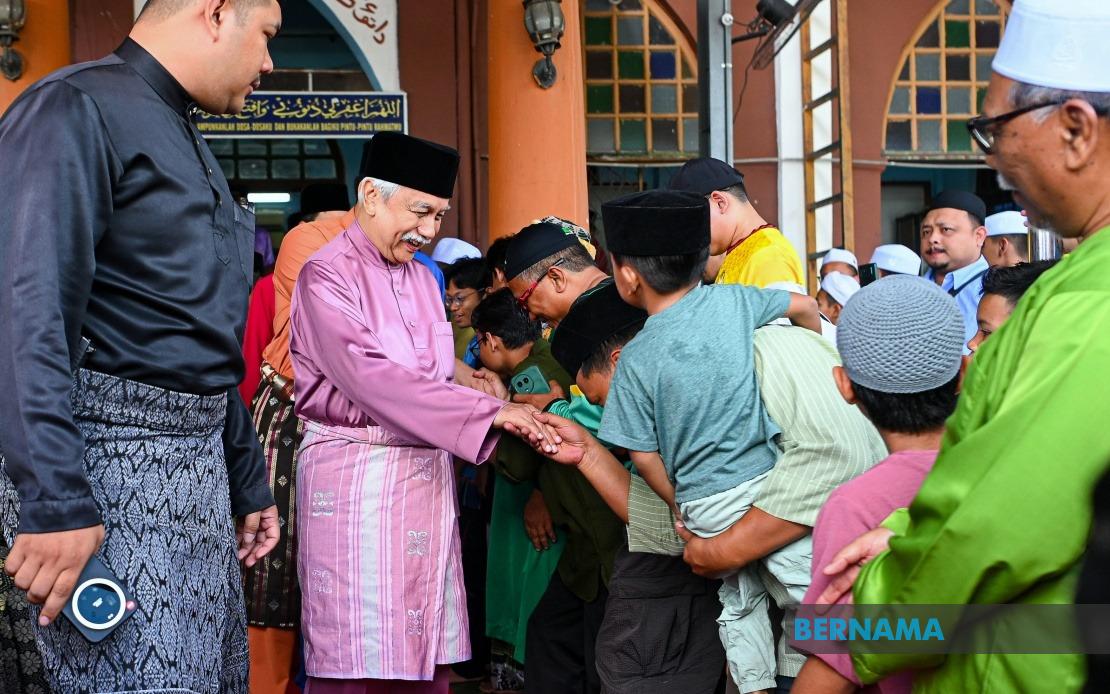
The Yang Dipertuan Besar Negeri Sembilan, Tuanku Muhriz Tuanku Munawir, participated in Friday prayers at Masjid Kariah Pantai in Seremban on 17 July, reinforcing the monarchy's visible commitment to religious observance and community engagement. The event drew more than 500 Muslim worshippers to the congregation, underscoring the significance of the occasion and the broad appeal of the mosque as a place of worship in the state capital.
Tuanku Muhriz was joined by his two sons, Tunku Besar Seri Menanti Tunku Ali Redhauddin and Tunku Zain Al-'Abidin, demonstrating the family's united participation in religious affairs. This multi-generational presence carries symbolic weight in Malaysian culture, where succession planning and the transmission of values are often demonstrated through shared public activities. The involvement of the heir apparent sends a message about continuity and the importance of religious duty across future leadership.
Among the high-ranking officials attending the prayer session were Undang of Luak Sungei Ujong Datuk Klana Petra Muhammad Faris Johari and Menteri Besar Datuk Seri Aminuddin Harun. Their presence reflected the intersection of state governance and religious observance—a common feature of Malaysian political life where religious and administrative institutions often converge during public events. The gathering of these figures in a mosque setting represents the formal relationship between rulers and their subjects in matters of faith.
Prior to the commencement of prayers, Imam Amru Zubair Abu Hanifah delivered a sermon addressing contemporary challenges to religious faith. This thematic choice is particularly relevant given ongoing discussions across Malaysia and Southeast Asia regarding threats to religious identity and practice. The sermon's focus provided congregants with a spiritual perspective on navigating modern pressures while maintaining their commitment to Islamic principles—a message that resonates with many Malaysian Muslim communities grappling with rapid social change.
The Friday prayers themselves followed the traditional Islamic liturgical format, with the imam leading the assembled congregation through the prescribed motions and recitations. For Muslims in Negeri Sembilan and across Malaysia, Friday congregational prayers represent a cornerstone of religious practice, offering a weekly opportunity for community reinforcement and spiritual renewal. The large turnout suggests healthy engagement with mosque-based religious activities in this state, despite competing demands on people's time in contemporary society.
Following the conclusion of prayers, Tuanku Muhriz and his sons engaged in direct interaction with worshippers, a gesture that personalizes the monarchy and demonstrates accessibility. This mingling with congregants, rather than an immediate departure, reflects an approach to royal engagement that emphasizes connection with ordinary citizens. Such moments of informal contact can strengthen the social bonds between the ruler and ruled, maintaining the institution of the monarchy as a touchstone for national identity and stability.
During this post-prayer period, the royal party distributed contributions to children who had attended the Friday prayers. This gesture serves multiple purposes within Malaysian society: it demonstrates generosity, reflects Islamic values of supporting youth and education, and reinforces positive associations with religious participation among young people. By directing charitable attention toward children present at the mosque, the initiative encourages families to maintain mosque attendance and religious involvement across generations.
The event exemplifies how Malaysia's constitutional monarchies integrate religious observance into their public duties and representations. Unlike purely secular heads of state in some democracies, the Yang Dipertuan Besar and other members of the Malaysian royal family maintain active roles in promoting Islam and participating in religious ceremonies. This dimension of royal responsibility has deep roots in Malaysian constitutional arrangements, which designate the sultans as custodians of Islam in their respective states.
For residents of Negeri Sembilan specifically, such visits by Tuanku Muhriz to mosques and religious venues provide opportunities to see their ruler in a spiritual context, reinforcing perceptions of the monarchy as aligned with and supportive of religious values. Seremban, as the state capital, benefits from these high-profile engagements, which elevate the profile of local institutions and demonstrate that the state government and its ceremonial head remain engaged with grassroots religious life.
The participation of both the Undang and Menteri Besar alongside the sultan reflects the layered nature of governance in Malaysian states. Luak Sungei Ujong, one of the historic territorial divisions of Negeri Sembilan, maintains its own traditional leader whose attendance at this prayer event signals coordination between traditional and administrative hierarchies. This multi-layered structure of authority, combining historical sultanates with modern state government, remains a distinctive feature of Malaysian federalism that shapes how public events are organized and represented.
Beyond the immediate participants, the event carries implications for how Malaysian Islamic practice is perceived and practiced at the state level. Mosques serve not merely as prayer facilities but as community centers, meeting points, and venues where citizens can observe their rulers and administrative leaders engaged in shared religious practice. This visibility helps normalize mosque attendance and positions religious observance as consistent with effective governance and responsible leadership.
The contribution to children attending prayers also reflects contemporary discussions about revitalizing youth engagement with Islam and with mosque-based religious education. In a region where younger generations increasingly navigate plural societies with diverse cultural influences, institutional efforts to make mosque attendance appealing and rewarding can influence long-term patterns of religious practice and community participation. Such initiatives by high-profile figures like Tuanku Muhriz signal state-level commitment to strengthening intergenerational transmission of Islamic values.

