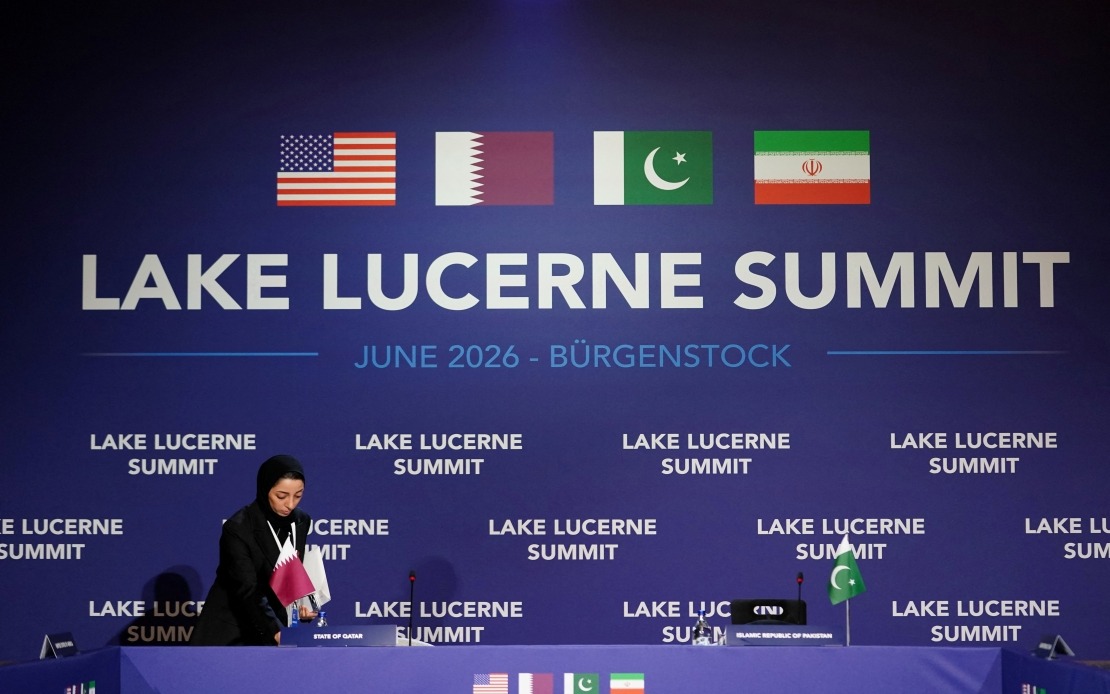
Four influential Muslim-majority nations have thrown their collective weight behind a freshly signed memorandum between the United States and Iran, signalling that the diplomatic breakthrough enjoys substantial backing across the Middle East and South Asia. In a joint statement released following talks in Cairo on Sunday, the foreign ministers of Türkiye, Egypt, Pakistan and Saudi Arabia characterized the Islamabad Memorandum of Understanding as a constructive development that could ease dangerous tensions that have long threatened the stability of West Asia.
The agreement's significance extends well beyond bilateral relations between Washington and Tehran. According to the four nations, the accord addresses a conflict that has cast a shadow over regional security, disrupted global energy supplies, endangered freedom of navigation along critical maritime routes, and created friction in international supply chains and trade flows. By bringing these heavyweights into the conversation, the joint statement underscores how the US-Iran relationship has become intertwined with the interests of multiple regional stakeholders who bear the costs of escalating tension.
Among the signatories, Pakistan's role merits particular attention. The country served as the organizational hub for the negotiation process itself, hosting discussions in Islamabad and actively shepherding the two sides toward agreement. This positioning reinforces Pakistan's status as a regional mediator and reflects its strategic interest in stability along major shipping lanes and energy corridors that affect South Asian economies. Qatar also received acknowledgment for its behind-the-scenes diplomatic support, demonstrating how smaller but strategically positioned Gulf states continue to play outsized roles in resolving major regional conflicts.
Crucially, the four ministers insisted that any further negotiations must move at speed toward finalizing a comprehensive, long-term and verifiable settlement. The emphasis on speed reflects anxiety that momentum could dissipate or that hardliners on either side might exploit delays to undermine progress. Equally important, the nations stressed that future accords must enshrine the security interests of Gulf Cooperation Council member states and countries across the Levant—a clear signal that Iran's regional activities and military capabilities remain central concerns that cannot be sidelined in pursuit of a quick headline agreement.
Palestinian statehood emerged as the other pillar of the statement, with the four diplomats linking regional peace architecture directly to resolution of the Israeli-Palestinian conflict. They reaffirmed their commitment to a two-state solution grounded in UN resolutions, with borders based on the 1967 lines and East Jerusalem serving as the capital of an independent Palestinian state. This framing treats the Palestinian question not as a separate issue but as foundational to achieving durable stability across West Asia—a position that reflects the deep emotional resonance this conflict carries in Muslim-majority societies.
For Southeast Asian observers, this development carries implications beyond the immediate region. Malaysia, as a Muslim-majority nation with economic interests in West Asian stability and energy security, has long advocated for dialogue-based solutions to regional disputes. The backing from Pakistan and Saudi Arabia, two nations with whom Malaysia maintains close ties through Islamic organizations and trade relationships, suggests that a consensus is building among major Muslim powers for de-escalation over confrontation. This alignment could strengthen Malaysia's diplomatic positioning should it seek to mediate or contribute to future regional peace efforts.
The statement also reflects shifting geopolitical calculations among regional powers. Türkiye's inclusion signals Istanbul's investment in maintaining a balance between its NATO commitments and its interests in a stable Middle East. Egypt's participation underscores Cairo's role as a gateway between the Arab world and the broader Islamic community, while Saudi Arabia's endorsement represents a cautious shift from previous positions that sometimes portrayed Iran as an irredeemable adversary. Pakistan's central role showcases how South Asian countries have become integral to Middle Eastern diplomacy rather than peripheral observers.
The emphasis on long-term verification mechanisms suggests the four nations are not satisfied with symbolic gestures. They appear to be signalling that any agreement lacking robust monitoring and compliance measures will lack their full confidence. This technical dimension, though less headline-grabbing than political symbolism, may prove crucial in determining whether the accord survives the inevitable implementation challenges ahead. Without verification that both sides are adhering to commitments, trust will remain fragile and the risk of renewed escalation will persist.
The joint statement's careful framing around Gulf security interests also hints at lingering tensions. While praising the US-Iran agreement, the four nations are essentially saying that Iran's regional conduct—particularly its missile programmes, proxy militias, and interference in neighboring states—remains on the table for future negotiation. This suggests the Islamabad Memorandum is viewed as an opening move rather than a comprehensive resolution, with substantial diplomatic work still required to address the security concerns that have shaped regional rivalries for decades.
Moving forward, the success of this agreement and subsequent negotiations will likely depend on whether the constructive momentum demonstrated in Cairo can be sustained in the coming months. The involvement of four significant regional players in issuing this joint statement suggests that investment in de-escalation runs deep, but implementation will test whether competing strategic interests can be reconciled. For Malaysia and other Southeast Asian nations watching from afar, the outcome will shape everything from oil prices and shipping security to the broader question of whether dialogue can ultimately triumph over confrontation in one of the world's most volatile regions.
%22%2F%3E%3C%2Fpattern%3E%3C%2Fdefs%3E%3Crect%20width%3D%22100%25%22%20height%3D%22100%25%22%20fill%3D%22url(%23ph1hlthg)%22%2F%3E%3Crect%20width%3D%22100%25%22%20height%3D%22100%25%22%20fill%3D%22url(%23ph1hlthp)%22%2F%3E%3Ctext%20x%3D%2250%25%22%20y%3D%2250%25%22%20text-anchor%3D%22middle%22%20dominant-baseline%3D%22central%22%20fill%3D%22rgba(255%2C255%2C255%2C0.95)%22%20font-family%3D%22Georgia%2C%20'Times%20New%20Roman'%2C%20serif%22%20font-weight%3D%22700%22%20font-size%3D%22151%22%20letter-spacing%3D%22-0.02em%22%3EMalaysian%3C%2Ftext%3E%3C%2Fsvg%3E)
%22%2F%3E%3C%2Fpattern%3E%3C%2Fdefs%3E%3Crect%20width%3D%22100%25%22%20height%3D%22100%25%22%20fill%3D%22url(%23ph11w77g)%22%2F%3E%3Crect%20width%3D%22100%25%22%20height%3D%22100%25%22%20fill%3D%22url(%23ph11w77p)%22%2F%3E%3Ctext%20x%3D%2250%25%22%20y%3D%2250%25%22%20text-anchor%3D%22middle%22%20dominant-baseline%3D%22central%22%20fill%3D%22rgba(255%2C255%2C255%2C0.95)%22%20font-family%3D%22Georgia%2C%20'Times%20New%20Roman'%2C%20serif%22%20font-weight%3D%22700%22%20font-size%3D%22226%22%20letter-spacing%3D%22-0.02em%22%3EPolice%3C%2Ftext%3E%3C%2Fsvg%3E)
%22%2F%3E%3C%2Fpattern%3E%3C%2Fdefs%3E%3Crect%20width%3D%22100%25%22%20height%3D%22100%25%22%20fill%3D%22url(%23ph56tdng)%22%2F%3E%3Crect%20width%3D%22100%25%22%20height%3D%22100%25%22%20fill%3D%22url(%23ph56tdnp)%22%2F%3E%3Ctext%20x%3D%2250%25%22%20y%3D%2250%25%22%20text-anchor%3D%22middle%22%20dominant-baseline%3D%22central%22%20fill%3D%22rgba(255%2C255%2C255%2C0.95)%22%20font-family%3D%22Georgia%2C%20'Times%20New%20Roman'%2C%20serif%22%20font-weight%3D%22700%22%20font-size%3D%22320%22%20letter-spacing%3D%22-0.02em%22%3EIran%3C%2Ftext%3E%3C%2Fsvg%3E)