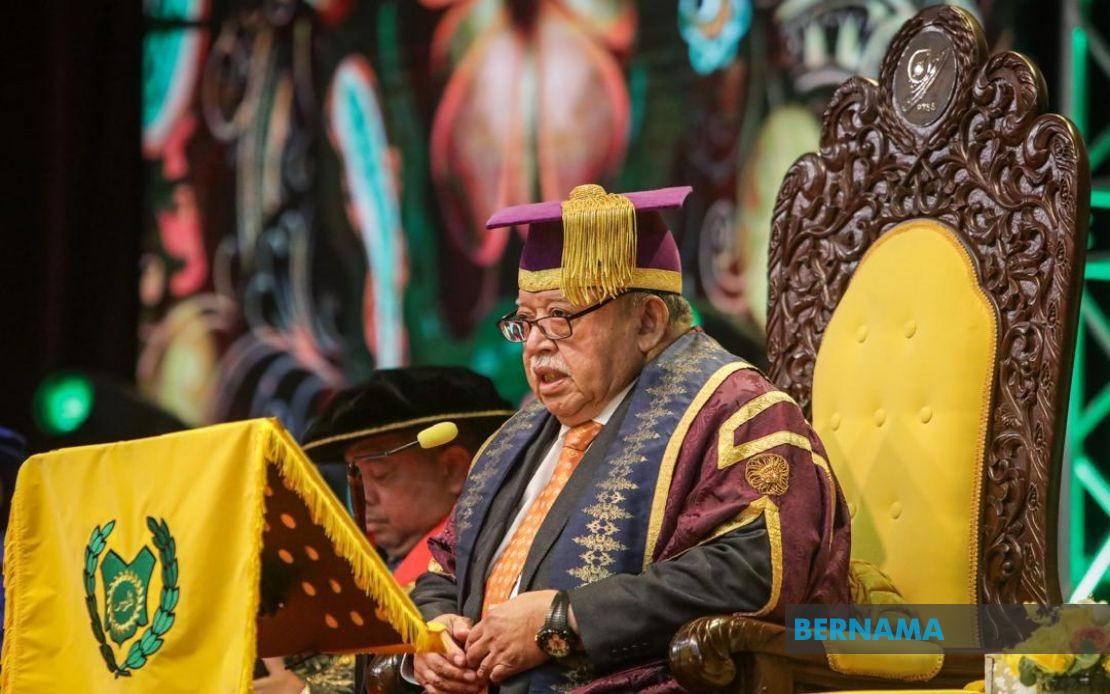
Technical and vocational education has emerged as a cornerstone strategy for developing Malaysia's human capital, according to the Raja of Perlis, Tuanku Syed Sirajuddin Jamalullail, who delivered the message at the 2026 Northern Zone Polytechnic and Community College Convocation Ceremony. The Ruler's remarks at Politeknik Tuanku Syed Sirajuddin in Arau underscored the growing recognition among national leadership that TVET institutions are vital pathways for equipping Malaysians with the practical skills and innovative mindset required in an increasingly competitive global economy.
The Perlis Ruler's emphasis on innovation reflects a broader understanding that Malaysia's economic future depends not merely on technical competency but on the ability of graduates to think creatively and adapt rapidly to technological change. In a world where artificial intelligence, automation, robotics and digitalisation are fundamentally reshaping employment patterns and industrial structures, traditional educational approaches alone cannot suffice. TVET programmes, with their practical, hands-on focus, position graduates at the frontline of this transformation, enabling them to bridge the gap between emerging technologies and real-world applications.
Tuanku Syed Sirajuddin specifically cautioned that innovation cannot be viewed as optional in contemporary Malaysia. Rather, it has become foundational to the nation's economic competitiveness and capacity to progress on the global stage. This reframing of innovation—from luxury to necessity—carries significant implications for how TVET institutions allocate resources and design curricula. The message sends a signal that polytechnics and community colleges must continuously update their programmes to reflect cutting-edge industry developments, ensuring that graduates remain relevant in rapidly shifting labour markets.
Beyond technical prowess, the Ruler articulated an equally important dimension often overlooked in skills-focused discussions: the primacy of moral values and character development. His Royal Highness stressed that knowledge and skills must always be guided by strong ethical principles, integrity, and patriotic commitment. This dual emphasis reflects a mature understanding that technical excellence divorced from moral grounding can lead to misapplication of skills and societal harm. For Malaysia, where governance challenges and ethical concerns have featured prominently in recent years, this message carries particular weight in suggesting that educational institutions bear responsibility not only for producing technically skilled workers but also morally upright citizens.
The convocation ceremony itself underscores the scale of Malaysia's vocational education sector. The event, spanning August 3-9 at Politeknik Tuanku Syed Sirajuddin, honours 6,104 graduates from polytechnic and community college programmes across the northern corridor of Perlis, Kedah, and Penang. This substantial cohort represents the annual output capacity of just one region's TVET institutions, illustrating the significant human resource pipeline that technical education provides to the Malaysian economy. The geographic concentration in Malaysia's north also highlights how TVET infrastructure has been distributed across the country to ensure broader access to vocational pathways.
During the ceremony's first session, recognition was accorded to distinguished achievers within the graduating cohort. Teerti Ganapathi Rao, a 22-year-old Diploma graduate in Digital Technology from the Department of Information and Communication Technology at PTSS, received the Director-General of Polytechnic and Community College Education Award. Such recognition systems serve multiple purposes: they celebrate excellence, motivate peers, and provide visible models of achievement that inspire incoming students. The fact that this award went to a digital technology graduate is particularly symbolic, reflecting the economy's growing emphasis on information and communication technology skills.
The setting at Dewan Harumanis carries its own significance. Named after the institution's namesake, Tuanku Syed Sirajuddin, the venue embodied the symbolic importance placed on TVET by Perlis state leadership. That the Raja himself attended and delivered substantive remarks on vocational education demonstrates the political and social standing these institutions now occupy in Malaysian discourse. This represents a significant shift from historical perceptions that sometimes positioned vocational pathways as secondary options for those unable to pursue academic routes.
For Malaysia's broader economic development, TVET expansion addresses critical workforce gaps in sectors ranging from manufacturing to hospitality to healthcare support services. Southeast Asia's middle-income trap challenge—the difficulty nations face in transitioning from labour-cost-based competition to innovation-based competition—makes TVET particularly strategically important. Economies like Thailand and Vietnam have similarly recognised vocational education as essential infrastructure for industrial upgrading and economic diversification.
The emphasis on innovation within TVET programmes also reflects recognition that future economic opportunities will increasingly emerge at the intersection of technology and practical application. A technician who understands not just how to operate machinery but how to optimise processes, identify inefficiencies, and propose improvements becomes far more valuable to employers. This distinction between rote technical knowledge and innovative technical thinking increasingly defines competitive advantage in regional manufacturing and service sectors.
Looking forward, the challenge for Malaysia's TVET sector will be maintaining the balance the Raja articulated: fostering genuine innovation and technical excellence while embedding strong ethical foundations. This requires not only curriculum design but also institutional cultures that encourage questioning, experimentation, and responsible innovation. Faculty development, industry partnerships, and linkages with research institutions become critical enablers of this vision.
The Ruler's call for TVET graduates to "contribute meaningfully to society, the state and the nation" frames vocational education not merely as economic training but as civic preparation. This perspective is especially relevant for Malaysia, where TVET institutions serve diverse student populations including those from lower-income backgrounds. By positioning TVET as both pathway to economic opportunity and responsibility to contribute to national development, the message potentially strengthens social cohesion and sense of shared purpose among graduate cohorts.
For employers across Malaysia and the region, the Northern Zone convocation ceremony represents a substantial talent pool emerging equipped with contemporary skills. The quality of this talent pool—shaped by leadership messaging emphasising both innovation and integrity—will significantly influence whether Malaysia can sustain competitive advantage in increasingly knowledge-intensive manufacturing and service sectors. As industries across Southeast Asia face pressure to move upmarket and away from low-cost competition, the calibre of TVET graduates becomes ever more consequential to regional economic trajectories.

