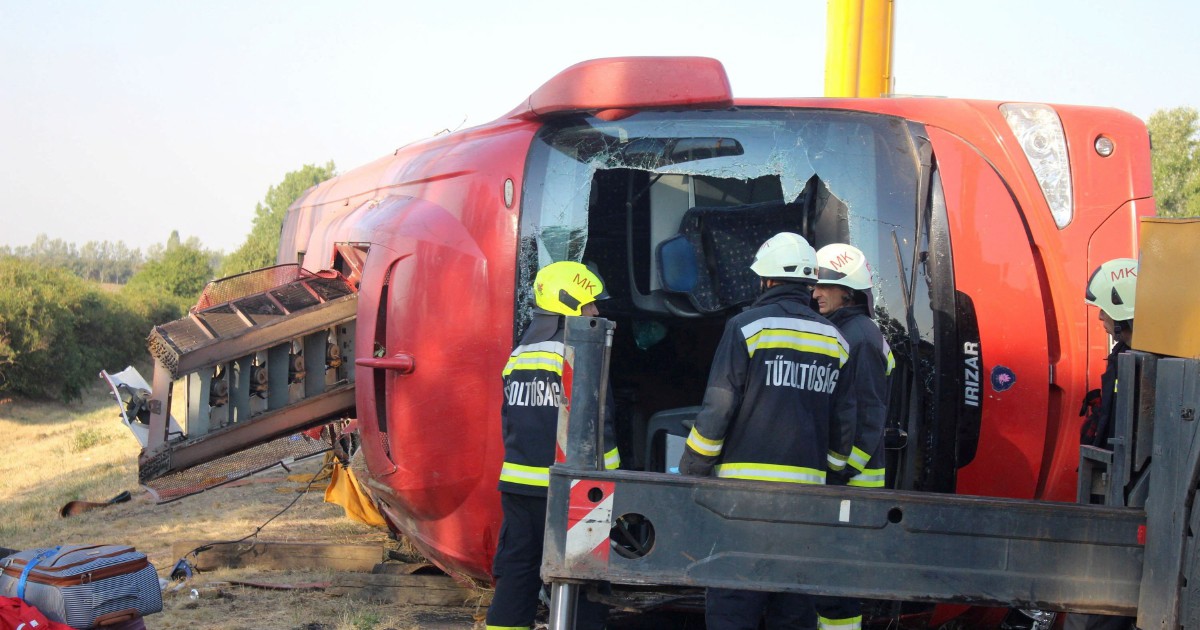
A tragic road accident in Hungary claimed at least twelve lives when a Polish passenger coach overturned on a motorway early Sunday morning. Prime Minister Peter Magyar confirmed the death toll, while officials reported that another ten passengers suffered serious injuries in the incident. The crash highlighted ongoing safety concerns surrounding long-distance coach travel across Central and Eastern Europe, a region where such services remain popular despite periodic accidents.
Details surrounding the circumstances of the overturn remained under investigation as Hungarian authorities launched a formal inquiry. Early reports suggested the bus veered off the highway, though the exact cause had not been established. The location of the crash on a major Hungarian transport corridor underscores how heavily this region depends on cross-border coach services linking Poland, Hungary, and destinations further afield throughout the continent.
Response teams mobilized quickly to the scene, with emergency medical personnel treating the injured and transporting the most severely affected to nearby hospitals. The scale of casualties required coordination between Hungarian health services and potentially neighbouring medical facilities, reflecting the severity of the impact. Recovery operations continued as authorities worked to document the incident and identify the deceased.
This accident represents a significant transportation tragedy for Central Europe and carries particular weight for Polish communities, given that the victims were passengers on a domestic coach service. Coach travel forms a crucial part of regional mobility infrastructure, offering affordable transport for millions of travellers annually. However, periodic disasters underscore the inherent risks of prolonged journeys on motorways, where driver fatigue, mechanical failures, or sudden weather changes can rapidly transform routine trips into catastrophes.
The Hungarian government's immediate public acknowledgment of the incident, through Prime Minister Magyar's statement, reflected the gravity of the situation and signalled official commitment to investigating root causes. Such transparency matters for passenger confidence in long-distance coach services, which depend on public trust. Families affected by the crash would require comprehensive support, including victim identification assistance and counselling services.
Long-distance coach operators across Central Europe maintain strict regulatory frameworks intended to prevent such tragedies. These include mandatory rest periods for drivers, regular vehicle safety inspections, and speed restrictions on certain road types. The apparent magnitude of this crash raises questions about whether existing safeguards functioned as intended or whether additional measures might reduce future risks. Investigators would examine maintenance records, driver credentials, and black box data if available.
The accident also reflects broader transportation dynamics within the European Union, where freedom of movement encourages cross-border coach services. Passengers from various countries utilise these affordable alternatives to rail or air travel, accepting inherent risks in exchange for lower fares. However, such acceptance diminishes when individual crashes demonstrate the potential for mass casualties, prompting renewed scrutiny of operator standards and regulatory enforcement.
For Malaysian readers familiar with coach travel throughout Southeast Asia, this European incident offers comparative perspective on transport safety across different regions and regulatory environments. While Malaysian authorities maintain strict licensing and inspection requirements for long-distance buses, the Hungarian accident demonstrates that even developed European nations with comprehensive safety frameworks experience periodic catastrophes. The underlying challenge remains human and mechanical variability—factors that standardised regulations can mitigate but never entirely eliminate.
The broader impact of this tragedy would extend beyond immediate casualty figures. Coach operators might face increased scrutiny and potential regulatory changes, insurers would adjust risk assessments, and affected families would pursue accountability investigations. The incident would likely spark industry-wide discussions about fatigue-monitoring technology, vehicle maintenance protocols, and driver training standards. Hungarian and Polish transport authorities would coordinate to determine whether additional measures could prevent similar occurrences.
As investigations proceeded, questions would emerge about whether the coach operator possessed appropriate certifications, whether the driver had complied with mandatory rest requirements, and whether any mechanical defects contributed to the overturn. These details would inform both immediate judicial proceedings and broader policy discussions about European coach safety standards. The tragedy underscored that transportation infrastructure development must continuously evolve to address emerging risks and implement lessons learned from previous accidents.

