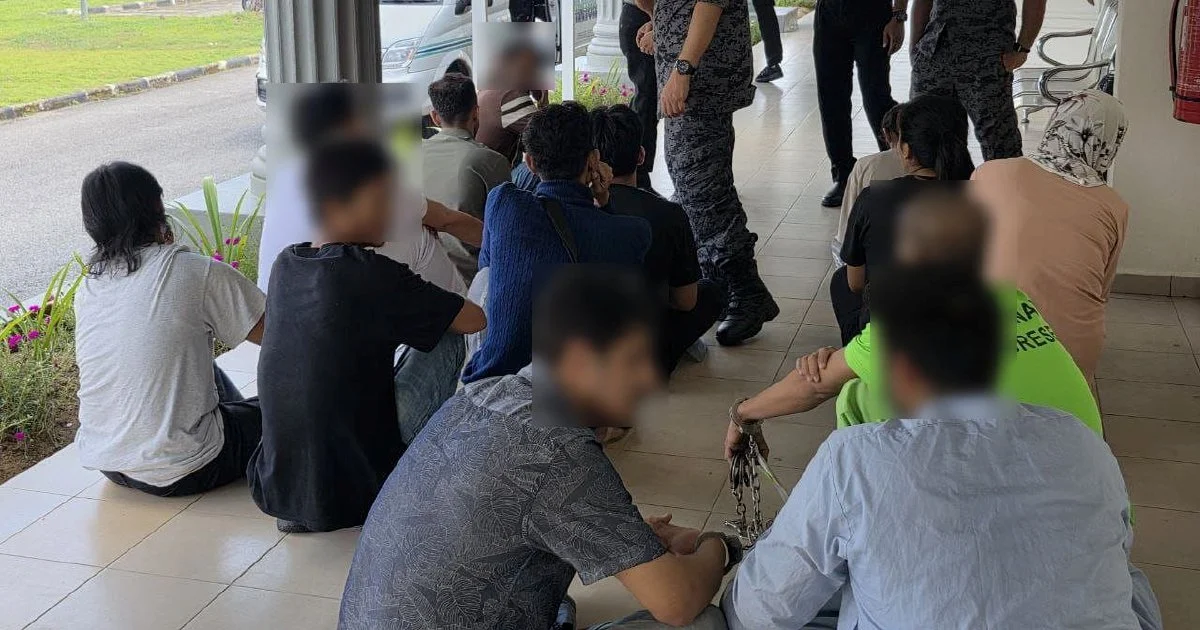
Authorities in Kelantan have taken action against a group of twelve undocumented migrants brought before the Sessions Court in Pasir Mas, where they faced charges relating to their illegal presence within Malaysian territory. The enforcement operation underscores the ongoing challenge faced by immigration authorities across the country in managing unauthorised entries and irregular residency, particularly along border regions prone to such violations.
The cohort included three female migrants among the twelve individuals processed through the court system. All faced multiple charges that encompassed illegal entry into the country, a violation that carries significant legal consequences. Additionally, the migrants were charged with overstaying beyond the period authorised by their entry permits, a common offence that strains resources devoted to immigration compliance and border management throughout Southeast Asia.
A third category of charges involved the misuse of travel passes, suggesting some individuals may have attempted to circumvent immigration regulations by fraudulently presenting documents or employing false identification. This component of the case highlights the sophisticated methods sometimes employed by trafficking networks or individual migrants seeking to evade detection at border checkpoints and immigration processing stations.
The Pasir Mas Sessions Court serves as the judicial venue for such immigration-related matters in Kelantan's northern district, an area geographically positioned along Thailand's southern border. This location makes it a natural enforcement focal point, as the porous nature of the Malaysia-Thailand boundary creates regular opportunities for unlawful border crossings. Kelantan's position as a gateway region means immigration violations here receive particular scrutiny from both federal and state-level authorities.
The enforcement action reflects broader Malaysian immigration policy priorities established by federal authorities to curb irregular migration, which has become increasingly pressing as economic disparities between Malaysia and neighbouring countries continue to draw migrant workers seeking employment opportunities. The nation hosts one of Asia's largest irregular migrant populations, with estimates suggesting hundreds of thousands of individuals working without proper documentation or permit status.
Migrants charged with illegal entry typically face substantial fines and potential imprisonment, though sentences often balance deterrence against humanitarian considerations and the practical realities of processing large caseloads through the criminal justice system. The inclusion of three women in this group reflects patterns observed across regional migration flows, where women migrants often undertake equally perilous journeys under conditions that expose them to heightened vulnerabilities and exploitation.
The court proceedings underscore the distinction Malaysian immigration enforcement makes between those apprehended immediately upon crossing borders and those discovered through subsequent compliance operations within the country. Overstaying charges, as applied to this cohort, typically indicate the migrants successfully cleared initial border checks but subsequently remained beyond their authorised period, often due to employment or family circumstances that motivated them to extend their stays regardless of legal consequences.
Pass misuse charges represent a more serious component of immigration violations, as they suggest intentional deception of authorities or fraudulent use of legitimate documentation. Such offences carry elevated penalties precisely because they undermine the integrity of the entire immigration and documentation verification system that Malaysia maintains at points of entry.
The Kelantan operation aligns with nationwide enforcement patterns that have intensified in recent years across multiple entry points and interior locations. Immigration authorities conduct routine sweeps at factories, construction sites, agricultural plantations, and domestic households where undocumented workers concentrate, supported by inter-agency cooperation with police and local government bodies.
For Malaysia's economy and labour market, the ongoing presence of undocumented migrants creates dual pressures. While they fill critical labour shortages in sectors such as agriculture, manufacturing, and domestic work that struggle to attract citizen workers, their unregulated status generates revenue losses through unpaid taxes and social insurance contributions, alongside complications for workplace safety standards and worker protections that companies might otherwise maintain.
The regional context matters significantly for understanding these enforcement patterns. Thailand, Indonesia, Myanmar, and Bangladesh collectively represent the primary source nations for Malaysia's undocumented migrant population, with economic circumstances and employment networks driving continuous outflows toward Malaysian labour markets despite well-publicised risks of trafficking, exploitation, and legal prosecution.
Moving forward, authorities emphasise that prosecutions serve as deterrents, though evidence suggests enforcement alone has limited impact on migration flows driven by substantial economic incentives. The court proceedings in Pasir Mas represent routine administrative outcomes within Malaysia's immigration enforcement machinery, with dozens of similar cases processed monthly across the country's various jurisdiction centres. Nevertheless, they highlight persistent challenges that regional governments increasingly recognise require coordinated approaches involving labour market reforms, anti-trafficking initiatives, and bilateral cooperation mechanisms.

