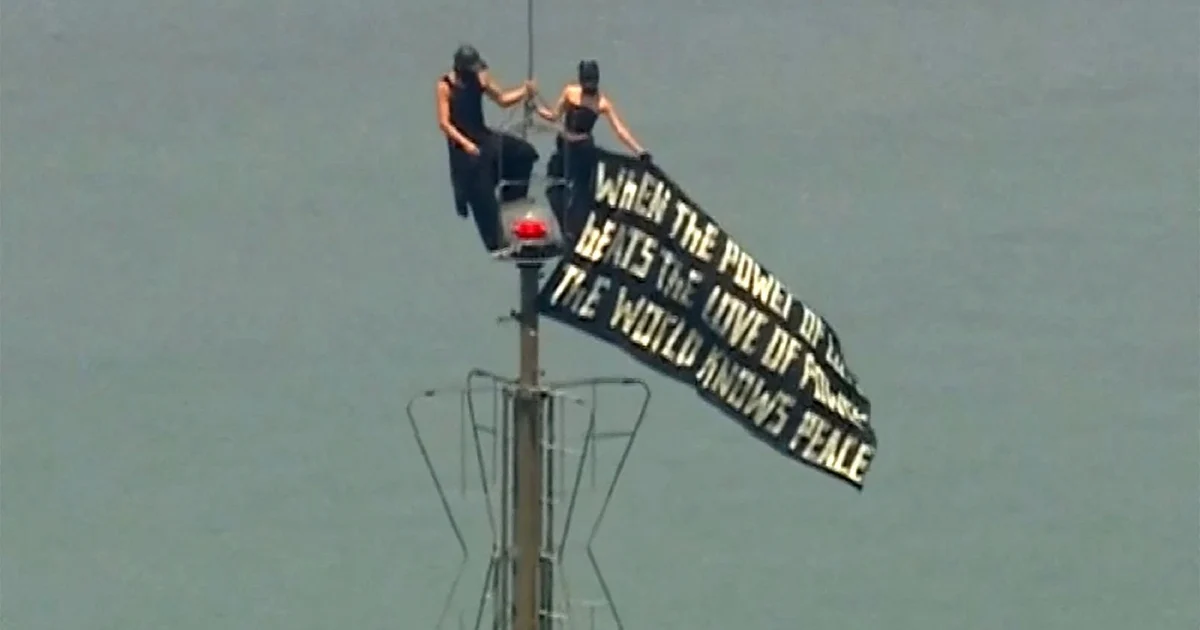
Two people were taken into police custody on Wednesday following an unauthorized climb of an antenna structure crowning New York's Empire State Building, one of the United States' most recognizable architectural landmarks. The pair had made their way to the top of the antenna system, which extends from the building's roof, in what observers and investigators suggest may have been coordinated with a marriage proposal. The audacious stunt unfolded at one of Manhattan's most heavily monitored and securitized locations, raising questions about how the climbers managed to breach security protocols at a building that has fortified its access points considerably since the September 11 attacks.
The Empire State Building, standing at 1,454 feet including its antenna, attracts millions of visitors annually who ascend through designated elevator systems to its observation decks. However, the building's antenna system — a structural element critical to the building's historical silhouette and functional broadcasting capabilities — remains strictly off-limits to the public for safety and security reasons. The decision to climb this particular portion of the structure represents an especially dangerous undertaking, given the extreme height, exposure to wind, and complete absence of safety equipment typical of such unauthorized ascents.
Security at the iconic skyscraper has been substantially reinforced over decades. The building management has implemented multiple layers of protection, including surveillance systems, access controls, and security personnel stationed throughout the structure. That individuals could reportedly reach the antenna suggests either sophisticated planning to circumvent these measures or an unexpected vulnerability in the security apparatus. The incident will likely prompt a comprehensive review of access protocols and monitoring systems, particularly those governing the building's roof and antenna structures.
The apparent proposal element adds an unusual dimension to what is fundamentally a serious security breach. Climbers and stunt performers have occasionally attempted to reach high points on major buildings to publicize causes, set records, or mark personal milestones. The combination of romance and rule-breaking appears to have motivated this particular venture, though authorities have not confirmed whether an engagement actually occurred during the climb.
For residents and visitors across Southeast Asia, incidents at American landmarks carry particular resonance given the global profile of such locations. The Empire State Building remains on many bucket lists for Malaysian and regional travelers visiting New York. This incident serves as a stark reminder that security boundaries at these iconic sites exist for genuine safety reasons — the extreme height, harsh weather conditions, and structural hazards present genuine life-threatening dangers to anyone attempting unauthorized access.
The arrest of the two individuals reflects the serious legal consequences accompanying such actions in the United States. Trespassing charges, reckless endangerment, and potentially additional counts may be pursued. Beyond immediate legal ramifications, the incident draws attention to the persistent tension between public access and security at historically significant structures. Building management must balance heritage preservation, tourist experience, and legitimate safety concerns.
New York's relationship with high-altitude stunts and building climbs stretches back decades. The city has witnessed numerous unauthorized ascents, from BASE jumpers to filmmakers seeking dramatic backdrops. However, post-9/11 security measures have made such attempts substantially more difficult and more heavily prosecuted. The successful antenna climb therefore represents an unusual occurrence in contemporary New York security history.
The incident also highlights evolving social media culture surrounding proposals and milestone moments. Individuals increasingly seek dramatic, photogenic backdrops for significant life announcements, sometimes prioritizing the spectacle over safety and legality. This cultural phenomenon has contributed to numerous high-risk stunts and dangerous situations globally. Content creators and adventurers face mounting pressure to produce ever-more-impressive footage and experiences for online audiences.
Communications infrastructure considerations also emerge from this incident. The antenna system atop the Empire State Building serves functional broadcast purposes. Any interference with or damage to this equipment could theoretically disrupt communications signals. The building owners and telecommunications companies relying on this infrastructure have legitimate interests in maintaining the security and integrity of these systems. Unauthorized climbs create not only personal safety hazards but also potential threats to critical infrastructure functionality.
The arrest and investigation will likely generate substantial media attention, both in New York and internationally. Such incidents become cultural talking points, sometimes inspiring copycat attempts by others seeking similar attention or experiences. Law enforcement and building security will need to remain vigilant against potential future attempts, particularly given the publicity this incident receives.
For the two individuals arrested, Wednesday's events will have lasting personal consequences extending far beyond the immediate legal proceedings. The decision to attempt this climb — whatever its romantic motivation — has resulted in criminal charges and a permanent record. Their situation serves as a cautionary tale for anyone contemplating similar unauthorized access to restricted areas of famous buildings or structures.
Looking forward, this incident may prompt discussions among building managers across major cities about security improvements and response protocols. The Empire State Building's management will likely implement additional measures to prevent future attempts at reaching the antenna system. New York authorities will probably increase monitoring and patrols at this and other iconic structures, recognizing that security gaps cannot be entirely eliminated but must be continuously addressed.

